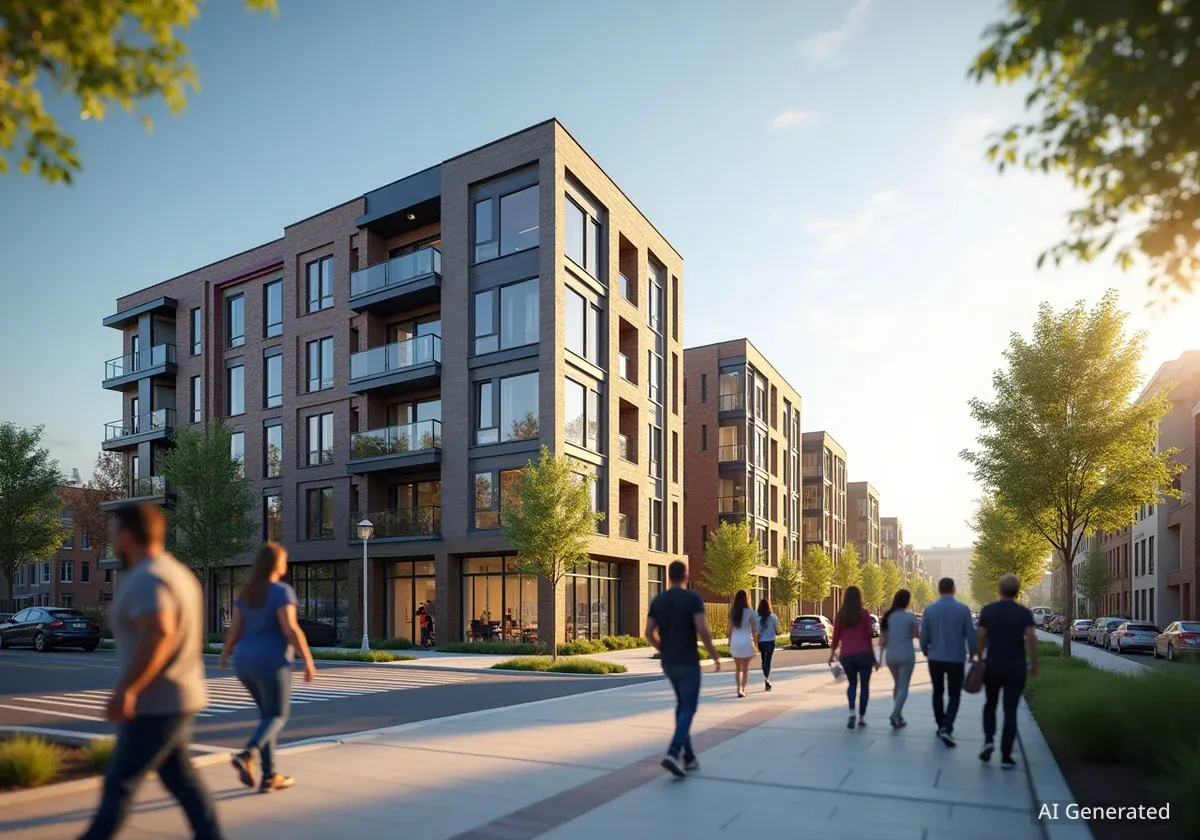
In Seattle's Phinney Ridge neighborhood, a new 35-unit residential building is challenging traditional notions of apartment living. Opened in 2023, Shared Roof is a co-housing community designed to foster deep connections among its residents, combining private homes with extensive shared amenities and a unique ownership model that aims to build a multi-generational community from the ground up.
The project, initiated by real estate developer Chad Dale and a group of friends and family, grew from a simple idea: create a living space that offers the benefits of community without sacrificing personal privacy. The result is a five-story building where neighbors aren't just strangers sharing a hallway, but active participants in a shared lifestyle.
Key Takeaways
- Shared Roof is a 35-unit co-housing community in Seattle that opened in 2023.
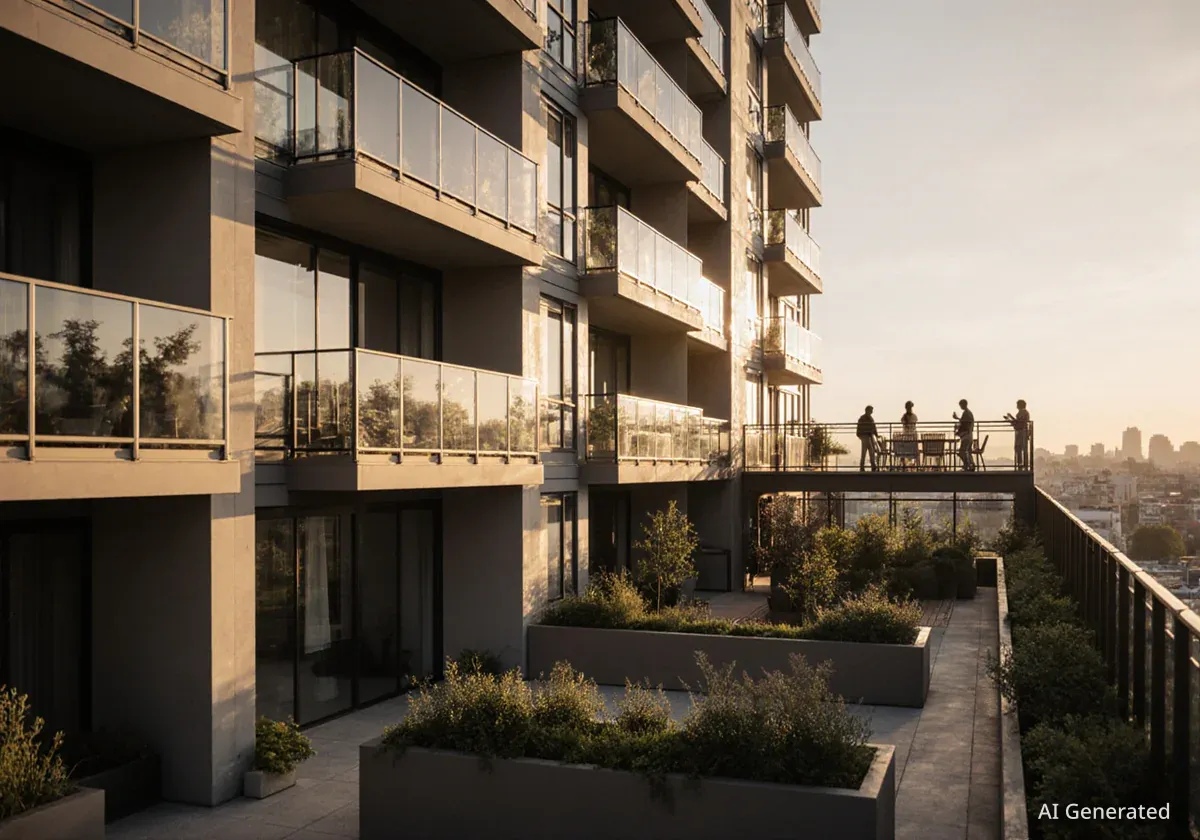
- The building combines private apartments with extensive shared amenities like a rooftop greenhouse, library, and art room.
- It operates on a unique ownership model where residents and investors form an LLC, replacing a traditional landlord.
- Approximately 20% of units are reserved for moderate-income renters through Seattle's Multifamily Tax Exemption program to promote income diversity.
An Idea Born from Experience
The concept for Shared Roof stemmed from a personal experiment by developer Chad Dale. Nearly a decade ago, Dale and several other families pooled their resources to buy a shared vacation home on Whidbey Island. While the experience highlighted the joys of communal living, it also exposed the challenges of sharing a space that wasn't designed for it.
"There were a lot of people sharing an intimate space — it was a little too intimate," Dale explained, reflecting on the four-bedroom farmhouse that five families used. The friction and lack of privacy in that arrangement sparked a more ambitious question: How could you design a permanent community that captures the benefits of sharing while respecting individual needs?
This question led Dale to the co-housing model, an intentional community of private homes clustered around shared space. Unlike co-living, where residents often share kitchens and living areas within a single unit, co-housing provides complete, private residences alongside communal facilities that residents collectively manage.
What is Co-Housing?
Co-housing is a residential model where people own or rent private homes but share common facilities and actively participate in the community's management. The goal is to create a neighborhood feel with more social interaction and shared resources than a typical apartment building or subdivision.
A New Model for Ownership and Design
Shared Roof distinguishes itself not only through its design but also its financial structure. The project was financed by Dale and 13 other friends and family members, who invested amounts ranging from $50,000 to $5 million. Together, they formed an LLC that owns the building. Nine of these investors, including Dale, now live on the property.
Residents pay monthly rent, but the payments go directly to the LLC they are a part of, rather than to an external landlord. This model gives residents a direct stake in the property's success and governance. According to Ray Johnston, a founding partner of Johnston Architects which helped design the project, this business model is more common in office buildings and is a novel approach for a mixed-use residential property.
The building's architecture was carefully planned to encourage interaction. Inspired by European city blocks, the five-story structure is built around a central courtyard. The residential units are intentionally varied, with no two being exactly alike, and were customized to meet the needs of the founding families. They range in size from around 2,000 to 5,000 square feet.
Shared Amenities at a Glance
- Rooftop greenhouse and trampoline
- 5,000-square-foot turf soccer field
- Community library and art room
- Fully-equipped gym
- Underground parking
Fostering a Multi-Generational Community
A core goal for Shared Roof was to create a diverse, multi-generational environment. Dale, who lives in an 1,800-square-foot unit with his wife and three children, emphasized the importance of this mix. "My folks and my wife's folks are all in Michigan, so my kids didn't get a lot of interaction with older people," he said. "To see my neighbor with Parkinson's interacting with my 7-year-old — they're both winning."
For the children in the building, the environment is a constant source of social activity. "They come home, crack the door, toss their school bag inside, and then leave because all their friends are around," Dale noted.
This sense of community is a major draw for residents like John Ware, 54, a technical program manager who moved in with his partner, Liesl Langley, after their children had grown. As investors in the project, they were among the first to move in and have become the building's unofficial social directors, hosting events like Oscar parties and weekly movie nights.
"I used to live in a building that had about 90 units, and I probably knew a third of folks, but we know every single person who lives in this building," Ware stated. "We have a group chat on WhatsApp, so that folks can stay in touch with what's happening."
Addressing Affordability in a Pricey City
While the custom finishes and extensive amenities place many units at a premium price point, with some larger apartments renting for $8,000 per month, the project also includes provisions for affordability. Shared Roof participates in Seattle's Multifamily Tax Exemption (MFTE) program, setting aside about 20% of its units for moderate-income renters.
"It was incredibly important for us to have as much diversity — including income diversity — in the building as we could," Dale said. This commitment makes the co-housing model accessible to a wider range of people.
For resident Mary Jo Wagner, 53, the MFTE program was essential. The spa owner first encountered the building while visiting a client and was immediately drawn to the community atmosphere. The program made it possible for her to move in.
"The median income in the city is so incredibly high, so it drives up all the prices of the regular rental units that are available," Wagner explained. "The fact that Shared Roof participates in this MFTE program is absolutely amazing because it is more affordable."
Wagner, who lives in a one-bedroom unit, said the shared spaces effectively extend her living area. "If I want to have my friends or family over for a larger gathering, there are spaces in the building to do that," she said. For her, the experience feels less like living in an apartment complex and more like being part of a large, supportive family where everyone looks out for one another.