
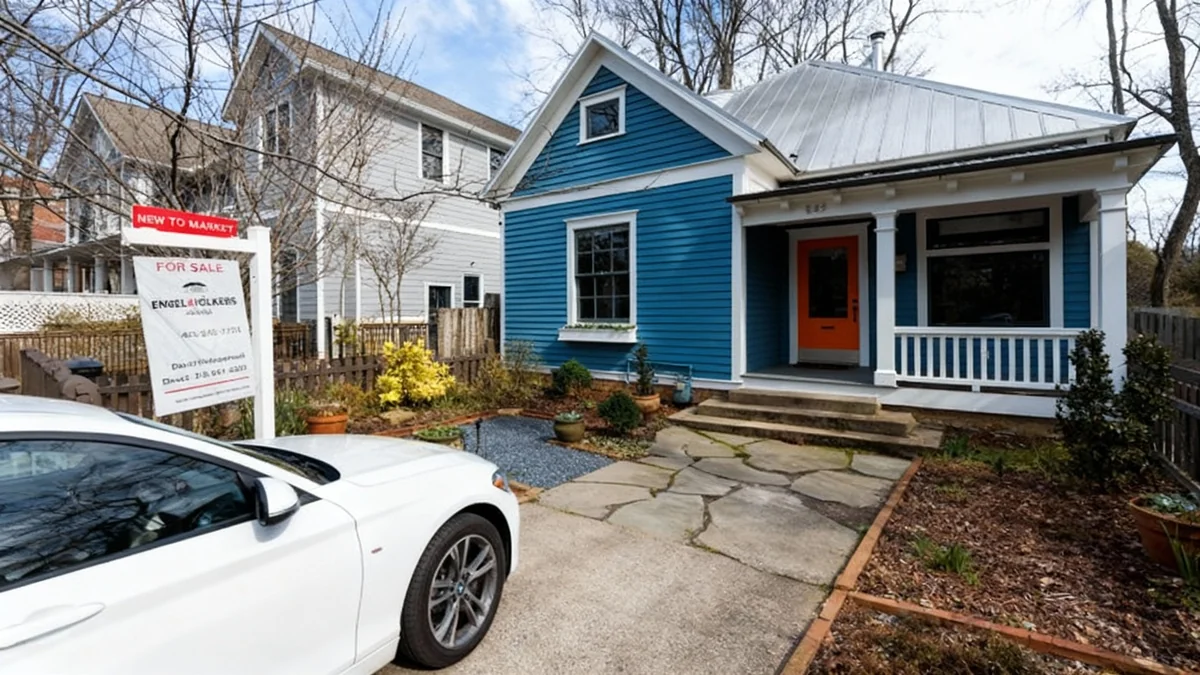
Venture capital firms are increasingly directing funds toward technology startups designed to tackle the high cost of homeownership. This shift in investment strategy comes as political pressure mounts to address the widespread housing affordability crisis, signaling a new frontier for innovation in the real estate sector.
Investors are now backing companies that offer alternative paths to homeownership, including models that eliminate traditional sales commissions or provide rent-to-own options. The trend suggests a growing belief that technology can disrupt the fundamental economics of buying a home, making it more accessible for millions of people.
Key Takeaways
- Venture capital investment is shifting towards real estate technology (PropTech) focused on affordability.
- Growing political attention on high housing costs is a significant driver of this investment trend.
- Startups are developing innovative models like commission-free transactions and flexible rent-to-own programs.
- The goal is to lower the financial barriers that prevent many individuals from buying a home.
Political Climate Spurs Investor Interest
The housing market has become a central topic in political discussions, with policymakers at local and national levels examining ways to bring down costs for prospective buyers. This heightened scrutiny is creating a favorable environment for startups that offer solutions.
Venture capitalists are taking note of this political momentum. According to Dan Wenhold, a partner at the venture firm Fifth Wall Ventures, the focus on affordability is a top priority for investors, driven in part by these political shifts. The implication is that companies solving this problem may find regulatory tailwinds and a large, receptive market.
"Technology focused on affordability is top of mind for investors, in part because of political shifts." - Dan Wenhold, Partner at Fifth Wall Ventures
This alignment between political goals and market opportunities is rare and powerful. It suggests that the push for more affordable housing is not just a social issue but is now being recognized as a significant business opportunity.
Disrupting the Traditional Home Buying Model
For decades, the process of buying a home has remained largely unchanged, characterized by high upfront costs, complex paperwork, and significant fees paid to intermediaries like real estate agents. A new wave of tech startups is working to dismantle this old-fashioned structure.
Their approaches vary, but they share a common goal: to reduce the financial burden on the buyer.
Eliminating Sales Commissions
One of the most significant costs in a real estate transaction is the agent's commission, which typically ranges from 5% to 6% of the home's sale price. On a $400,000 home, this can amount to $24,000.
Some startups are building platforms that facilitate direct transactions between buyers and sellers, replacing the traditional commission structure with a flat fee or a subscription model. This could save buyers and sellers thousands of dollars, money that could be used for a down payment or home improvements.
Commission Costs by the Numbers
- Average Commission: 5-6% of the sale price.
- Cost on a $400,000 Home: $20,000 - $24,000.
- Potential Savings with New Models: Startups aim to reduce this cost by over 70% in some cases.
The Rise of Rent-to-Own Platforms
Another major barrier to homeownership is saving for a down payment. Rent-to-own models address this challenge directly. New technology platforms are making this process more transparent and accessible.
Here’s how they generally work:
- A company purchases a home that a prospective buyer has chosen.
- The individual rents the home from the company for a set period.
- A portion of their monthly rent is set aside as credit towards a future down payment.
- At the end of the lease term, the renter has the option to buy the home at a predetermined price.
This model allows people to build equity while they rent, providing a structured pathway to ownership that was previously unavailable to many.
The Venture Capital Perspective
Venture capital firms are not charities; they are looking for substantial returns on their investments. The interest in affordable housing technology is based on a clear financial calculation: the market is enormous, and the potential for disruption is high.
Why PropTech is Attracting Billions
Property technology, or PropTech, refers to the application of technology and new business models to the real estate industry. While early PropTech focused on search platforms like Zillow and Trulia, the new generation is tackling more fundamental economic problems within the transaction itself. Investors see a multi-trillion dollar industry that has been slow to innovate, making it a prime target for disruption.
Investors like those at Fifth Wall Ventures see a convergence of factors that make this sector particularly attractive right now. Public demand for solutions is at an all-time high, and technology has advanced to a point where new, more efficient models are viable.
By backing companies that lower transaction costs or create new financing mechanisms, VCs are betting that they can capture a piece of one of the world's largest asset classes. The success of these startups could not only generate significant profits but also reshape the housing market for generations to come.
Challenges and the Road Ahead
Despite the optimism, the path forward is not without obstacles. The real estate industry is heavily regulated and dominated by established players who may resist change. Navigating the complex web of local, state, and federal housing laws will be a major challenge for any new company.
Furthermore, economic conditions such as interest rates and housing supply will continue to play a major role in affordability. Technology alone cannot solve a shortage of available homes or the impact of rising mortgage rates.
However, the influx of venture capital and the focus on innovative solutions represent a significant step in the right direction. By addressing the transactional inefficiencies and financial barriers that have long plagued the market, these new companies offer a credible hope for making the dream of homeownership a reality for more people.