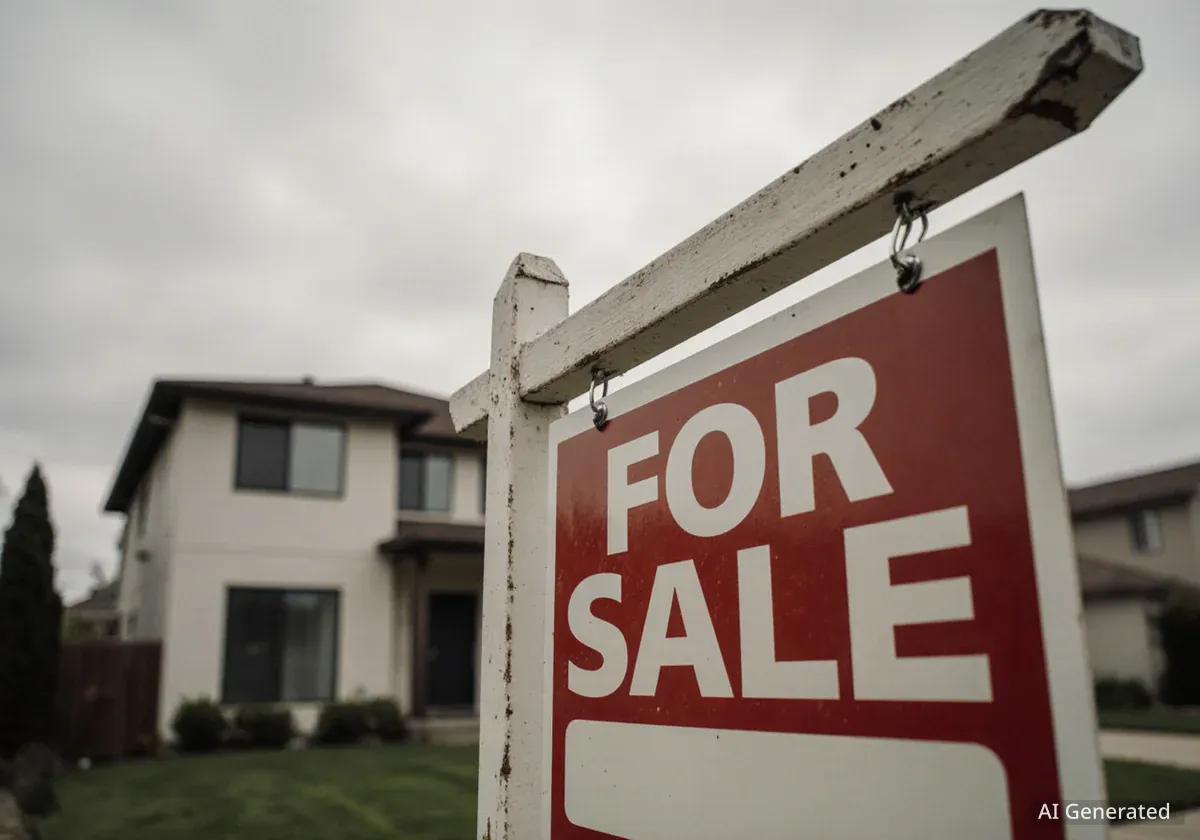
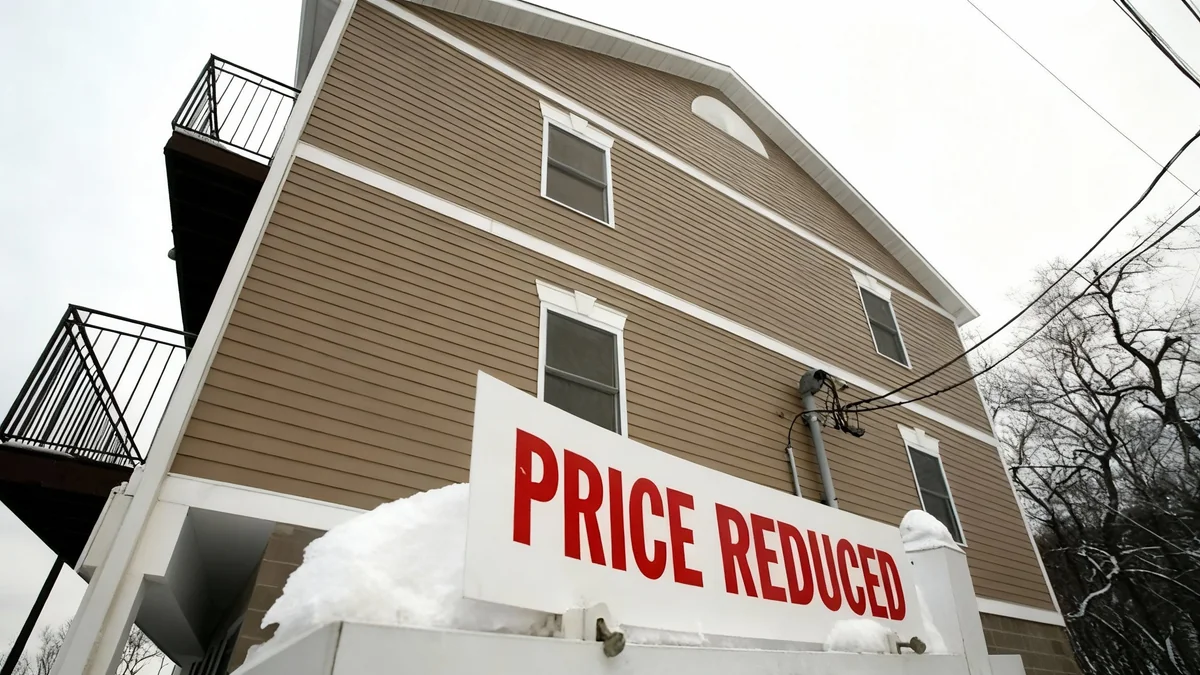
A major legal ruling has reshaped the landscape of real estate transactions, shifting significant negotiating power to home buyers. As the spring buying season approaches, those looking to purchase a home now have unprecedented control over agent commissions, a process once handled exclusively between sellers and their agents.
This change comes at a time when market conditions are already tilting in favor of buyers, with a national increase in the number of homes for sale compared to active purchasers. The new rules require greater transparency and direct negotiation, fundamentally altering a system that has been in place for decades.
Key Takeaways
- A landmark legal decision now allows home buyers to directly negotiate the compensation for their real estate agents.
- The traditional 5% to 6% commission structure, previously set by sellers, is facing significant disruption.
- Market data shows more sellers than buyers, giving purchasers additional leverage in negotiations this spring.
- Buyers must now sign formal agreements with their agents, outlining services and payment, before viewing homes.
The End of an Era for Commissions
For years, the process of paying a buyer's real estate agent was largely invisible to the buyer themselves. A seller would agree to pay a total commission, typically between 5% and 6% of the sale price, to their listing agent. That agent would then offer a portion of that commission to the agent who brought in the buyer.
This long-standing practice was successfully challenged in court. A group of Missouri homeowners argued that the system forced them to pay inflated commission rates. The resulting verdict from the Sitzer/Burnett case has sent ripples through the entire industry, effectively dismantling the old way of doing business.
"So much of that was behind closed doors before," explained Summer Goralik, an independent consultant on legal compliance for the real estate industry. "For years and years, buyers and agents never talked about compensation. Never."
How the Old System Worked
Under the previous model, a seller's agent would list a property on the Multiple Listing Service (MLS). In a private section of the listing, they would specify the commission split offered to a buyer's agent. This pre-determined arrangement meant buyers rarely, if ever, discussed payment with the professional representing them.
A New Set of Rules for Buyers
The new environment places the responsibility of negotiation squarely on the buyer's shoulders. Before an agent can even begin showing properties, they must have a signed agreement with the buyer detailing the scope of their services and, crucially, their compensation.
This means buyers must now decide how much they are willing to pay for representation. While they can still ask the seller to cover this cost as part of the overall purchase offer, the seller is no longer obligated to do so. If a seller refuses, the buyer is responsible for paying their agent directly.
"I don’t know how much buyers are aware of the new power they hold," Goralik noted, highlighting the educational curve for many consumers entering the market.
This shift introduces new financial considerations. Michael Carter, a mortgage broker in North Carolina, deals with confused buyers daily. He explained that if a buyer's agent fee is paid separately from the home loan, it often must be paid in cash at closing, adding another financial hurdle.
"The structure of the loan can be adjusted to cover the cost of the buyer’s agent," Carter said, suggesting that creative solutions, like having the seller cover other closing costs to offset the agent's fee, will become more common.
Market Advantage for Buyers
A recent survey from national brokerage Redfin found that at the end of last year, there were 47.1% more home sellers than buyers nationally. This inventory surplus gives buyers a strong negotiating position on price, repairs, and now, agent commissions.
Navigating the New Market Dynamics
With more power comes more responsibility. Buyers must now be more diligent than ever in understanding contracts and the value their agent provides. Some are opting for short-term or single-property agreements to test the waters with an agent before committing.
Andi DeFelice, who owns Exclusive Buyer’s Realty in Savannah, Georgia, advises buyers to carefully review any representation contract. "Understand who’s paying for what and how you get out of this agreement," she urged. "Don’t sign it when you’re sitting in front of the house you want to see."
The Risk of 'Dual Agency'
One potential pitfall for unseasoned buyers is "dual agency," where a single agent represents both the seller and the buyer. While this can sometimes result in a discounted commission, experts warn it creates a significant conflict of interest.
- The agent cannot fully advocate for the seller's goal of the highest price.
- Simultaneously, they cannot fight for the buyer's goal of the lowest price.
- This arrangement compromises the agent's fiduciary duty to either party.
"How can one be a fiduciary to both sides? It’s impossible," Goralik stated bluntly. DeFelice echoed this sentiment, emphasizing that neither party receives dedicated representation.
The Future of Real Estate Commissions
Industry experts predict that these changes will lead to a gradual decline in the standard 5-6% commission. Amanda Orson, CEO of home selling platform Galleon, believes that as consumers become more familiar with the process, they will gain the confidence to negotiate lower fees or handle parts of the transaction themselves.
"You’ll see the 5% to 6% commission decay over time," Orson predicted. She compared the process to filing taxes—a high-stakes, low-frequency event that seems intimidating until you've done it a few times.
For now, the market's current conditions favor buyers, allowing many to insist that sellers continue to cover agent fees. However, as the market balances, the ability to negotiate commissions will become a critical skill for anyone looking to purchase a home.