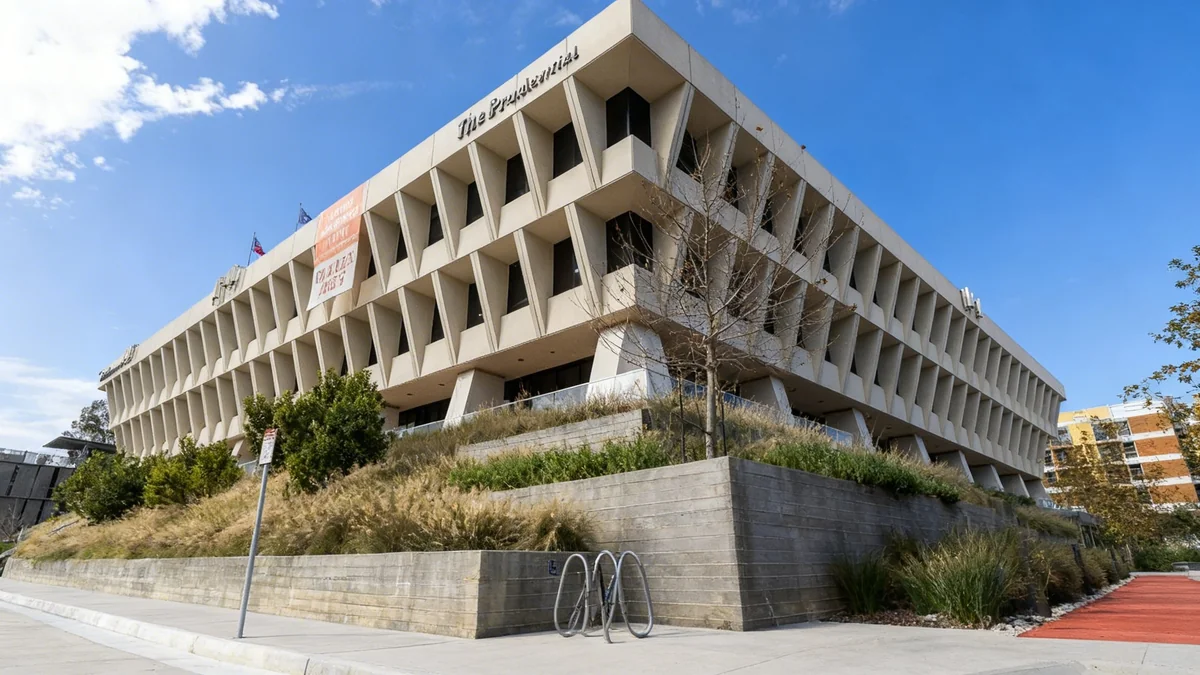
Los Angeles has enacted a new citywide ordinance designed to streamline the conversion of underused commercial buildings into residential housing. The policy aims to address two critical issues simultaneously: the city's severe housing shortage and its growing surplus of vacant office space.
The new rules significantly expand upon a 1999 measure that was largely confined to downtown. Now, developers across the entire city can convert commercial properties as young as 15 years old into apartments with a more predictable and faster approval process, potentially unlocking thousands of new homes.
Key Takeaways
- Los Angeles has launched a new Citywide Adaptive Reuse Ordinance to simplify converting commercial buildings into housing.
- The ordinance applies to buildings 15 years or older across the entire city, a major expansion from previous rules.
- It aims to tackle both the housing crisis and high office vacancy rates, which exceed 50 million square feet.
- Developers still face challenges, including high construction costs, interest rates, and the city's Measure ULA property tax.
- Iconic buildings like the former Sunkist headquarters are already slated for conversion under the new policy.
A Modern Solution for a Dual Crisis
Los Angeles is grappling with a well-documented housing affordability crisis while its commercial real estate market struggles with the aftershocks of the pandemic. With more than 50 million square feet of office space currently sitting empty, city officials have turned to adaptive reuse as a pragmatic solution.
The previous ordinance, established in 1999, was a catalyst for the residential boom in Downtown L.A. However, its scope was limited, applying only to buildings constructed before 1975 and concentrated in a few specific neighborhoods. The new Citywide Adaptive Reuse Ordinance, which went into effect this month, dramatically broadens these parameters.
Ken Bernstein, a principal city planner, noted that the updated rules remove cumbersome and expensive hurdles. Previously, conversions outside designated zones required a lengthy series of approvals, hearings, and environmental reviews. The new streamlined process allows qualifying projects to receive staff-level approval, providing developers with much-needed certainty.
"This is monumental for the city," said Garrett Lee, president of Jamison Properties, a major L.A. developer. "It addresses both the housing shortage and the long-term office vacancy issue."
From Corporate Headquarters to Apartment Homes
The impact of the new legislation is already visible. Several high-profile projects that were previously stalled or unfeasible are now moving forward. One of the most notable is the former Sunkist Growers headquarters in Sherman Oaks, an iconic Brutalist-style building visible from the 101 Freeway.
Developer David Tedesco of IMT Residential plans to transform the landmark structure into 95 apartments. He explained that the new ordinance was the key to making the project viable, allowing his company to proceed much faster and avoid a potentially protracted environmental review process.
What is Adaptive Reuse?
Adaptive reuse is the process of repurposing an existing building for a function other than what it was originally designed for. In this context, it primarily refers to converting commercial structures like office towers, retail stores, and even parking garages into residential units such as apartments or lofts.
Jamison Properties is also leveraging the new rules. The firm has already started work on converting a large office high-rise on the edge of downtown into nearly 700 apartments. Lee highlighted that the ability to get projects approved without navigating a complex and unpredictable political process is a game-changer.
"When you take that risk off the table, it materially improves the feasibility of conversions," Lee stated. His firm is even redesigning existing plans to create more, smaller units per floor, which can help make rents more affordable.
Lingering Economic Hurdles for Developers
While the ordinance removes significant bureaucratic red tape, it does not eliminate the economic challenges inherent in large-scale construction projects. Developers point to several factors that continue to make projects difficult to finance.
Financial Obstacles to Conversion
- High Interest Rates: Increased borrowing costs make construction loans more expensive.
- Material Costs: Tariffs and supply chain issues have driven up the price of building materials.
- Labor Shortages: A strained labor market contributes to higher construction costs.
- Measure ULA: The city's tax on large property sales, often called the "mansion tax," adds another layer of expense that developers say discourages new projects.
Architect Karin Liljegren, who specializes in adaptive reuse and assisted the city in drafting the new ordinance, believes Measure ULA is a major impediment. "[It] is really impeding developers from doing any development in the city of Los Angeles," she said.
Furthermore, the rental market itself has shown signs of softening. In December, the median rent in the Los Angeles metro area fell to $2,167, a four-year low. While experts are divided on whether this is a temporary plateau or a lasting trend, it creates uncertainty for developers calculating the potential profitability of new apartment buildings.
Calls for Further Financial Incentives
With significant financial headwinds, some business leaders argue that regulatory relief alone is not enough. They are urging the city to consider financial incentives to help bridge the gap and make more conversion projects economically viable.
Nella McOsker, president of the Central City Assn., described the new ordinance as "tremendous" but emphasized the need for Los Angeles to follow the lead of other major cities. She pointed to programs designed to encourage redevelopment in places like New York, Chicago, and San Francisco.
Examples of such incentives include:
- Property tax abatement programs (New York, Boston, Washington D.C.)
- Transfer tax exemptions (San Francisco)
- Tax-increment financing (Chicago)
- Direct grants for developers (Calgary, Canada)
McOsker and other advocates argue that offering financial support, even as the city faces its own budget shortfalls, is a necessary investment to spur the creation of desperately needed housing.
The new rolling 15-year eligibility requirement means that a new wave of buildings becomes candidates for conversion each year. As Lee of Jamison Properties noted, newer buildings are often easier and cheaper to convert. "Converting a building from 1990 versus one from 2010 is night and day due to the differences in code eras," he said. This dynamic suggests the ordinance's impact will grow over time, potentially reshaping neighborhoods across Los Angeles for years to come.