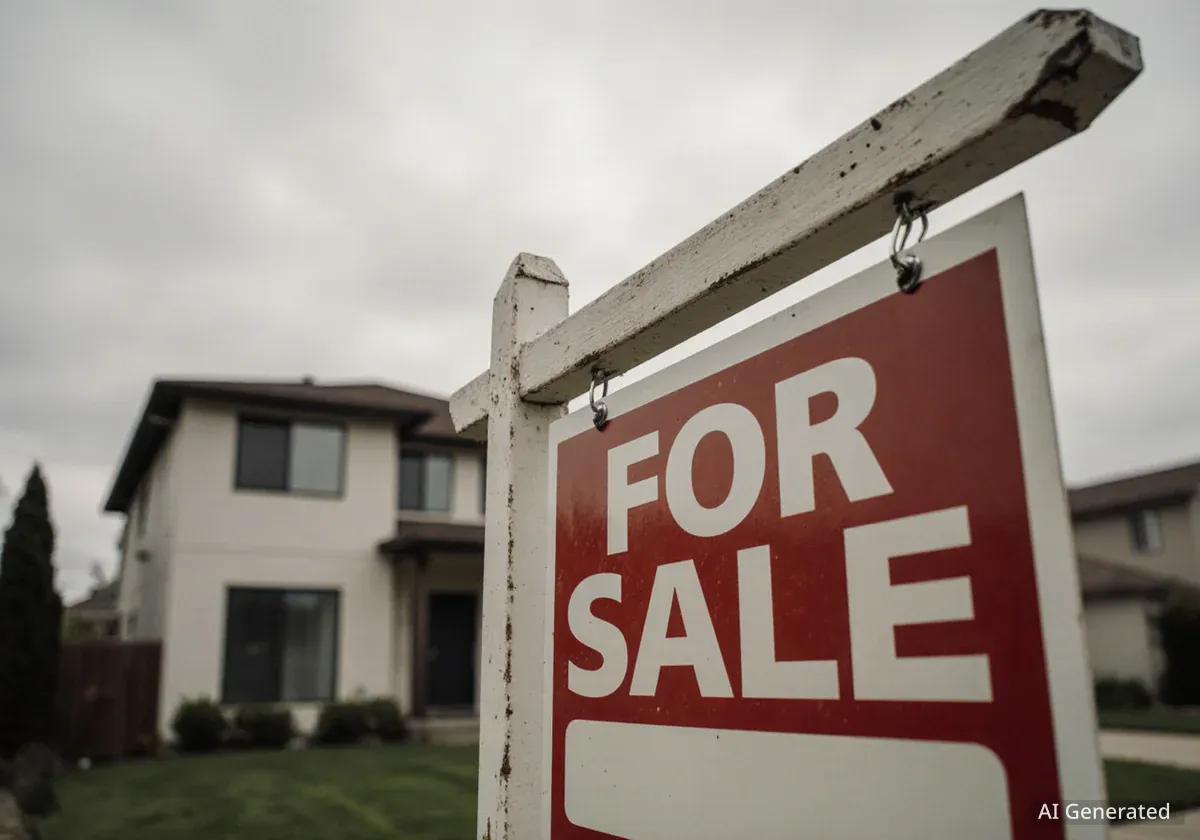

A proposed 9.5% property tax increase in New York City is drawing national attention to a financial pressure point for homeowners everywhere. As property values continue to climb across the United States, the debate in New York highlights the growing tension between municipal funding needs and household budgets.
The proposal by Mayor Zohran Mamdani comes at a time when U.S. home prices have surged approximately 55% over the past five years, pushing property tax bills higher and forcing a difficult conversation about how local governments fund essential services.
Key Takeaways
- New York City's mayor has proposed a 9.5% property tax increase to address budget needs.
- The proposal reflects a national trend where rising home values, up 55% in five years, are increasing tax burdens on homeowners.
- Property taxes are the primary revenue source for local governments, funding services like schools, police, and sanitation.
- Homeowners have options to challenge their property assessments if they believe they are inaccurate, but the process has strict deadlines.
- Federal tax law, specifically the SALT deduction cap, limits the ability of many homeowners in high-tax states to offset their property tax payments.
The New York City Proposal in Context
Mayor Zohran Mamdani has positioned the potential 9.5% property tax hike as a necessary step if the state government in Albany does not agree to raise taxes on millionaires. This framing presents a choice between taxing high earners or property owners to fund the city's budget.
This local political issue resonates nationally because it touches on a fundamental aspect of American homeownership. Property taxes are a critical, yet often contentious, part of funding local communities.
By the Numbers: The Role of Property Taxes
In fiscal year 2022, property taxes constituted 27.4% of all state and local tax collections in the U.S. For local governments specifically, that figure jumps to 70.2%, making it their most significant and stable source of income.
How Your Property Tax Bill is Calculated
Understanding your property tax bill starts with two key components: the assessed value of your property and the local tax rate. A government assessor's office determines what your property is worth, a figure that is supposed to reflect its fair market value.
For residential homes, this valuation is typically based on recent sales of similar properties in the area, known as "comparable sales" or "comps." For commercial properties, assessors often look at income-generating potential, such as rental revenue.
Once the value is set, the local tax rate is applied. This rate is sometimes expressed in "mills"—a certain number of dollars for every $1,000 of assessed value—or as a simple percentage. The formula remains the same: Assessed Value × Tax Rate = Your Tax Bill.
The Impact of Reassessment Schedules
How often your property's value is reassessed can have a major impact on your finances, especially in a rapidly rising market. The frequency of reassessment varies significantly across the country.
- Annual Reassessment: In states like Florida, properties with a homestead exemption are reassessed every year on January 1.
- Cyclical Reassessment: Cook County, Illinois, which includes Chicago, reassesses properties on a rotating three-year schedule.
- Reassessment at Sale: California's Proposition 13 is a well-known example where reassessment generally only occurs when a property changes ownership or undergoes new construction.
These different schedules create varied experiences for homeowners. In areas with infrequent reassessments, long-term owners may benefit from lower tax bills that don't reflect current market values. However, this often means new buyers face a sudden and significant tax increase upon purchasing a home.
Tax Caps Offer Predictability
To prevent extreme tax hikes driven by market volatility, some states have implemented caps on annual assessment increases. California limits increases to 2% per year between sales. Florida caps annual growth for homesteaded properties at 3% or the rate of inflation, whichever is less. These measures provide stability for existing homeowners but can also create large tax disparities between neighbors.
Challenging Your Property Assessment
If you receive a tax bill that seems too high, you are not without recourse. Homeowners have the right to challenge their property's assessed value. The process typically begins with an informal review by the local assessor's office.
This is the stage to correct simple factual errors, such as incorrect square footage, the wrong number of bathrooms, or an inaccurate property classification. If this doesn't resolve the issue, a formal appeal can be filed with a local review board.
It is crucial to act quickly. Most jurisdictions impose strict deadlines, often just 30 to 60 days after the assessment notice is issued. Missing this window usually means you have to wait until the next assessment cycle to appeal.
Preparing for an Appeal
To successfully appeal, you need to provide evidence that your property is worth less than its assessed value. For residential properties, the most effective evidence is a list of comparable sales showing that similar homes sold for less.
In more complex cases, or for unique properties, a professional appraisal may be necessary. While a residential appraisal can cost several hundred dollars, the potential tax savings can make it a worthwhile investment. For high-stakes appeals, especially those that may end up in court, consulting a real estate attorney is advisable.
The Federal Connection: The SALT Deduction
Property taxes also play a role in federal income taxes through the State and Local Tax (SALT) deduction. Homeowners who itemize their deductions can deduct property taxes they've paid, along with state income or sales taxes.
However, the Tax Cuts and Jobs Act of 2017 introduced a significant change by capping the total SALT deduction at $10,000 per household per year ($5,000 for married couples filing separately). Before this, the deduction was unlimited.
This cap has a disproportionate effect on residents of high-tax states like New York, New Jersey, and California. For many, their combined property and state income taxes easily exceed the $10,000 limit, meaning any local property tax increase cannot be offset by a federal deduction. Recent legislative negotiations temporarily raised this cap for 2025, but it is set to revert to $10,000 in 2030 unless Congress takes further action.
A Difficult Balancing Act for Local Governments
The debate in New York City is a microcosm of a challenge faced by municipalities nationwide. As budget pressures mount, local leaders are often forced to choose between cutting essential services or raising taxes.
Some states with budget surpluses have offered temporary property tax relief. Wyoming is currently exploring an expansion of its relief programs, while Texas used a one-time surplus to fund a $10 billion property tax relief package. However, these solutions can be short-lived.
Without a sustainable, long-term replacement for the revenue, cutting property taxes can lead to difficult decisions down the road. The stability of property tax revenue makes it an attractive, if unpopular, tool for funding the services residents rely on every day. The outcome of New York's proposal will be watched closely by city leaders and homeowners across the country, as it may signal how other municipalities will navigate these same financial pressures.