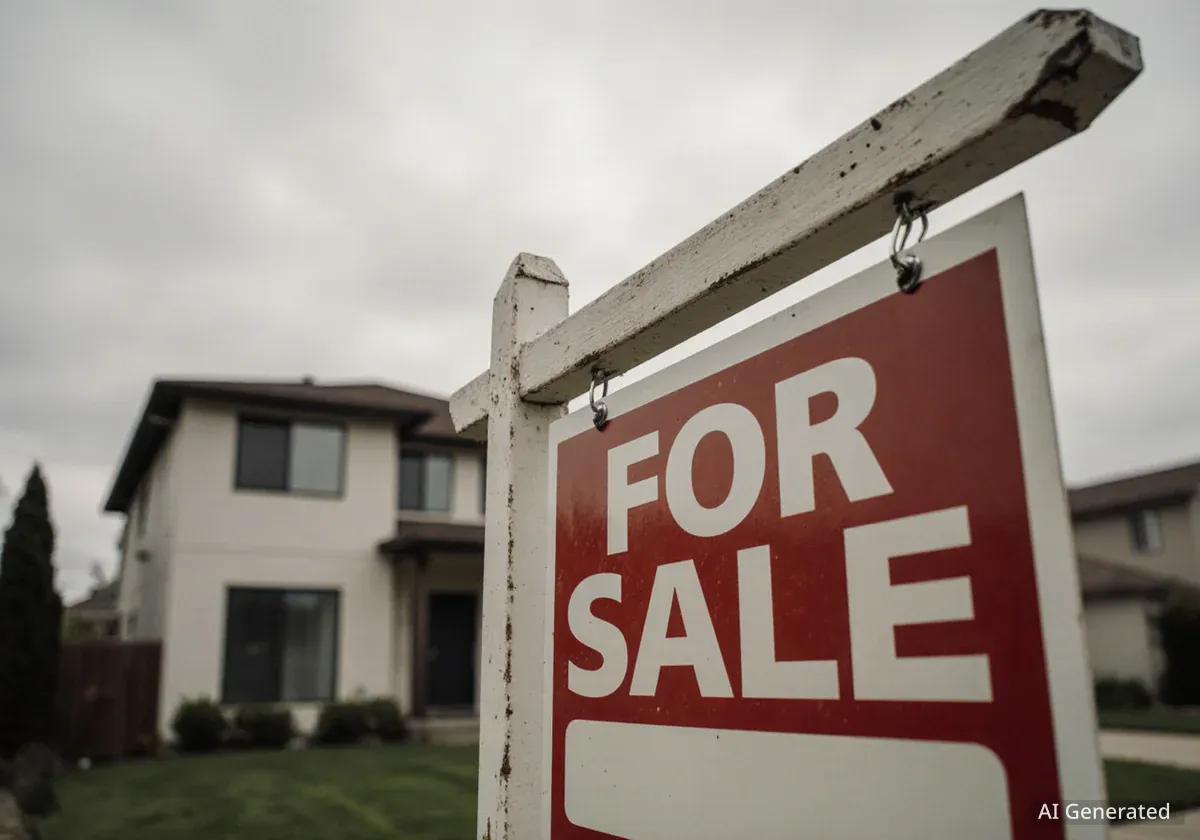

A nationwide cooling in the U.S. housing market is creating fresh opportunities for potential homebuyers, with average prices seeing a notable decline in recent months. Coupled with a dip in mortgage rates, experts suggest that buyers may finally be gaining the upper hand in specific regions across the country.
Data shows that average home prices in the United States have fallen by 1.4% over the last three months. At the same time, mortgage rates recently dropped below 6%, reaching their lowest point since early 2023. This shift signals a potential end to the intense bidding wars and soaring prices that defined the market during the pandemic.
Key Takeaways
- Average U.S. home prices have decreased by 1.4% in the past three months.
- Mortgage rates have recently fallen below 6%, the lowest since early 2023.
- Experts identify markets in the Sun Belt, Mountain West, and Midwest as having the best potential deals for buyers.
- An increase in housing inventory and longer days on the market are giving buyers more negotiating power.
A Changing Tide for American Real Estate
The intense, seller-driven housing market that characterized the past few years is beginning to show clear signs of rebalancing. For buyers who have been sidelined by fierce competition and prohibitive costs, this change is a welcome development.
The current environment is one where strategy and patience can pay off. According to Jake Vehige, president of mortgage lending at Neighbors Bank, buyers should focus on specific indicators.
"The best deals for buyers in 2026 are the markets where buyers have leverage. Buyers should look for homes staying on the market longer, sellers that are more open to concessions and [where] monthly payments can be kept within an affordable range," Vehige advises.
This shift means that instead of facing multiple offers above the asking price, buyers may now find sellers more willing to negotiate on price, closing costs, or repairs.
Sun Belt and Mountain West Markets Hit a Turning Point
Regions that experienced explosive growth during the pandemic are now at the forefront of this market correction. The Sun Belt and Mountain West, once hotspots for migration and investment, are seeing a significant slowdown.
Cities like Phoenix, Arizona, and Boise, Idaho, saw a boom fueled by an influx of new residents and a surge in new construction. However, that rapid expansion has led to a surplus of homes.
The Pandemic Boom Effect
The rise of remote work during the pandemic allowed many Americans to relocate. They sought more affordable housing and a different lifestyle, leading to unprecedented price appreciation in once-overlooked cities, particularly in the Sun Belt and Mountain West. Now, as some companies call employees back to the office and demand normalizes, these same markets are experiencing a correction.
Tom Orr of Northwest Exteriors notes that this dynamic is shifting the power back to buyers. "Markets with fast price appreciation and new construction are giving way to negotiation, notably areas of the Sun Belt and Mountain West," he explains. "When supply supersedes demand, sellers lose their edge and are forced to reduce prices further."
Jules Garcia, a real estate agent with Coldwell Banker Warburg, points to overbuilding and stagnant inventory as key factors in cities like Phoenix. He also highlights a potential headwind from proposed restrictions on institutional investors buying single-family homes, which could further cool demand from large-scale buyers.
Florida's Hot Market Begins to Cool
Several metropolitan areas in Florida are also showing signs of softening. After a period of sharp price increases, markets from Cape Coral and Fort Myers to North Port and Sarasota are becoming more favorable for buyers.
Levi Rodgers, a real estate broker and co-founder of VA Loan Network, observes a consistent pattern. "The model is the same in all of them: sharp price appreciation, plenty of new product entering the market and buyers who have enough wiggle room to negotiate," he says.
Florida's Price Correction
Economic forecasts suggest that Cape Coral and North Port, Florida, are among the markets expected to see the most significant annual home price declines. This is largely due to a rebalancing from the "outsized pandemic-era price gains," according to Hannah Jones, a senior economic researcher at Realtor.com.
The increase in new construction, particularly condos in South Florida, is adding to the available inventory. Daniel Ickowicz, a broker at Elite International Realty, sees this as a window of opportunity. He anticipates an "increase in deal activity" where pricing becomes more negotiable without harming long-term property values, thanks to continued migration and job growth in the region.
Opportunities Emerge in the Midwest and Southeast
While coastal and Sun Belt cities often grab headlines, experts are pointing to small and mid-sized markets in the Midwest and Southeast as places where buyers can find exceptional value. Cities like St. Louis, Missouri, are highlighted for their affordability and reduced competition.
Ben Mizes, a licensed real estate agent and co-founder of Clever Offers, describes the deals in St. Louis as "incredible." He adds, "There’s more inventory, less competition and the prices are more reasonable than the coastal metros."
Other promising secondary cities include:
- Nashville, Tennessee
- Raleigh, North Carolina
- Columbus, Ohio
- Indianapolis, Indiana
Jonathan Ayala, founder of Real Estate Photography, notes that these markets are normalizing after a period of positive migration. As job growth stabilizes, so does housing demand. He also points out that as return-to-office policies become more common, some overvalued suburban and exurban communities are seeing price adjustments, creating new opportunities for buyers.
Louisville, Kentucky, is another example. According to Nathan Garrett, owner of Realty Homes, the city is showing signs of a more balanced market. "Average days on the market have trended upward, the list-price-to-sale-price ratio has declined and inventory has increased roughly 35% over the past 12 months," Garrett says.
Even Major Metros Offer Pockets of Value
Surprisingly, even some of the nation's most expensive and competitive markets may have deals for savvy buyers. In cities like New York and Seattle, specific neighborhoods and property types are becoming more accessible.
In New York, Frances Katzen of The Katzen Team at Douglas Elliman suggests looking at "fringe locations" that are often the first to weaken in a downturn. She identifies areas like Flatiron, Chelsea, and parts of the Upper East Side as places where prices are softening, especially in markets that saw heavy development or co-op submarkets.
Meanwhile, Seattle's market has undergone a more gradual shift. James Dainard, a real estate entrepreneur, explains that while the city remains supply-constrained, conditions are far more balanced than in previous years. By late 2025, about a quarter of listings had experienced price reductions. "Higher borrowing costs, affordability ceilings and slower tech hiring... have extended days on market, particularly in mid- and upper-price segments," Dainard states. This provides buyers with more time to consider their options and negotiate favorable terms.