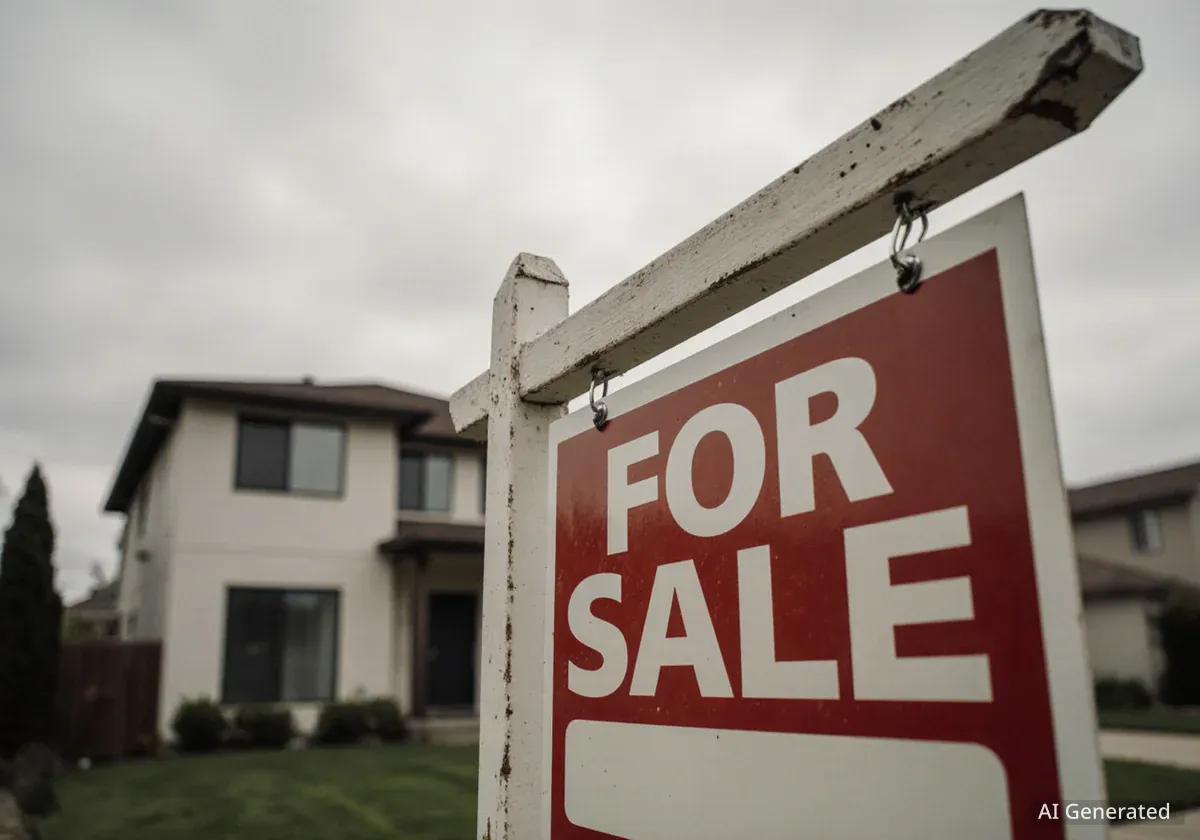

The debate over Wall Street's role in the residential real estate market continues. A new analysis suggests that large institutional investors account for a small and even shrinking share of home purchases nationwide. This finding challenges the common belief that these investors are a primary cause of current housing affordability issues.
Key Takeaways
- Institutional investors buy only 1% of homes.
- Their purchasing activity has decreased since 2021.
- New legislation aims to restrict large investor purchases.
- Experts say increasing housing supply is more crucial for affordability.
Institutional Investors Hold Small Share of Home Sales
A recent report, published on March 13 by economists at Realtor.com, indicates that investors owning more than 350 single-family homes represent only 1% of total home purchases across the country. This analysis covers activity since 2015. The report highlights that this segment of the market has seen a steady decline in purchasing activity, particularly since its peak in 2021.
Many observers have pointed to large corporate investors as a major factor in today's challenging housing market. However, the data from this report suggests a different picture. The actual footprint of these large entities appears to be quite small.
"Large corporate investors are often viewed as a primary driver of today’s housing affordability challenges, but the data show their footprint is relatively small," said Danielle Hale, chief economist at Realtor.com, when discussing the report's findings.
Legislative Actions Target Investor Purchases
The release of the Realtor.com report came just one day after the U.S. Senate passed a significant piece of legislation: the 21st Century ROAD to Housing Act. This bill marks the first broad bipartisan housing legislation in over a decade. One of its key provisions aims to restrict the purchase of new single-family homes by large institutional investors.
This restriction applies to entities that directly or indirectly own at least 350 single-family homes. However, the legislation does include certain exemptions. For example, large institutional investors can still purchase or build new single-family homes specifically for the rental market. These properties would then be required to be sold to an individual homeowner after a period of seven years.
Policy Background
In January, President Donald Trump signed an executive order titled "Stopping Wall Street from Competing with Main Street Homebuyers." This order stated that it was the administration's policy for large institutional investors not to buy single-family homes that could otherwise be purchased by families. This sentiment is widely shared among many Americans.
Focus Shifts to Housing Supply
Despite the public's concern and the recent legislative efforts, some experts argue that focusing on institutional investors might not address the core issues of housing affordability. The Realtor.com report suggests that policy efforts should instead prioritize increasing the overall housing supply.
According to Hale, policies designed to boost housing supply are likely to have a much greater impact on affordability and homeownership than simply limiting a small group of buyers. This view is echoed by most other analyses on the subject.
Key Statistic
- In Memphis, the area with the most corporate interest, only 4.4% of homes were bought by corporate owners over the last decade. This illustrates that even in concentrated areas, the overall percentage remains low.
Past and Present Policies
During the Biden administration, the Department of Housing and Urban Development (HUD) implemented several policies designed to encourage owner-occupants in the housing market. These measures aimed to give individual homebuyers a better chance.
However, over the past year, many of these protections have been rolled back. Sarah Edelman, who helped develop some of these policies while at the Federal Housing Administration, noted these changes. Edelman, now with the nonprofit National Community Stabilization Trust, spoke about this in January when the idea of banning Wall Street from buying homes first emerged.
Disproportionate Impact in Specific Markets
While the national data suggests a small overall footprint for institutional investors, consumer advocates have pointed out that their presence can be disproportionately strong in certain metropolitan areas. This concentration can make it significantly harder for local residents to enter the housing market in those specific locations.
The Realtor.com analysis helps put this into perspective. For example, Memphis, Tennessee, experienced the highest level of purchases by corporate interests. Even there, corporate owners bought only 4.4% of homes over the past decade. This figure, while higher than the national average, still represents a minority of transactions.
The discussion highlights a complex issue with multiple contributing factors. While the desire to curb large corporate involvement is understandable, the data suggests that broader strategies focusing on housing construction and supply may be more effective in the long term for improving affordability for all.
Moving Forward
The focus on increasing housing supply rather than solely restricting a small segment of buyers aligns with the views of many economists. Building more homes, especially affordable ones, is seen as the most direct path to easing market pressures. Lawmakers will need to consider these various perspectives as they continue to shape future housing policies.
The goal remains to create a housing market where families can more easily achieve homeownership. Understanding the true impact of all market players is essential for effective policy creation.