


Residents of a Southbridge, Massachusetts housing complex, many of whom are seniors on fixed incomes, are facing rent increases of up to 70% after the property was sold to a new owner. The change comes after the 116-unit building lost its federal affordable housing subsidy, leaving dozens of elderly tenants in a state of uncertainty and fear of eviction.
The situation at the Lebanon Hill Housing complex highlights a growing crisis for aging baby boomers across the state and nation, where a gap between fixed retirement incomes and soaring housing costs is pushing a vulnerable population to the brink. For many, the dream of a stable retirement is being replaced by a fight to keep a roof over their heads.
Key Takeaways
- Seniors at a Southbridge housing complex face rent hikes up to 70% after a new owner took over.
- The property, formerly income-restricted, lost its federal affordable housing status.
- The new owner cites rising taxes and maintenance costs as reasons for the increase.
- Tenants have formed a union to negotiate, while some face eviction proceedings.
- The issue reflects a wider housing crisis affecting older adults on fixed incomes in Massachusetts.
A Retirement Dream Turned Nightmare
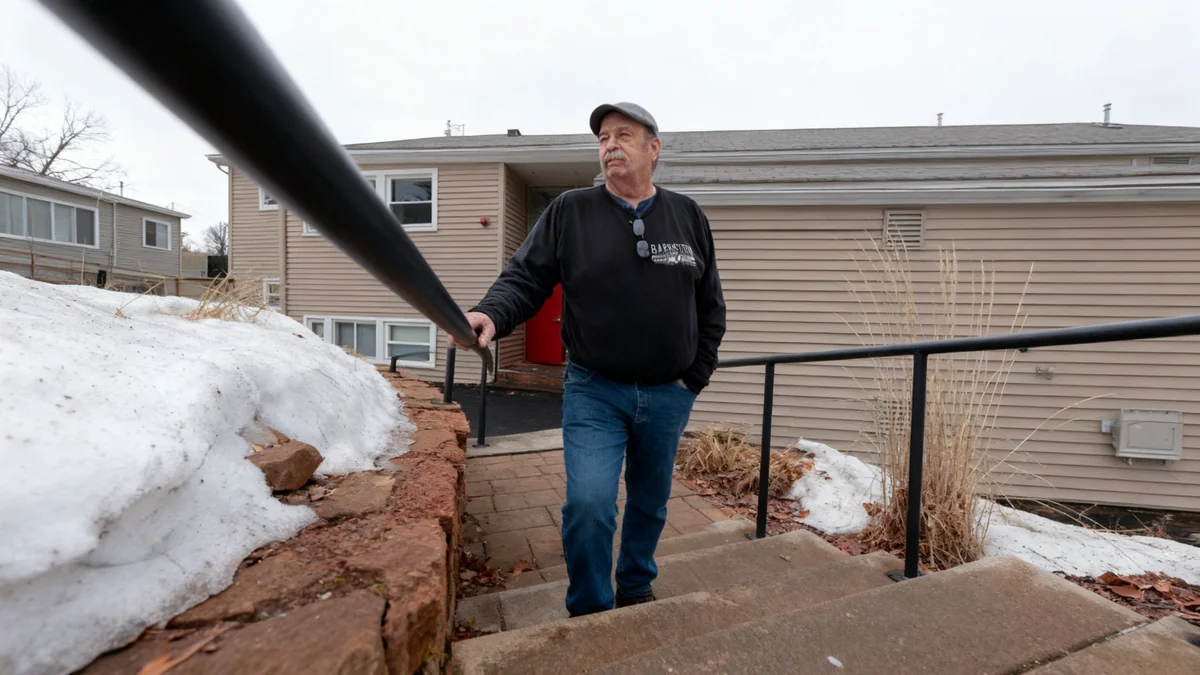
For David Bourassa, a 67-year-old retired firefighter, moving into the Lebanon Hill Housing complex in 2020 with his wife, Karen, was supposed to be a step toward a peaceful retirement. A battle with cancer had forced them to sell the home they owned for two decades, and the income-restricted senior housing seemed like a secure alternative.
That sense of security has vanished. Last year, Westborough-based Shorelight Real Estate purchased the complex. Soon after, residents received notices of dramatic rent increases. Bourassa’s monthly rent for his one-bedroom apartment is set to jump from $975 to $1,650, a nearly 70% increase that he says is impossible on their fixed income.
"I had a dream when I was younger, you know, buy a house just like everybody else, own a property, and have a place to retire. That doesn’t work, because life has its own plan for you." - David Bourassa, Resident
Bourassa is not alone. Nearly 60 residents, all over the age of 58, have formed a tenant union to challenge the hikes. They argue that many who agreed to the new rates did so under pressure, depleting their life savings to avoid the daunting task of moving in their 70s and 80s.
The Broader Context: An Aging Population in Crisis
Massachusetts is experiencing a significant demographic shift. Residents aged 65 and older now constitute 23% of the population, a figure that has nearly doubled since 2010. While baby boomers represent the largest group of home sellers and buyers nationally, a significant portion of this generation faces financial instability. According to experts, 20% of baby boomers have no retirement savings, making them extremely vulnerable to housing shocks.
The Business of Housing
The new property owner, Shorelight Real Estate, defends the rent increases as a necessary business decision. Co-owner and property manager Emily Panzone pointed to surging operational costs. Public records show the property's tax assessment increased by over 187% between 2024 and 2026, now valued at $11.5 million. Panzone also cited rising maintenance costs, which she described as more "management intensive" with an aging tenant population.
Panzone has resisted the characterization of the building as senior housing, noting that its official designation as such expired years ago. The company is actively rebranding the property as "Therese Pines" to change its public perception.
"I am trying to keep a property afloat and pay the bills, and you can’t do that when utilities are included and people are paying $900 a month," Panzone stated. She added that the company is involved in "elder affairs" for at least one tenant.
By the Numbers: The Financial Squeeze
- 70%: The maximum rent increase faced by some Lebanon Hill tenants.
- $975 to $1,650: The proposed monthly rent jump for a one-bedroom apartment.
- 187%: The increase in the property's tax assessment between 2024 and 2026.
- 23%: The portion of the Massachusetts population now aged 65 or older.
However, residents like Bourassa claim that maintenance has declined under the new ownership, providing photos of ice dams, leaking ceilings, and unplowed lots from this past winter as evidence. The tenants' union, supported by the advocacy group Homes for All Massachusetts, sees the situation differently. Organizer Jonathan Morales said the firm is attempting to accumulate wealth from a vulnerable population.
A System Under Strain
The struggle at Lebanon Hill is a microcosm of a statewide housing emergency. Nonprofits and housing advocates report being overwhelmed by the demand for services.
"We’re in crisis mode, as far as Massachusetts is concerned," said Alex Martin, marketing director for Rogerson Communities, a nonprofit that operates over 1,500 units of senior-focused housing. "Now the demand for housing services is outstripping the supply, and it’s getting worse."
Sharon Scott-Chandler, CEO of Action for Boston Community Development (ABCD), noted a similar trend. "We’re seeing more seniors seeking help for the first time... once their income changes to that fixed income, then they’re for the first time seeing that challenge," she explained.
This crisis has severe consequences. Researchers from Boston College found a 40% increase in homelessness among older adults between 2019 and 2022. They noted that in 2020, one in five single homeless adults was over the age of 60, more than double the rate from two decades prior.
"We keep thinking about this population in terms of statistics, and not thinking about this population as our grandparents and mothers and fathers... These are human beings that deserve to age with dignity, and right now do not have the ability to." - Alex Martin, Rogerson Communities
An Uncertain Future for Southbridge Tenants
The Southbridge Town Council has passed a resolution supporting the tenants and asking for housing stability for its elder residents. Last week, 38 members of the Lebanon Hill Tenant Association formally asked Emily Panzone to cap the rent increases and implement more gradual, structured bumps over time.
Despite these efforts, the company has begun eviction proceedings against some residents who have not agreed to the new rates. David Bourassa received a "notice to quit" letter, the first step in the eviction process, for arrears of over $1,300. His monthly income is too high to qualify for Section 8 housing assistance.
With his future uncertain, Bourassa is left questioning where he and his wife can possibly go. "Eventually, it’s going to come to a point where I’m going to have to move somewhere else. Where do I go?" he asked. "It’s like every time I turn around, something is kicking me in the butt. I don’t know where to turn anymore."