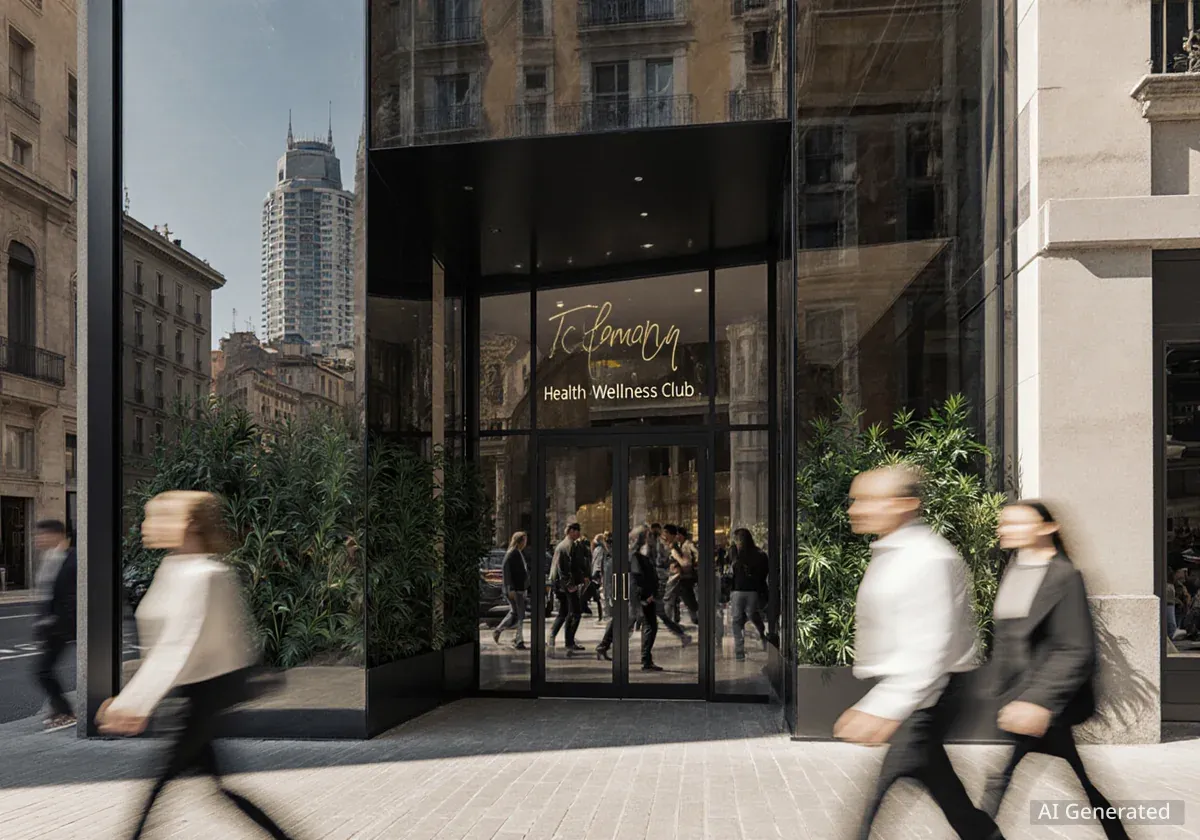

David Lloyd Leisure, Europe's largest health, fitness, and wellness group, has officially entered the Italian market by acquiring the prestigious Harbour Club Milano. This strategic move marks the company's expansion into its 11th country and underscores its ambition for continued growth across the continent.
The acquisition of the Milan-based club, located in the city's San Siro area, is part of a broader European expansion strategy for the UK-headquartered company. The facility will undergo a significant, multi-million-euro refurbishment to align it with the David Lloyd brand's premium standards before its official relaunch.
Key Takeaways
- David Lloyd Leisure has acquired Harbour Club Milano, marking its first entry into the Italian market.
- This expansion brings the company's presence to 11 countries and 134 clubs across Europe.
- A multi-million-euro investment is planned to upgrade the Milan facility's spa, gym, and family areas.
- The move is part of a wider growth strategy, which includes recent club openings in the UK and Spain.
- Italy is identified as a key growth market for the premium health and wellness sector.
Strategic Entry into a Key European Market
The acquisition of Harbour Club Milano provides David Lloyd Leisure with an immediate and significant foothold in Italy. Milan, as a major European hub for business and fashion, represents a prime location for the company's target demographic of affluent families and professionals.
According to company statements, the decision to enter Italy was driven by strong market potential for premium wellness services. The existing Harbour Club already boasts a strong reputation and a substantial membership base, providing a solid foundation for David Lloyd's launch.
The move is consistent with the company's long-term vision of becoming the leading wellness provider across Europe. This acquisition is not just about a single club; it is a clear signal of intent to explore further opportunities within the Italian peninsula.
Who is David Lloyd Leisure?
Founded in 1982, David Lloyd Leisure has grown to become the largest health and wellness group in Europe by revenue. The company operates 134 clubs, including 103 in the UK and 31 in mainland Europe. It employs approximately 8,000 people and serves over 750,000 members. The brand is known for its family-oriented, premium facilities that combine fitness, racquets sports, and leisure amenities.
A Multi-Million-Euro Refurbishment Plan
David Lloyd has committed to a significant capital investment to transform the Milan facility. The refurbishment project is designed to elevate the club's offerings to meet the high standards expected by members of its premium locations worldwide.
The planned upgrades will focus on several key areas:
- The Spa: A complete renovation will create a state-of-the-art spa retreat, featuring both indoor and outdoor facilities. This includes saunas, steam rooms, hydrotherapy pools, and relaxation zones.
- Fitness and Gym Facilities: The gym floor will be expanded and equipped with the latest fitness technology and equipment. New studios for group classes such as Blaze, Cyclone, and IGN1TE are also planned.
- Family and Children's Areas: A dedicated 'DL Kids' area will be developed, offering activities and facilities for younger members, a core component of the David Lloyd brand.
- Clubroom and Social Spaces: The club's social areas will be redesigned to create a comfortable environment for members to work, relax, and socialize.
This level of investment demonstrates the company's commitment to establishing a flagship location in Italy that will serve as a benchmark for potential future clubs in the country.
Club at a Glance: Harbour Club Milano
The facility is one of the largest of its kind in Italy, set within a four-hectare park. It currently features 17 tennis courts, a full-size football pitch, an Olympic-sized swimming pool, and extensive gym and spa facilities. The planned upgrades will further enhance its premium status.
Executive Vision for European Growth
Company leadership has been vocal about the importance of this expansion. Glenn Earlam, Executive Chairman of David Lloyd Leisure, highlighted the strategic value of the Italian market.
"The acquisition of the Harbour Club in Milan is a very exciting step for David Lloyd Leisure as we expand into our 11th country. Italy is a country we have been looking at for some time, and we are delighted to have found the perfect club to become our first in the country."
Earlam also emphasized the quality of the existing club and its potential. "The club is a perfect fit for the David Lloyd brand, and with the planned investment, we are confident it will become Milan’s leading family-friendly health and wellness club," he added.
This sentiment reflects a growth strategy that balances acquiring established, high-potential clubs with new-build projects. The company recently opened a new club in Bicester, UK, and another in Madrid, Spain, showcasing this dual approach to expansion.
The Broader Wellness Industry Context
David Lloyd's entry into Italy comes at a time of growing consumer demand for holistic health and wellness experiences. The post-pandemic era has seen a significant shift in consumer priorities, with a greater emphasis on physical and mental well-being.
The premium segment of the fitness market, in particular, has shown resilience and growth. Consumers are increasingly willing to pay for high-quality facilities, expert guidance, and a sense of community—all elements central to the David Lloyd model.
This trend is not limited to the UK. Across Europe, the wellness industry is expanding, creating opportunities for established brands like David Lloyd to leverage their expertise and reputation in new territories. The company's focus on racquet sports, spa facilities, and family activities allows it to appeal to a broader audience than traditional, gym-only operators.
By establishing a strong presence in Milan, David Lloyd is positioning itself to capitalize on these long-term consumer trends and build a sustainable business in one of Europe's most dynamic markets.