
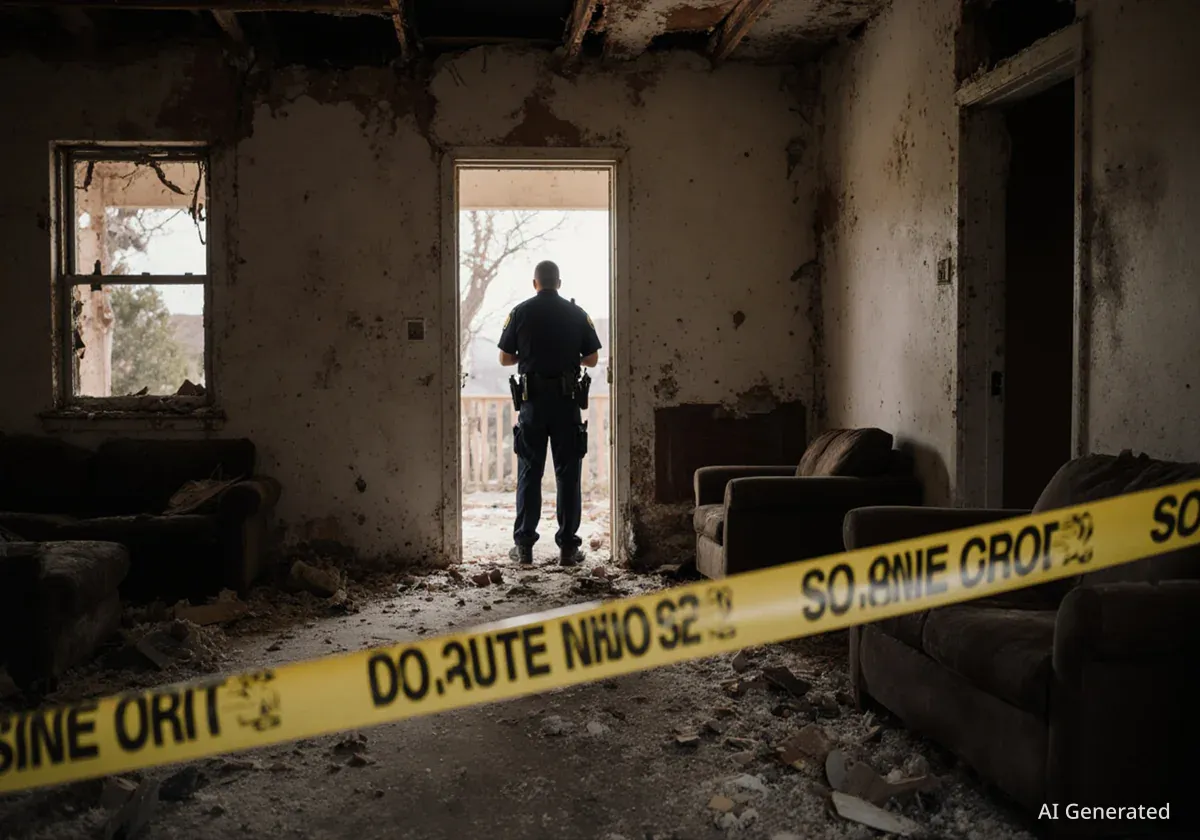
An alarming trend is taking hold across San Diego County, where organizers are breaking into vacant homes listed for sale and hosting large, pay-to-enter parties. These illegal events, often promoted through private social media groups, have resulted in significant property damage and growing frustration among homeowners and neighbors, while law enforcement officials grapple with the challenges of holding perpetrators accountable.
In just the past two months, more than a dozen such parties have been confirmed at properties from Otay Mesa to La Mesa. The San Diego Police Department is now escalating its response, forwarding cases against several organizers to city and district attorneys for potential prosecution.
Key Takeaways
- Organizers are illegally using vacant real estate listings to host parties, charging attendees a cover fee.
- Over a dozen such incidents have been confirmed in San Diego County since Christmas, with some properties hit multiple times.
- Property damage has reached as high as $250,000 in a single incident.
- Police face challenges with staffing shortages and legal hurdles in prosecuting trespassers, leading to few arrests on-site.
- Authorities are now building more detailed cases against organizers for potential prosecution by city and district attorneys.
A New Threat to Unoccupied Properties
For homeowners like Michael Sumber, the experience is both shocking and invasive. His late mother's home in the College Area, just two weeks from closing, was targeted by party promoters. He received a startling notification from his real estate agent that the property was being advertised online as a party venue.
"I got notified by my real estate agent that the property — my property — is advertised as a party house," Sumber explained. That evening, he watched as a stream of cars drove past, their occupants looking for the advertised event. Fortunately, a tip-off from another Realtor whose listing had been previously damaged allowed police to intervene before the party could start.
This incident is not isolated. The practice involves organizers scouting empty homes, forcing entry, and then using social media to draw crowds. Attendees, often unaware the event is illegal, are charged a cover at the door. The aftermath ranges from a significant mess to outright vandalism, leaving property owners with costly repairs.
A Coordinated Community Response
The real estate community has begun to organize its own defense. Realtors are sharing information about suspicious online advertisements, creating an informal neighborhood watch to protect listings. In Sumber's case, this network was crucial. He also took direct action, posting signs that read, "No party here, police on their way," to deter potential attendees.
A County-Wide Problem
These illegal parties are not confined to one neighborhood. Incidents have been reported across San Diego County, including in Otay Mesa, Skyline, Oak Park, Spring Valley, and several areas near San Diego State University. The widespread nature of the problem suggests a coordinated effort by multiple groups of organizers.
The Challenges Facing Law Enforcement
When police do arrive at these parties, their options are often limited. Angry neighbors have confronted officers after watching dozens of party-goers leave the scene without being arrested or cited. An officer explained the difficulty to one resident, stating, "We can’t pinpoint it to somebody. So all we can do is break it down and tell people to leave."
San Diego Police Lt. Cesar Jimenez acknowledged the community's concerns and the department's efforts to adapt. "It's affecting real people. So it's important for us to say, 'Hey, we hold people accountable for these kinds of things,'" he said.
However, several factors complicate the police response. Proving that attendees knew they were trespassing is a significant legal hurdle. Many claim they believed the organizer was the legitimate resident of the home.
"What they've told us is, 'I didn't know that this was, you know, a home up for sale. I thought the guy who put it up on Instagram, I thought this was his house,'" Lt. Jimenez reported.
Staffing Shortages Impact Response
Another critical issue is police staffing. A recent SDPD report from March 2 showed the department has only 1,822 of its 2,031 budgeted sworn officer positions filled. This shortage directly affects how calls are prioritized.
209: The number of vacant sworn officer positions at the San Diego Police Department as of early March, impacting the ability to respond to non-violent calls.
"Staffing plays a role in everything that we do," Lt. Jimenez confirmed. Life-threatening emergencies, or "Priority Zero calls," must take precedence. When only a few officers are available to handle a crowd of over 100 people, the primary goal becomes safely dispersing the crowd rather than making mass arrests.
Calls for Stronger Accountability
Legal experts argue that a lack of consequences will only encourage this criminal enterprise to grow. Former San Diego County District Attorney Paul Pfingst believes more assertive action is needed. "This won't stop until handcuffs come out, this won't stop until a jail door slams," Pfingst stated.
The potential for violence at these unregulated events is a serious concern. In 2024, a party at a vacant National City property ended in tragedy when five people were shot. A 12-year-old boy did not survive.
State Senator Tom Umberg, a former prosecutor, suggested that even if charges don't stick, issuing citations for trespassing would send a powerful message. "You would send a message, and most certainly their parents would know that they're attending illegal functions," Umberg said. "My expectation would be the parents would also intervene to stop this."
A Shift in Strategy
While on-the-spot arrests remain challenging, the San Diego Police Department is now focusing on building stronger cases against the organizers. Lt. Jimenez revealed that detectives are actively working on these investigations, which involve writing search warrants to trace social media activity and financial transactions from cover charges.
"We have one that's being evaluated by the district attorney's office and another one by the city attorney's office," Jimenez said. This signals a strategic shift from managing crowds to prosecuting the individuals responsible for orchestrating the events.
How Homeowners Can Protect Their Property
Law enforcement officials emphasize that property owners are the first line of defense. They recommend several proactive measures for those with vacant homes on the market:
- Install Security: Cameras and security systems can deter break-ins and provide crucial evidence.
- File a Letter of Agency: This document gives police permission to enter your property and arrest trespassers without you being present. This paperwork can be filed with the local police or sheriff's department.
- Post Signage: Clearly visible "No Trespassing" signs are a legal prerequisite for police action in some cases.
- Engage Neighbors: Ask trusted neighbors to keep an eye on the property and report any suspicious activity immediately.
As police build their cases against organizers, this combination of proactive homeowner security and community vigilance is seen as the most effective way to combat the growing problem of illegal parties in San Diego's vacant homes.