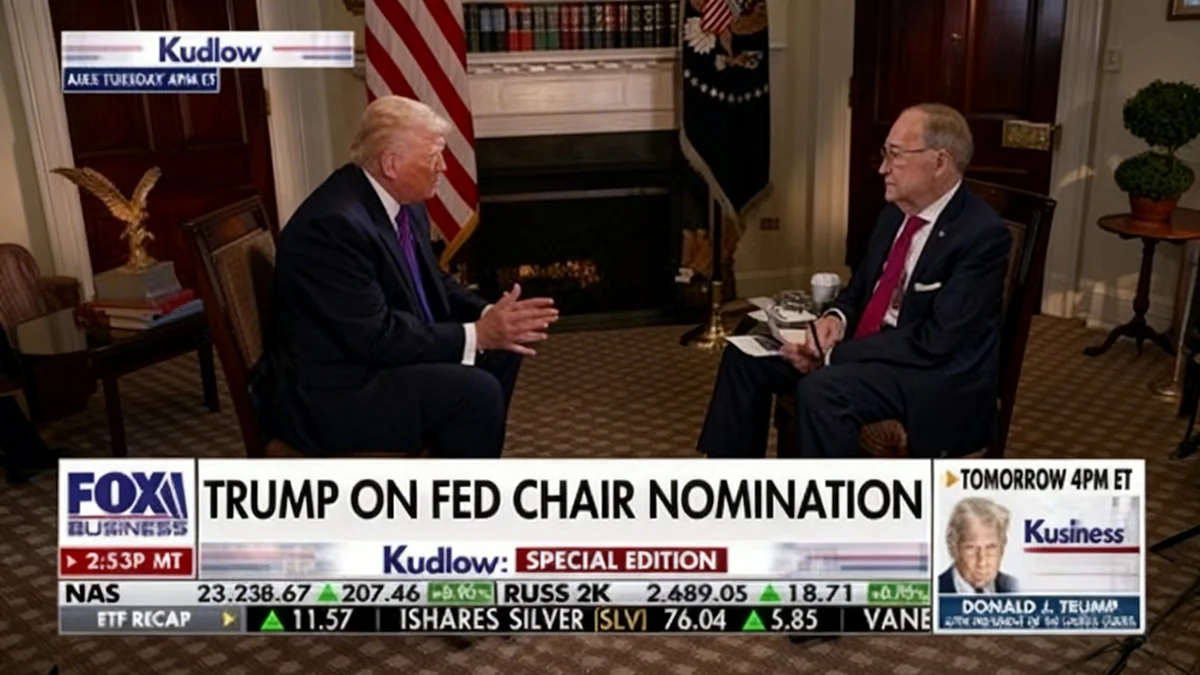
The Dow Jones Industrial Average has surpassed the historic 50,000 mark, a milestone met with celebration in some circles but viewed with caution by market experts. The achievement comes as American consumers face rising costs for everyday goods like gasoline and beef, creating a complex economic picture for the country.
President Donald Trump has lauded the market's performance, describing the current economic climate as the "greatest period we've ever seen." However, underlying data on consumer prices and upcoming inflation reports suggest a more nuanced reality for working families, with some analysts warning that the market's rally may not reflect the full story.
Key Takeaways
- The Dow Jones Industrial Average has officially passed the 50,000 threshold for the first time.
- President Trump celebrated the milestone, calling the U.S. the "hottest country in the world."
- Despite market highs, consumers are facing rising beef prices and anticipated fuel cost increases, particularly in California.
- Major corporations are adapting to the economic environment, with moves in energy, pharmaceuticals, and advertising.
- Market analysts remain divided, with some predicting further growth while others urge caution.
Market Euphoria Meets Consumer Reality
The financial world is buzzing after the Dow Jones Industrial Average, a key indicator of stock market health, climbed past 50,000. This record-breaking event has been championed by the Trump administration as definitive proof of a booming economy. President Trump stated, "We have the hottest country in the world," pointing to the market's performance as a primary indicator of national success.
This sentiment was echoed by former economic advisor Larry Kudlow, who expressed astonishment at the market's strength, calling the recent economic performance "almost impossible to believe." Analyst Peter Navarro suggested the rally is far from over, claiming there are "no resistance levels" to hold the market back.
However, this optimism is not shared universally. Other market experts caution that the headline number doesn't tell the whole story. One analyst noted, "We’re not out of the woods yet," indicating that upcoming jobs and inflation data will be critical in determining the economy's true direction.
Global Market Context
The Dow's rally is part of a broader global trend. Japan's Nikkei index has also seen a significant rally, indicating a widespread positive sentiment among international investors. This global upswing is contributing to the momentum seen in U.S. markets.
Pressure on Household Budgets
While investors celebrate, many American families are feeling the pinch from rising prices. The cost of beef has become a significant concern, impacting grocery bills across the nation. The administration is reportedly looking at overseas options to help stabilize domestic prices and provide relief to consumers.
The situation is particularly acute in California, where gas prices are expected to soar. The planned closure of a Valero refinery in the Bay Area is anticipated to tighten fuel supply, leading to higher costs at the pump for millions of drivers in the state.
This contrast between Wall Street's success and Main Street's struggles highlights the economic divergence currently at play. While stock portfolios grow, the cost of living continues to be a primary concern for the average household.
Corporate Strategies in a Shifting Landscape
American corporations are actively navigating this complex environment. In the energy sector, Montana is preparing to meet a surge in energy demand, with Senator Steve Daines criticizing policies like the Green New Deal as being inadequate for the state's needs. Meanwhile, a Texas-based CEO is promoting a new backup power solution that offers an alternative to expensive home batteries at a "fraction of the cost."
Focus on Domestic Production
A significant development in the materials sector is the announcement from US Antimony Corp. The company revealed a major joint venture to construct a new hydromet processing facility, a move aimed at bolstering domestic supply chains for critical minerals.
The housing market is also seeing innovation. The CEO of OpenDoor Technologies (OPEN) discussed the potential impact of AI on housing affordability, a key issue in many urban areas. This comes as the administration's "Trump Homes" plan continues to be a topic of discussion.
"We’re here to stay."
Even consumer brands are adjusting their strategies. Companies like Budweiser and Pepsi are reportedly shifting their Super Bowl advertising to feature more patriotic themes, aiming to reconnect with American consumers. This move suggests a broader corporate trend of aligning with national sentiment during a period of economic uncertainty.
Looking Ahead: Politics, Policy, and Prices
The economic landscape is intertwined with political and policy decisions. President Trump acknowledged a first-term misstep in his choice for Federal Reserve chairman, a decision that has long-term implications for monetary policy. This reflection comes as the administration navigates delicate negotiations, including high-stakes talks between President Trump and Israeli Prime Minister Netanyahu concerning the escalating conflict with Iran.
In the technology and finance sectors, major investments continue to signal confidence. One firm recently made headlines by purchasing Bitcoin-related stock worth $90 million, demonstrating a strong belief in the future of digital assets.
However, not all tech news is positive. An incident involving an Amazon delivery drone hitting an apartment building has raised new questions about the safety and regulation of automated delivery systems.
As the market digests the Dow's new record, the focus now shifts to upcoming economic data. Inflation reports will be closely watched to see if the market's heat is translating into unsustainable price growth for consumers. The balance between celebrating historic market highs and addressing the real-world financial pressures on Americans will be the defining challenge in the months ahead.