Deutsche Bank has officially identified its exposure to the struggling United States commercial real estate market as a “key risk” to its financial stability. In its latest annual report, the German banking giant warned that persistent challenges in the sector could lead to significantly higher-than-expected provisions for credit losses.
The announcement underscores growing concerns within the global financial system about the health of the commercial property market, which continues to grapple with the aftershocks of the pandemic and a high-interest-rate environment.
Key Takeaways
- Deutsche Bank's annual report designates its U.S. commercial real estate (CRE) portfolio as a significant financial risk.
- The bank anticipates potentially needing to set aside more money to cover loan losses due to instability in the sector.
- Specific concerns were raised about U.S. office properties, particularly those located on the West Coast.
- Difficulties with refinancing and uncertain price stabilization are the primary drivers of this risk assessment.
A Warning from a Banking Giant
In a clear signal to investors and markets, Deutsche Bank detailed its concerns in its annual report released Thursday. The bank stated that the risk of significant impairment remains high across various property types and geographical regions within the United States.
The core of the problem lies in the difficulty property owners face when trying to refinance their loans in the current economic climate. Compounded by uncertainty over when, or if, property values will stabilize, the situation creates a precarious outlook for lenders with significant exposure.
The report explicitly noted that these market conditions “could result in Deutsche Bank experiencing loan loss provisions higher than expected.”
This statement is a formal acknowledgment of a threat that has been looming over the financial sector for months. As one of Europe's largest banks, Deutsche Bank's public declaration highlights the systemic nature of the risk posed by the downturn in commercial real estate.
The Epicenter of Concern: US Office Space
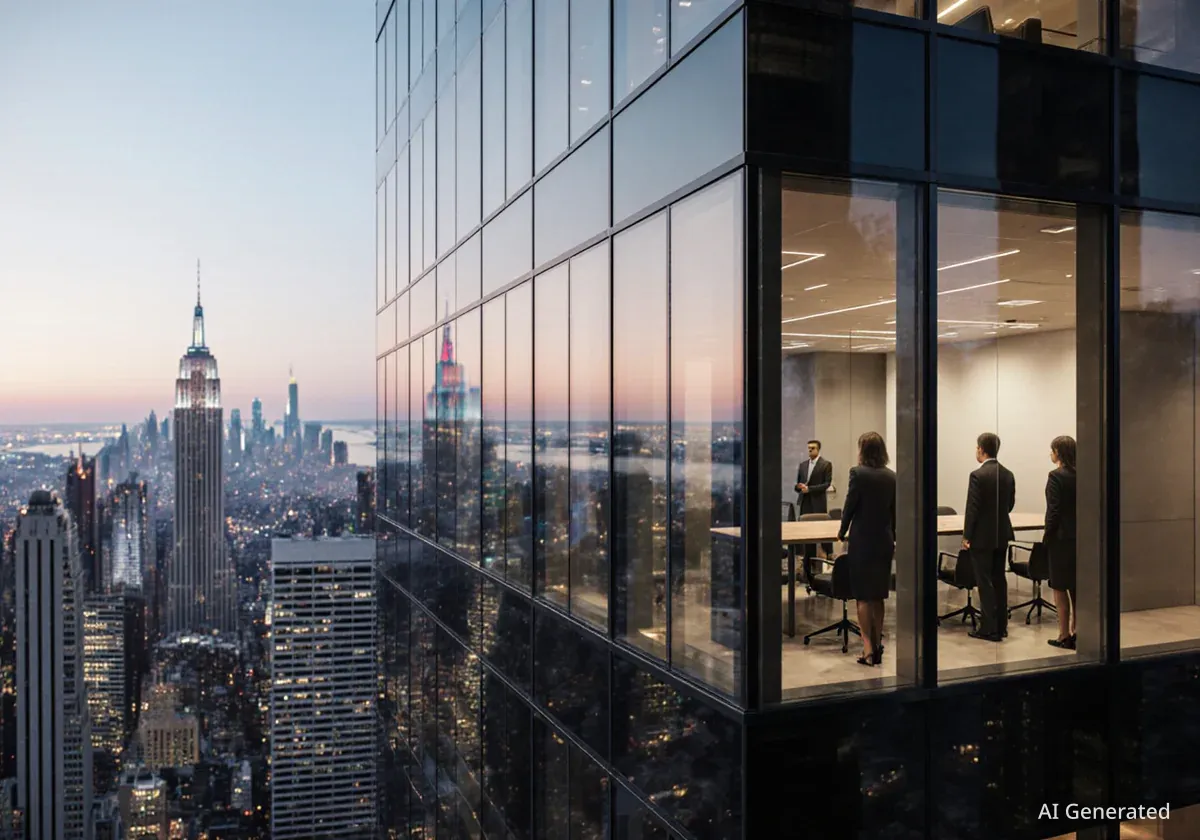
While the warning covers the broad commercial real estate market, the bank singled out one segment as particularly troublesome: U.S. office space. The report specifically mentioned properties on the West Coast, a region that has seen a dramatic shift in work culture.
The rise of remote and hybrid work models has led to record-high vacancy rates in major cities, depressing rental income and, consequently, the value of the buildings themselves. This trend has hit tech-heavy markets on the West Coast especially hard.
The Post-Pandemic Reality for Offices
Before 2020, prime office space in major U.S. cities was considered a stable, blue-chip investment. However, the global pandemic fundamentally altered work habits. Many companies have since downsized their physical footprints, leaving landlords with empty floors and diminishing cash flow. This has created a crisis for property owners who now struggle to make mortgage payments on devalued assets.
For banks like Deutsche Bank, this translates into a higher probability of loan defaults. When a borrower cannot pay, the bank is left with an asset that is worth significantly less than the value of the original loan, forcing it to absorb the loss.
Breaking Down the Risk Factors
The challenges facing the commercial real estate market are multifaceted. Several converging factors are creating a perfect storm for property owners and their lenders:
- High Interest Rates: Many commercial real estate loans taken out when rates were near zero are now coming due. Refinancing at today's higher rates means drastically increased monthly payments that current rental income often cannot support.
- Falling Property Values: With lower occupancy and demand, the market value of office buildings and other commercial properties has plummeted. This makes it difficult to secure new financing, as banks are unwilling to lend against a devalued asset.
- The 'Wall of Maturities': A significant volume of commercial real estate debt is scheduled to mature in the coming years. Analysts have warned of a "wall of maturities" that could trigger a wave of defaults if market conditions do not improve.
- Regional Disparities: As noted by Deutsche Bank, the pain is not evenly distributed. While some sun-belt cities have shown resilience, major coastal markets like San Francisco and New York have been severely impacted by office vacancies.
Broader Implications for the Financial Sector
Deutsche Bank is not alone in its exposure. Many regional and international banks hold substantial commercial real estate loan portfolios. The warning in its annual report serves as a bellwether for the entire industry, suggesting that other financial institutions are likely facing similar pressures.
A System-Wide Concern
Financial regulators in both the United States and Europe have been monitoring the commercial real estate sector closely. The concern is that a wave of defaults could put significant stress on the banking system, particularly smaller and mid-sized regional banks that have a higher concentration of these loans.
The potential for increased loan loss provisions means banks may have to hold more capital in reserve, which could, in turn, reduce their capacity for lending to other sectors of the economy. This creates a risk of a broader credit crunch that could slow economic growth.
For now, the market is watching closely to see how Deutsche Bank and its peers navigate this challenging environment. The bank's candid assessment in its annual report confirms that the turmoil in U.S. commercial real estate is no longer a distant threat but a present and significant risk to global financial players.