
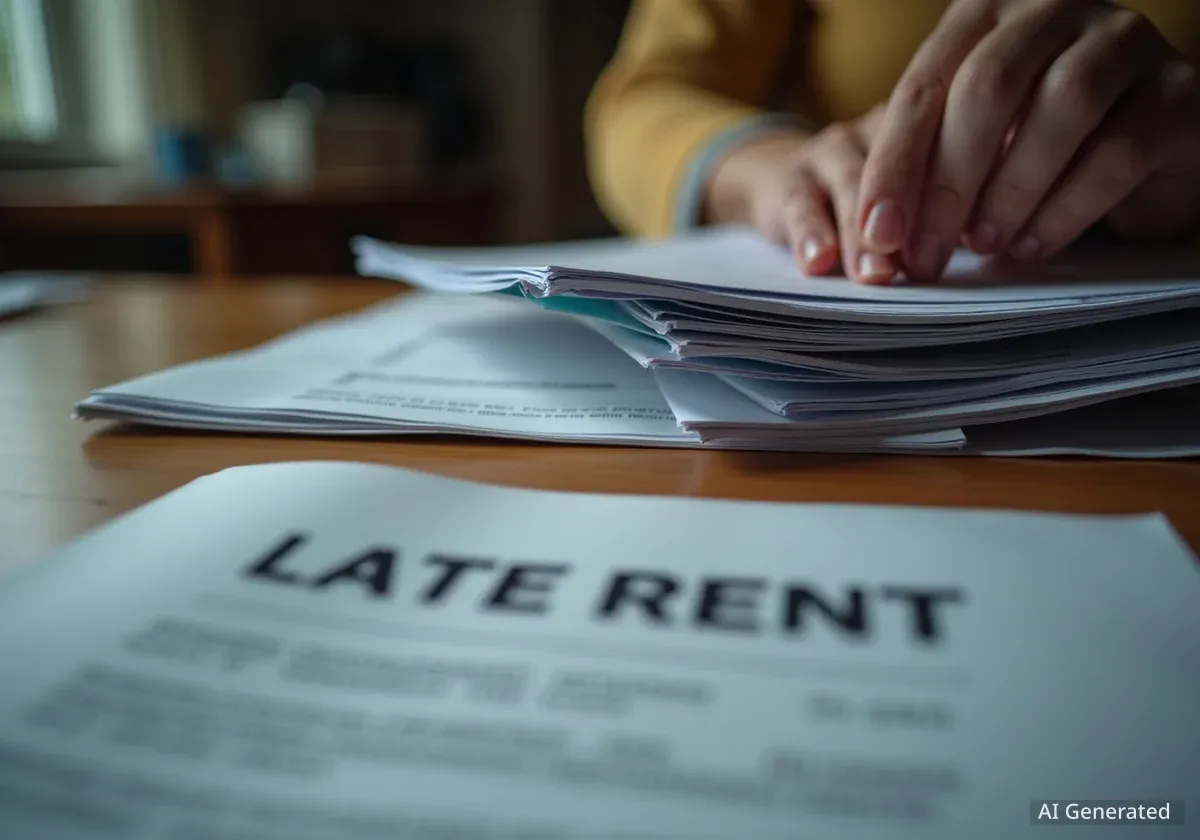
A Miami Township resident living on a fixed income is caught in a monthly cycle of late fees, highlighting a growing problem for renters whose Social Security payments arrive after their rent is due. Despite months of requests, his plea to adjust the payment date remains unanswered by property management.
James Simpson, who relies solely on Social Security retirement benefits, faces a recurring $100 penalty because his rent is due on the first of the month, while his check doesn't arrive until the second Wednesday. This timing mismatch is creating significant financial strain for him and others in similar situations.
Key Takeaways
- A local renter on Social Security is charged a $100 late fee each month because his rent due date precedes his benefit payment date.
- His request to adjust the due date by a few days has been pending with corporate property management for over three months.
- Legal experts note that while Ohio law doesn't mandate flexible due dates, tenants can and should negotiate these terms before signing a lease.
- The issue highlights a systemic challenge for a growing population of retirees and individuals on fixed incomes navigating a rigid rental market.
A Monthly Financial Squeeze
For James Simpson, every dollar counts. His monthly budget is carefully planned around his Social Security check, which covers all his essential expenses, including the rent for his Miami Township apartment.
However, a simple calendar misalignment has turned into a persistent financial burden. With his rent due on the first and his income arriving nearly two weeks later, a $100 late fee has become an unavoidable part of his monthly bills.
"My bills are paid through Social Security. That’s what pays the rent here in my apartment," Simpson explained. "That’s $100 that I could use for groceries, gas in my truck, just and to pay other bills."
The fee is not a one-time issue but a recurring penalty that chips away at his limited resources. Simpson has spent months trying to find a solution, hoping for a simple adjustment that would align his payment schedule with his income.
Stuck in Corporate Limbo
Simpson's efforts to resolve the problem have been met with frustrating delays. He has repeatedly communicated with his apartment's local management and ownership, requesting to have his due date moved to the second Wednesday of the month.
"I can’t seem to get answers. I feel like I’m getting a run around," he said, detailing a process that has dragged on for at least three months. He has been told his request was sent to the corporate "policy office," but has received no definitive answer.
When approached for comment, the manager at Simpson's complex declined to speak on camera, citing "privacy issues" regarding individual tenants. The manager stated that the property is required to make reasonable accommodations but confirmed that any request like Simpson's would "have to be sent up the chain."
What is a 'Reasonable Accommodation?'
Under fair housing laws, a reasonable accommodation is a change in rules, policies, practices, or services so that a person with a disability will have an equal opportunity to use and enjoy a dwelling. While often related to physical disabilities, arguments can be made for accommodations related to financial systems, though the legal interpretation can vary.
Navigating Renters' Rights in Ohio
Simpson's predicament raises important questions about the rights of tenants, especially those on fixed incomes. Is a landlord obligated to change a rent due date to accommodate a tenant's payment schedule? According to local legal expertise, the answer isn't straightforward.
Andrew Zeigler, a real estate lawyer with two decades of experience, clarified the legal framework in the state.
"Ohio law has some things you cannot put in a lease agreement, but nothing to do with due dates or anything like that," Zeigler said.
He explained that the rent due date is a contractual term that tenants agree to when they sign a lease. This makes it a point of negotiation from the outset, rather than a right guaranteed by law after the fact.
Negotiation is Key
According to legal experts, the most effective time to address payment schedules is before signing a lease. Once the agreement is signed, modifications depend entirely on the landlord's willingness to amend the contract.
However, Zeigler also suggested that Simpson's request is not excessive from a practical standpoint. "If it’s a simple fix of moving the due date past a couple weeks, I don’t see why that would be an unreasonable request by a tenant," he noted. The challenge often lies not with local managers but with rigid corporate policies that govern large property management firms.
A Broader Problem for Fixed-Income Households
While Simpson's story is personal, it reflects a systemic issue affecting millions of Americans. Many retirees, veterans, and individuals receiving disability benefits are paid on a fixed schedule set by the government, which often does not align with the first-of-the-month standard in the rental industry.
This disconnect can lead to a cycle of debt and housing instability for the most vulnerable populations. As large corporations increasingly own and manage apartment complexes, tenants often find it difficult to negotiate flexible terms that were once common with smaller, local landlords.
Steps Tenants Can Take
For renters facing a similar situation, experts advise taking proactive steps:
- Negotiate Upfront: Discuss your payment schedule with the landlord before signing the lease. Get any agreements on alternative due dates in writing as an addendum to the lease.
- Communicate in Writing: If you are already in a lease, submit your request for a due date change in writing. This creates a formal record of your communication.
- Reference Fair Housing: If your fixed income is due to a disability, you can frame your request as a "reasonable accommodation" to see if it prompts a different response.
- Seek Legal Aid: If you believe your rights are being violated, contact a local legal aid society or a tenant's rights organization for guidance.
For now, James Simpson continues to wait, hoping for a simple change that would provide significant financial relief. His goal remains modest but crucial for his stability.
"I just want the due date changed to where I don’t have to pay unnecessary late fees," he said.