Israel's housing market is showing clear signs of cooling, with home prices falling for the eighth consecutive period. The latest data reveals a 0.5% price drop in the September-October timeframe compared to the previous two months, contributing to an overall decline of approximately 2.6% over the last eight months.
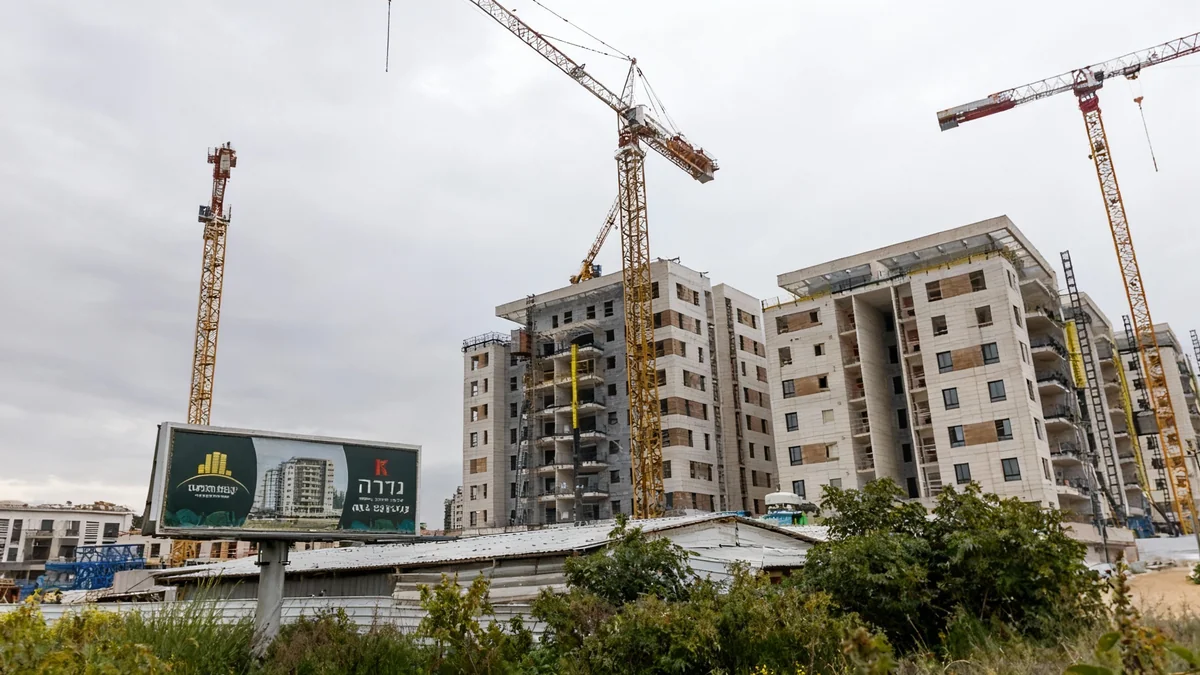
This sustained downturn has brought the annual price growth to a near standstill at just 0.1%, a significant slowdown from the 7.8% peak seen earlier in the year. A combination of high interest rates, geopolitical uncertainty, and a record supply of unsold new homes is contributing to the shift in market dynamics.
Key Takeaways
- Home prices in Israel have declined for eight consecutive measurement periods, falling 2.6% in total.
- The volume of apartment sales in October hit one of its lowest points since the year 2000, with a 12% year-over-year decline.
- High interest rates, a surplus of new housing, and a strong shekel are the primary factors driving the market slowdown.
- Major urban centers like Tel Aviv and the central district have seen annual price decreases, while Jerusalem has experienced price growth.
A Sustained Market Slowdown
The trend of falling home prices in Israel has become more pronounced in recent months. The 0.5% decrease recorded between September and October marks the eighth straight period of decline, according to the Central Bureau of Statistics. This consistent downward pressure has effectively erased the rapid gains seen previously, with the market's annual growth now hovering just above zero.
Several economic factors are behind this cooling trend. Elevated interest rates have made mortgages more expensive for potential buyers, reducing purchasing power. Simultaneously, the market is dealing with a significant inventory of unsold new properties, giving buyers more leverage. The ongoing multifront war, which began in October 2023, has also introduced a layer of uncertainty that has dampened market activity.
Economic Headwinds
Beyond local factors, the strength of the Israeli shekel, which has reached a multi-year high against the dollar at NIS 3.20, is also influencing the market. A stronger local currency makes Israeli property more expensive for overseas buyers, who have historically been a significant driver of demand, particularly in the luxury segment.
Sales Volume Hits Historic Lows
The slowdown is not just reflected in prices but also in the number of transactions. In October, only 4,518 apartments were sold across the country, representing a 12% decline from the same month a year ago. This figure is the lowest monthly total since November 2023 and stands as one of the slowest months for real estate deals since the turn of the century.
The decline in sales is widespread across different segments of the market. Sales of new apartments, including government-subsidized units, fell by 14% year-over-year to 1,917 units. The secondhand market also saw a significant drop, with 2,601 units sold—a 10% decrease compared to October 2024.
According to Finance Ministry data, investor activity has also waned. Investors purchased 759 apartments in October, a 15% decrease from the previous year, while sales by investors fell 14% to 768 apartments.
A Mixed Picture Across Regions
While the national trend points downward, the housing market's performance varies significantly by region. Major metropolitan areas that previously saw rapid appreciation are now leading the decline.
Tel Aviv and Central Israel See Price Drops
In the past 12 months, Tel Aviv has experienced a 2.9% decrease in home prices, while the surrounding central district saw a similar 2.7% decline. In the most recent reporting period of September-October, Tel Aviv prices fell by 1.1%, and prices in the central region dropped by 0.4%.
Jerusalem Bucks the National Trend
In contrast, Jerusalem's real estate market has remained resilient. The capital saw a 1.4% price increase in the last month and an impressive 8.9% rise over the past year. This divergence highlights localized demand and supply dynamics that set it apart from other major cities.
Other regions present a mixed but generally cooling picture:
- The North: Prices fell 0.2% recently but are up 5.5% over the past year.
- Haifa: Prices dropped 0.6% recently and are up 1.2% annually.
- The South: Experienced the sharpest recent drop of 2.1% but has seen a modest 0.5% annual gain.
On-the-Ground Market Snapshot
Recent transactions provide a tangible look at current property values in key cities. These sales, recorded in the past month, reflect the varied pricing across the country.
In Tel Aviv, a two-bedroom, 62-square-meter apartment on Ben Yehuda Street recently sold for NIS 4 million ($1,246,000). Meanwhile, a smaller three-bedroom unit of 56 square meters on HaHagana Street sold for NIS 2.35 million ($726,000).
In Jerusalem, a modern five-room (four-bedroom) apartment measuring 118 square meters sold for NIS 3.5 million ($1,090,000). A smaller four-room apartment of 90 square meters in the city sold for NIS 2.885 million ($898,000).
Prices in other cities are more moderate. In Beit Shemesh, a relatively new three-room (two-bedroom) apartment of 99 square meters sold for NIS 2.12 million ($657,000). In Haifa, a four-room apartment measuring 85 square meters sold for NIS 1.67 million ($513,000).
Rental Market Remains Active
As the sales market slows, the rental market continues to see activity. Current listings show a wide range of prices depending on location and amenities.
In Tel Aviv's Ramat Aviv Gimel neighborhood, a four-room apartment with a sea view is listed for NIS 11,500 ($3,047) per month. In Jerusalem, a large five-room garden apartment is available for NIS 10,000 ($2,648) per month. In Haifa, a similar-sized garden apartment in the Merkaz HaCarmel area is listed for a more modest NIS 4,500 ($1,191) per month, illustrating the significant cost-of-living differences between cities.