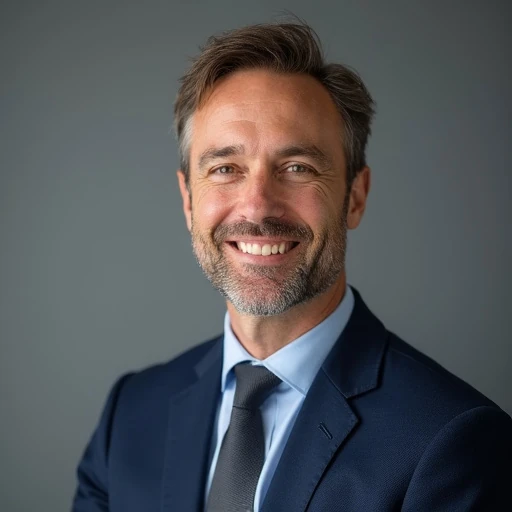

Fernando de Leon, the founder of Leon Capital Group who turned an initial $100,000 investment into a $10 billion real estate enterprise, is sounding a note of caution on the booming data center market. The investor, known for successfully navigating the 2008 financial crisis, is now sitting out while major private equity firms pour billions into the sector.
De Leon's strategy, which involves identifying market distress and understanding the sources of capital, has led him to question the long-term viability of current data center valuations. He points to several red flags, including the reluctance of major tech companies to own these assets themselves and the rapid obsolescence of the technology housed within them.
Key Takeaways
- Real estate investor Fernando de Leon, who anticipated the 2008 crisis, is avoiding the current data center investment boom.
- He questions why the world's largest tech companies are leasing data centers instead of owning the assets crucial to their AI operations.
- De Leon believes the rapid evolution of AI could make the technology inside data centers obsolete, undermining their long-term value.
- He expresses concern that pension funds are being exposed to high risk through private capital investments in this sector.
A History of Seeing Around Corners
Fernando de Leon's career is built on anticipating market shifts that others miss. In 2004, he started a residential lot development company, but just a year later, he saw troubling signs in subprime lending and overbuilding.
"We basically said, look, we see things here that are fundamentally unsound," De Leon explained. His response was to divest from those property positions, convert them to cash, and wait.
When the market collapsed between 2008 and 2012, his firm transitioned into a problem-solver for financial institutions. Leon Capital Group began working with banks and insurance companies to turn around stalled and problematic real estate projects, building a fortune while many others faced ruin.
This experience of identifying market euphoria shaped his decisions again during the pandemic. "In 2021, we sold a great deal, several billion dollars of real estate because prices were high, and that was a function of low interest rates and euphoria and bad incentives in the market," he said.
The Data Center Dilemma
Today, De Leon sees similar warning signs in the data center sector, a market attracting massive investment from firms like Blackstone and KKR. Despite the intense interest fueled by the artificial intelligence boom, he remains on the sidelines.
By The Numbers: Data Center Valuations
De Leon notes a significant discrepancy in the market. While some data centers are being valued at $10 billion, he points out that there have been no comparable sales, or "exits," above the $4 billion to $5 billion range, raising questions about current valuations.
His primary concern stems from a simple question he poses about the market's biggest players. The largest technology companies on the planet, for whom AI is a core business, are choosing not to own these critical assets.
"I don’t want to own this asset. I don’t want to have this on my balance sheet.' So I ask, Why? Why doesn’t the largest company in the world want to own its own asset?"
De Leon suggests the answer lies in the nature of the technology itself. The value of a data center is not in the physical building but in the sophisticated hardware inside. As AI is designed to make itself more efficient, the technology powering it could become obsolete far faster than traditional real estate assets depreciate.
Are Long-Term Leases an Illusion?
Many investors are banking on long-term leases of 15 to 20 years with major tech companies, known as hyperscalers. However, De Leon is skeptical, suspecting these agreements are what he calls "Swiss cheese" leases.
He believes these contracts may contain clauses and conditions that allow tech companies to adapt or exit the agreements as technology evolves, leaving building owners with an outdated and potentially worthless asset.
Who Is Funding the Boom?
A significant concern for De Leon is the source of the capital flowing into data centers. He highlights that large private capital investors manage money from pension funds for teachers, police officers, and firefighters. "When they say, ‘I’m going to own this asset and lease it back to one of the hyperscalers,’ they’re putting other people’s money at risk," he stated, questioning if the risk aligns with the fiduciary duty owed to pensioners.
An Unconventional Path to Insight
De Leon's analytical approach is rooted in an unusual academic background for a real estate titan: a degree in evolutionary biology from Harvard. He credits this field of study with helping him understand the human element of business.
"It was prescient. I mean, it turned out to help me make decisions about organizing companies and leadership, building businesses," De Leon said. "Basic commercial interaction between human beings is about incentives."
This perspective allows him to analyze market dynamics from a sociological standpoint, identifying the motivations and advantages of established players in any industry. This insight, he says, helps him see opportunities and risks that others might overlook.
His career in real estate began as a teenager, working as a translator for a developer in Texas. Instead of a salary, he negotiated for equity in a project, setting the stage for his future as an investor.
The Future of Real Estate Capital
Despite his caution on specific sectors like data centers, De Leon is optimistic about the broader commercial real estate market over the next decade. He sees a massive influx of new capital coming from wealth firms, family offices, and sovereign wealth funds.
"When the allocations to real estate go from 3% to 6%, that number means that there’s like $4 trillion more of capital that is chasing a finite number of real estate assets," he explained.
He predicts this oversupply of capital will lead to significant price appreciation for what he terms "fundamentally sound real estate assets." In his view, the story of the next ten years will be a tenfold growth in the real estate capital markets, creating new opportunities for discerning investors who can separate hype from sustainable value.