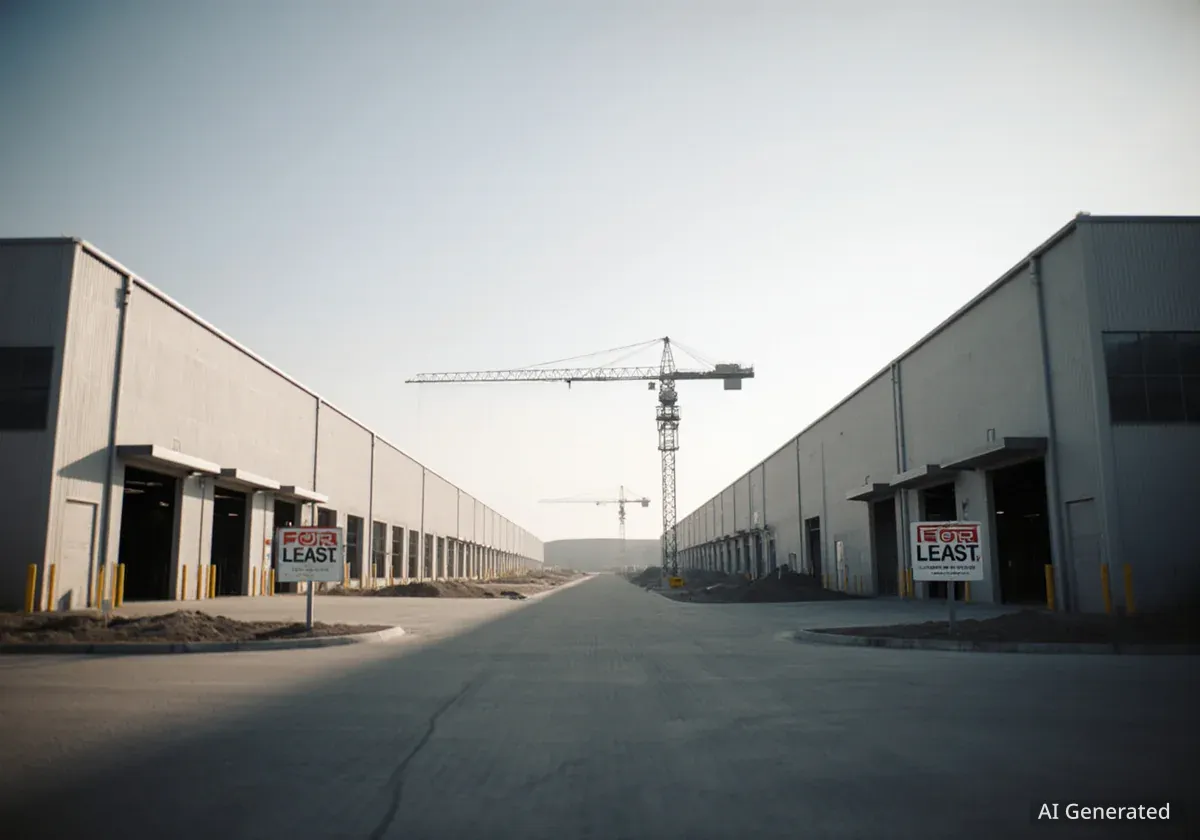
Austin's industrial real estate market is currently navigating a challenging period marked by elevated vacancy rates and a significant slowdown in new construction. Despite these headwinds, many industry experts and brokers express a strong sense of optimism, pointing to the city's robust long-term growth prospects and shifting economic landscape as key drivers for a future rebound.
This apparent contradiction paints a complex picture of a market in transition. While the surge in development during the pandemic has led to a temporary oversupply of space, underlying demand from diverse sectors suggests that the current downturn may be a short-term correction rather than a long-term trend.
Key Takeaways
- Austin's industrial market is experiencing higher-than-average vacancy rates following a period of intense construction.
- The pace of new industrial development has slowed considerably as developers react to current market conditions.
- Despite the current challenges, real estate brokers and market analysts remain optimistic about the sector's long-term health.
- Factors like population growth, a strong manufacturing base, and diversification of the local economy are expected to fuel future demand.
A Market in Correction
The current state of Austin's industrial market is a direct result of the unprecedented boom seen over the past few years. Fueled by the e-commerce explosion and a rush to secure supply chain stability, developers moved quickly to build new warehouse and logistics facilities across the region. This rapid expansion, however, has outpaced immediate absorption, leading to a surplus of available space.
Data from the second quarter of 2024 shows industrial vacancy rates hovering near 10.5%, a notable increase from the sub-5% levels seen just two years ago. This has put downward pressure on rental rates in some submarkets and increased competition among landlords to secure tenants.
By the Numbers
Market analysts report that nearly 15 million square feet of new industrial space was delivered in the Austin metropolitan area over the past 24 months, while net absorption has lagged, creating the current supply-demand imbalance.
Construction Grinds to a Halt
In response to the rising vacancies, the pipeline for new construction has slowed dramatically. Developers are now taking a more cautious approach, with many projects being postponed or redesigned. The number of new construction starts in the first half of 2024 is down by over 60% compared to the same period in 2022.
This slowdown is seen by many as a necessary and healthy market correction. It allows time for the existing inventory to be absorbed before new supply is added, preventing a more severe and prolonged downturn. According to one local developer, "We are in a digestive phase. The market needs to absorb the huge volume of speculative space that came online. The pause in new building is exactly what's needed to restore equilibrium."
The Case for Long-Term Optimism
Despite the short-term statistical challenges, the mood among Austin's industrial real estate professionals is far from grim. The consensus is that the city's fundamental economic drivers remain exceptionally strong, providing a solid foundation for future growth.
Brokers point to several key factors that underpin their positive outlook. The continued influx of companies and people to Central Texas, the region's burgeoning manufacturing sector, and its strategic location as a logistics hub are all expected to fuel sustained demand for industrial space for years to come.
What is "Speculative Building"?
Speculative building, or "spec space," refers to the construction of commercial properties without a tenant secured in advance. Developers build these facilities based on the expectation (or speculation) that demand will exist upon completion. This strategy was prevalent in Austin's recent boom.
Diversifying Demand Drivers
While e-commerce was the primary driver of the recent construction boom, the future of Austin's industrial market is expected to be more diverse. Key sectors poised to absorb space include:
- Advanced Manufacturing: The growth of semiconductor, electric vehicle, and other high-tech manufacturing facilities in the region creates a strong need for supplier warehouses and distribution centers.
- Data Centers: As a major tech hub, Austin is seeing increased demand for data center facilities, which fall under the industrial property category.
- Cold Storage: The area's growing population and thriving grocery and restaurant scene are driving demand for refrigerated and frozen storage facilities.
- Last-Mile Logistics: Even with a slowdown in broad e-commerce growth, the need for smaller, well-located facilities to serve the dense urban population remains high.
"We're seeing a flight to quality," noted a senior broker with a major commercial real estate firm. "The newer, Class A buildings with modern amenities are still leasing well. The challenge is with older, less functional properties. The long-term story for Austin is still incredibly compelling."
Navigating the Path Forward
The immediate future for Austin's industrial market involves a period of adjustment. Landlords may need to offer more flexible lease terms and concessions to attract tenants in the competitive environment. For businesses looking to lease space, this presents a significant opportunity to secure favorable terms in high-quality buildings.
The construction slowdown is expected to last for another 12 to 18 months, which should allow vacancy rates to stabilize and begin to decline as demand catches up with supply. Market analysts project that by late 2025, the market will return to a more balanced state.
Ultimately, the current challenges are viewed as growing pains for a market that has experienced explosive expansion. The underlying economic strength and diversification of Austin's economy provide a robust safety net, leading industry insiders to believe that the industrial sector is not down, but simply reloading for its next phase of growth.