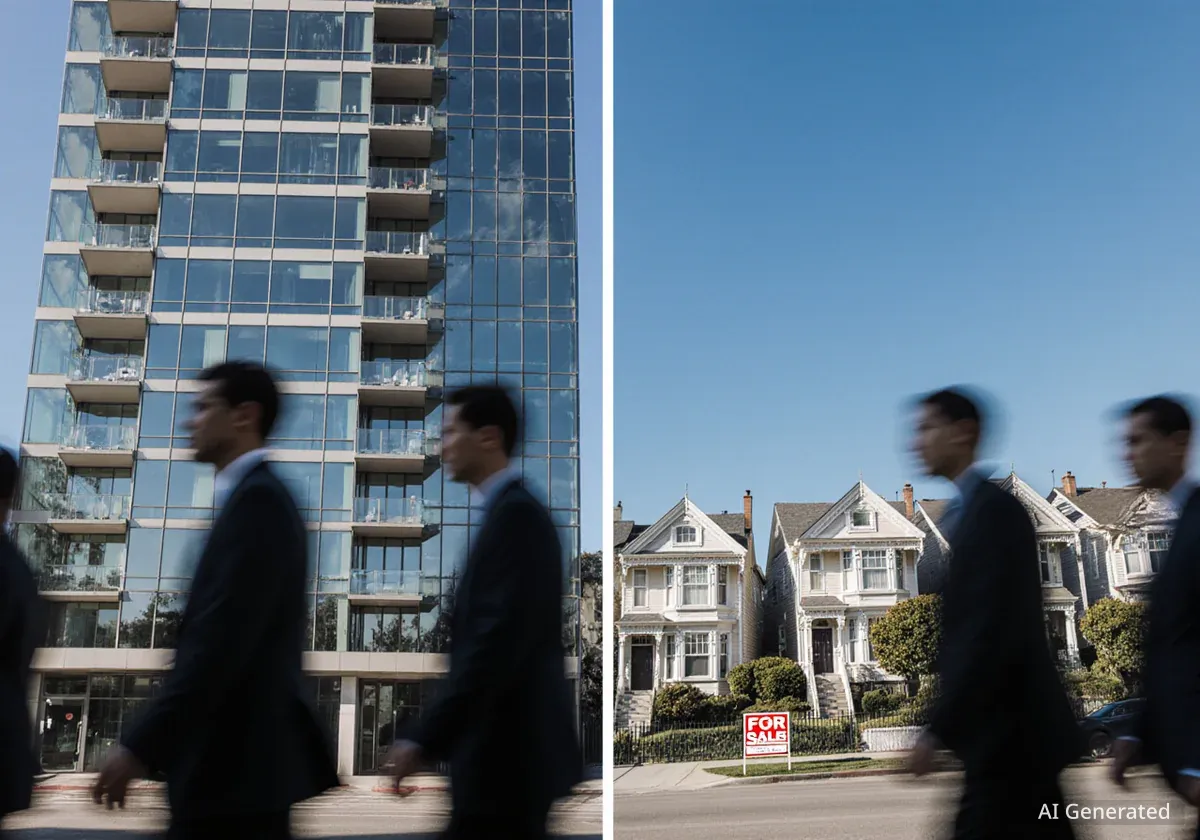
The Bay Area housing market experienced a significant cooling in 2025, with most areas seeing a notable drop in home values. However, a handful of exclusive ZIP codes, primarily located in San Francisco and San Mateo County, bucked this trend, posting value increases fueled by a surge in wealth from the artificial intelligence sector.
While high mortgage rates and economic uncertainty pushed many prospective buyers to the sidelines, a new class of affluent tech professionals has emerged, creating a starkly divided real estate landscape across the region. This divergence highlights a market increasingly accessible only to the wealthiest individuals.
Key Takeaways
- Overall Bay Area home values declined by an average of 5% in 2025, but select ZIP codes in San Francisco and San Mateo saw increases.
- The 94123 ZIP code, including the Marina and Cow Hollow, saw home values climb 3% year-over-year.
- The artificial intelligence boom is credited with creating a new wave of cash-rich buyers, driving up prices in luxury neighborhoods.
- Conversely, areas like Oakland, Richmond, and San Jose experienced significant price drops, some exceeding 10%, partly due to layoffs in the traditional tech sector.
- High mortgage rates have effectively priced out many first-time and middle-income buyers, leaving the market to existing homeowners and the newly wealthy.
A Region Divided by Technology and Wealth
The Bay Area's real estate market presented a tale of two vastly different realities in 2025. Data from December 2024 to December 2025 reveals that while the average ZIP code saw a 5% decline in home values, a select few affluent communities moved in the opposite direction. These pockets of growth were almost exclusively found in San Francisco and San Mateo counties.
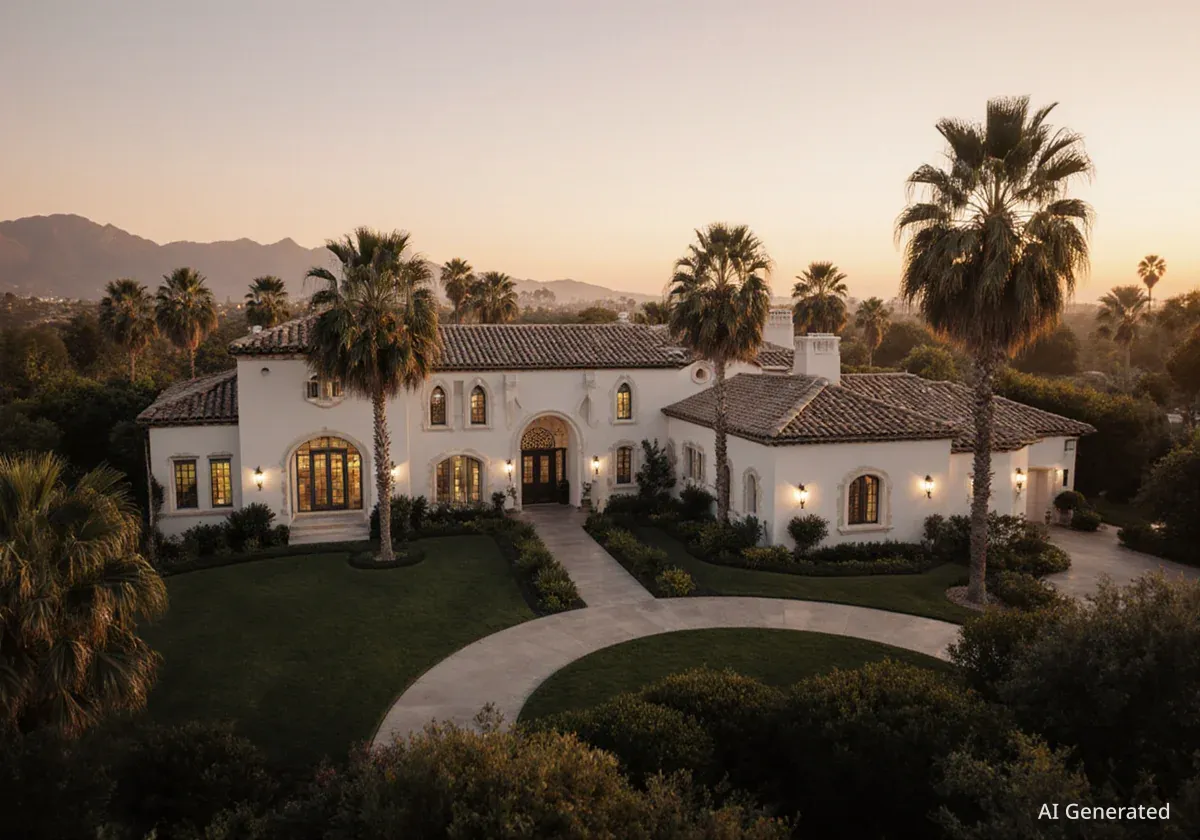
Neighborhoods such as San Francisco's Marina and Cow Hollow (ZIP code 94123) experienced a 3% year-over-year increase in home values after adjusting for inflation. This resilience is mirrored in other wealthy enclaves like Atherton and Portola Valley, where demand for high-end properties remains robust.
Real estate agents on the ground report a clear shift in the buyer profile. The market is no longer driven by a broad base of aspiring homeowners. Instead, it is dominated by existing homeowners with significant equity or newly wealthy engineers from the booming AI industry who can make all-cash offers or afford substantial down payments.
The Impact of High Interest Rates
Elevated mortgage rates throughout 2025 created a significant barrier for many potential buyers. This financial pressure reduced overall competition but also concentrated market activity at the highest end, where buyers are less sensitive to interest rate fluctuations.
The AI Boom's Concentrated Impact
The driving force behind the appreciation in San Francisco and the Peninsula appears to be the explosive growth of artificial intelligence. As AI companies have flourished, they have generated immense wealth for a new cohort of tech professionals, who are now investing that capital into local real estate.
This phenomenon is creating a hyper-localized boom. An agent familiar with the San Francisco market noted, "The people shopping right now are either existing homeowners using their equity or the AI engineers with cash. They are targeting luxury, move-in-ready properties, and that's where we're seeing prices hold or even increase."
This contrasts sharply with the broader market. Properties that require renovations, such as a new roof or updated wiring, are reportedly struggling to find buyers. This indicates a market where only the most desirable homes are attracting the limited pool of active, high-net-worth buyers.
While San Francisco and San Mateo saw isolated price growth, home values in some East Bay ZIP codes, including parts of Oakland, Richmond, and Pleasanton, have dropped by more than 10% over the past year.
South Bay and East Bay Face Headwinds
While AI is lifting fortunes in San Francisco, it may be contributing to the cooling of other regional markets. The South Bay, particularly San Jose, has seen its housing market sputter. This area's economy is heavily reliant on the traditional tech industry, which has faced significant layoffs over the past year.
Some companies have explicitly cited the rise of AI as a factor in their workforce reductions. This has created economic uncertainty that has dampened housing demand in tech-centric hubs like San Jose and Fremont, both of which saw home values decline in 2025.
Despite the recent cooling, it's crucial to maintain perspective. Home prices in the South Bay remain significantly higher than pre-pandemic levels. The typical home value in San Jose was approximately $1.38 million in December 2025, which is still 16% higher than its December 2019 value after adjusting for inflation.
"Even with the recent slowdown, housing supply across the Bay Area remains incredibly tight. The fundamental challenge of a lack of inventory hasn't gone away, which keeps a floor under prices even in a cooler market."
A Changed Market Landscape
The current market dynamics paint a clear picture of a region grappling with economic shifts. The days of widespread, rapid appreciation fueled by low interest rates are over. In its place is a more fragmented and challenging market.
Key Market Characteristics in 2025:
- Reduced Buyer Pool: High mortgage rates and affordability issues have pushed many first-time buyers out of the market.
- Cash is King: Buyers with significant cash reserves, often from AI-related wealth, have a distinct advantage.
- Flight to Quality: Well-maintained, luxury homes in desirable neighborhoods are performing well, while properties needing work are languishing.
- Geographic Divergence: A clear split has emerged between AI-centric hubs like San Francisco and traditional tech centers like San Jose.
Interestingly, despite the recent price increases in some neighborhoods, overall home values in San Francisco and San Mateo remain below their pre-pandemic peaks. As of December 2025, San Francisco values were still down by about 22% and San Mateo's by 7% compared to 2019, indicating that the recent AI-driven recovery is still in its early stages and has not yet offset previous declines.
Looking ahead, the Bay Area's housing market will likely remain a complex and divided landscape. The fortunes of specific neighborhoods will be closely tied to the performance of different sectors within the tech industry, creating pockets of intense competition amidst a broader regional cooldown.