For nearly five decades, entrepreneur Richard Branson has been methodically transforming a collection of private islands in the British Virgin Islands into a powerful and exclusive real estate portfolio. What began with a single speculative purchase in the 1970s has evolved into a multi-island hospitality enterprise, demonstrating a long-term strategy that blends personal lifestyle, brand building, and sustainable development.
With a personal net worth estimated at $2.8 billion, the Virgin Group founder has leveraged his Caribbean holdings to anchor an ultra-luxury travel and lifestyle brand. The islands serve not just as private getaways but as high-yield, revenue-generating assets that showcase a unique model of real estate development.
Key Takeaways
- Richard Branson's real estate journey in the British Virgin Islands began in the 1970s with the purchase of Necker Island for $180,000.
- The portfolio has expanded to include Moskito Island, which employs a different development model focused on a community of ultra-wealthy homeowners.
- Sustainability is a core component of the strategy, with significant investments in wind and solar power following natural disasters.
- The islands are key assets under the Virgin Limited Edition hospitality brand, with rental rates often exceeding $100,000 per night.
The Origin Story: Necker Island
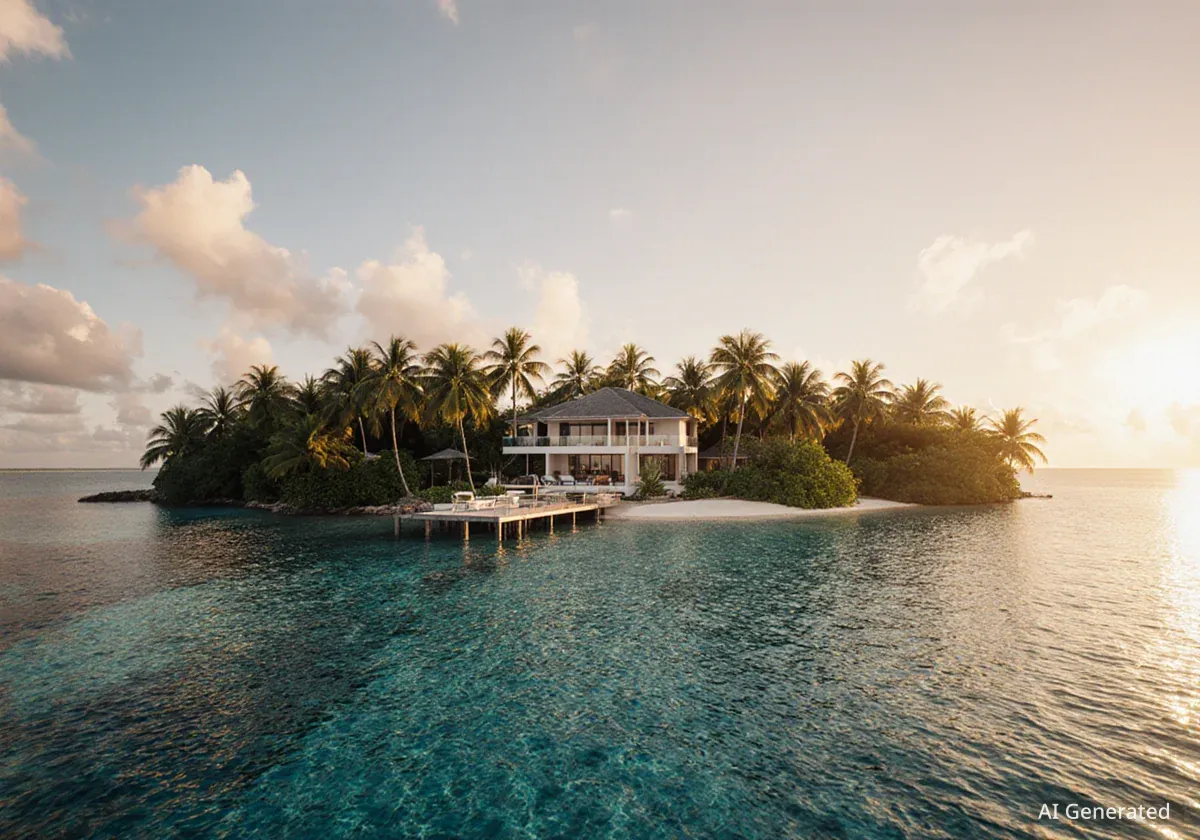
The foundation of Richard Branson's property empire was laid in the late 1970s with the acquisition of Necker Island. The then-uninhabited 74-acre island was purchased for $180,000, a move initially made to impress his future wife, Joan Templeman.
For years, the island served primarily as a private family retreat. However, over time, it was transformed into the flagship property of Virgin Limited Edition, Branson's collection of luxury hotels and retreats. This pivot turned a personal asset into a significant commercial enterprise.
Today, Necker Island operates as an exclusive resort. It features a main Great House built in a Balinese style and ten smaller private estates scattered across the landscape. The island is available for private buyouts, with rates beginning at approximately $100,000 per night. Weekly rentals frequently surpass the $1 million mark, highlighting its status as a premier destination for the world's wealthiest individuals.
From Private Retreat to Commercial Powerhouse
The transition of Necker Island from a personal home to a commercial hospitality venture is a key element of Branson's strategy. By integrating the property into the Virgin brand, he created a halo effect, using the island's exclusivity and his personal connection to it as powerful marketing tools for his broader travel and leisure businesses.
Resilience, Rebuilding, and Sustainability
The history of Necker Island has not been without significant challenges. A major fire in 2011, caused by a lightning strike, destroyed the Great House. Six years later, in 2017, Hurricane Irma devastated the island, causing widespread destruction to its buildings and ecosystem.
Rather than viewing these events as mere setbacks, Branson used them as opportunities to rebuild and modernize. The reconstruction efforts focused heavily on creating a more resilient and sustainable infrastructure. This strategic reinvestment was critical to securing the island's long-term value.
Following the hurricane, Necker Island was rebuilt with a strong emphasis on renewable energy. The property now operates largely on power generated by wind turbines and a large solar farm, significantly reducing its carbon footprint and operational costs.
This commitment to sustainability has become a central part of the island's identity. In an investment climate increasingly focused on environmental, social, and governance (ESG) criteria, this eco-conscious approach has likely increased the asset's overall valuation and appeal to a modern clientele.
Expansion and a New Model: Moskito Island
In 2007, Branson expanded his footprint in the British Virgin Islands with the purchase of the nearby 125-acre Moskito Island for a reported $13.2 million. This acquisition marked an evolution in his real estate development strategy.
Unlike Necker, which is primarily a single-entity resort, Moskito Island was developed as a community for a select group of ultra-high-net-worth individuals. Branson's company developed the island's core infrastructure, including roads, utilities, and communal recreational areas. Following this, private plots were made available for other owners to build their own bespoke estates.
"The model for Moskito Island is different. It's about creating a community where owners share the costs of infrastructure while enjoying their own private sanctuary."
This approach created a unique real estate ecosystem. It allows for shared operational costs while maintaining extreme privacy and exclusivity for each homeowner. Branson himself owns a personal compound on the island, which, like other estates, is available for rent through Virgin Limited Edition when not in use by the owner.
The financial success of this model is evident. In 2024, the final home built on the island, known as The Aerie, was listed for sale at $58 million. This price point demonstrates the immense value created through the island's curated development.
The Branson Blueprint: Brand, Lifestyle, and Legacy
The British Virgin Islands properties are more than just real estate; they are the physical embodiment of the Virgin brand's lifestyle-oriented ethos. Branson has consistently used these assets as backdrops for major brand announcements, media events, and as perks for his various ventures, from aviation to space travel.
This strategy extends beyond the Caribbean. His Son Bunyola estate in Mallorca, Spain, follows a similar model of transforming a unique property into a luxury hospitality destination under the Virgin Limited Edition banner. This consistent approach reinforces the brand's association with exclusivity, adventure, and a distinct lifestyle.
As Branson continues to focus on travel and hospitality, particularly with the growth of his cruise line, Virgin Voyages, the BVI holdings remain the crown jewels of his empire. They serve as a powerful lesson in real estate investment: the highest returns often come not just from building structures, but from curating an entire world and a desirable way of life around them.