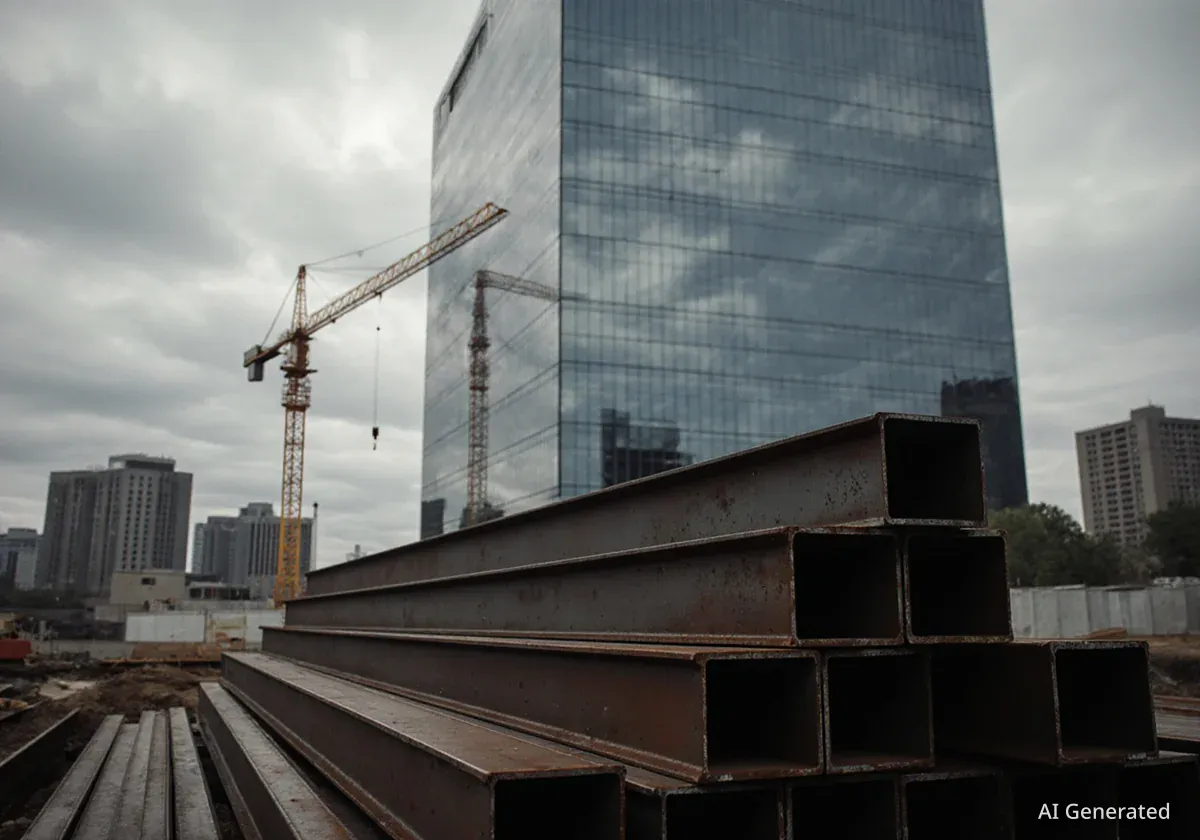
Jacksonville's once-booming commercial real estate market is entering a new phase of stabilization. Recent indicators point to a slowdown in new construction and a leveling-off of vacancy rates across several key sectors, signaling a shift from rapid expansion to a more measured pace of growth.
While the broader market adjusts to changing economic conditions, one area continues to demonstrate remarkable resilience. The industrial and logistics sector is bucking the general trend, maintaining strong momentum and continuing its expansionary path, driven by persistent demand for warehousing and distribution facilities.
Key Takeaways
- Overall construction activity in Jacksonville's commercial property market is slowing down after a period of intense growth.
- Vacancy rates, particularly in the office and retail sectors, are beginning to stabilize, indicating a market adjustment.
- The industrial and logistics sector remains a powerful outlier, continuing to expand and attract investment.
- This divergence highlights a two-speed market, with industrial properties outperforming other commercial asset classes.
A Broader Market Correction
After several years of vigorous development, the Jacksonville commercial real estate landscape is showing clear signs of a cooldown. The frenetic pace of new construction projects breaking ground has noticeably decreased. This slowdown is not isolated to one specific area but is being observed across multiple segments, including office buildings and retail centers.
Developers appear to be taking a more cautious approach, likely influenced by higher interest rates and economic uncertainty. This shift is leading to a stabilization in the market's supply-demand dynamics. For tenants and investors, this change could mean fewer new options but potentially more predictable market conditions in the months ahead.
The Post-Pandemic Adjustment
The current market shift can be seen as a natural correction following the accelerated growth seen during the pandemic. Changes in work habits have impacted the office sector, while evolving consumer behavior has reshaped the needs of the retail market. The current stabilization reflects the market finding its new equilibrium.
Vacancy Rates Find Their Footing
Alongside the slowdown in construction, vacancy rates are also beginning to level off. After a period of fluctuation, the availability of commercial space is becoming more consistent. This stabilization suggests that the market is absorbing existing inventory without the pressure of a massive influx of new properties.
For property owners, this trend could bring a welcome sense of predictability, making it easier to forecast occupancy and revenue. For businesses seeking space, it indicates that while the market is no longer in a state of rapid flux, competition for prime locations remains a key consideration.
Market stabilization is often a sign of maturity. A market that can absorb existing space and slow down new construction without a sharp increase in vacancies is generally considered healthy and resilient.
The Industrial Sector: An Engine of Growth
In stark contrast to the general trend, Jacksonville's industrial real estate sector continues to thrive. This segment, encompassing warehouses, distribution centers, and light manufacturing facilities, remains firmly in expansion mode. The demand for modern logistics space near major transportation hubs like the Port of Jacksonville continues to fuel new development and investment.
Several factors are contributing to this sector's robust performance:
- E-commerce Growth: The sustained rise of online shopping requires a sophisticated network of fulfillment and last-mile delivery centers.
- Port Activity: As a major East Coast port, JAXPORT drives significant demand for warehousing and distribution services to handle imported and exported goods.
- Population Growth: Northeast Florida's growing population increases the need for goods to be stored and distributed locally, further boosting demand for industrial space.
Investors continue to show strong confidence in Jacksonville's industrial market, viewing it as a reliable asset class even amid broader economic uncertainty. This sustained interest is ensuring that the pipeline for new industrial projects remains active, unlike in other commercial sectors.
What This Means for Jacksonville's Economy
A Tale of Two Markets
The current situation paints a picture of a dual-speed commercial real estate market in Jacksonville. On one hand, the office and retail sectors are adjusting to new realities and entering a period of stabilization. On the other hand, the industrial sector is still experiencing a boom, driven by fundamental shifts in commerce and logistics.
This divergence underscores the evolving nature of the local economy. While traditional commercial properties are finding a new balance, the infrastructure supporting trade and logistics has become a primary driver of growth and development in the region.
"The resilience of the industrial market in Jacksonville is a testament to the city's strategic importance as a logistics hub. While other sectors pause to recalibrate, the demand for warehousing and distribution facilities shows no signs of slowing down."
This ongoing expansion in the industrial sector is a positive indicator for local employment and economic activity. Each new warehouse or distribution center brings jobs in construction, logistics, and management, contributing to the region's overall economic health.
Looking ahead, market watchers will be closely observing whether the stability in the office and retail sectors holds firm and how long the industrial sector can maintain its powerful growth trajectory. For now, Jacksonville's commercial landscape is a clear example of adaptation and resilience in a changing economic environment.