A decade-old attempt to orchestrate a major real estate transaction in downtown Detroit involved an approach to the late financier Jeffrey Epstein for assistance, new information reveals. The deal, which centered on a prominent city skyscraper, ultimately failed to materialize, but the connection sheds light on the high-stakes networking that occurred during a pivotal time in the city's economic recovery.
Key Takeaways
- Financier Jeffrey Epstein was reportedly approached for help regarding a significant real estate deal in downtown Detroit about ten years ago.
- The proposed transaction involved the historic Buhl Building, located at 535 Griswold Street.
- Despite the high-level approach, the deal never progressed and ultimately collapsed for undisclosed reasons.
- This event took place during a period of intense redevelopment and investment interest in Detroit as the city navigated its post-bankruptcy landscape.
An Ambitious Plan That Never Launched
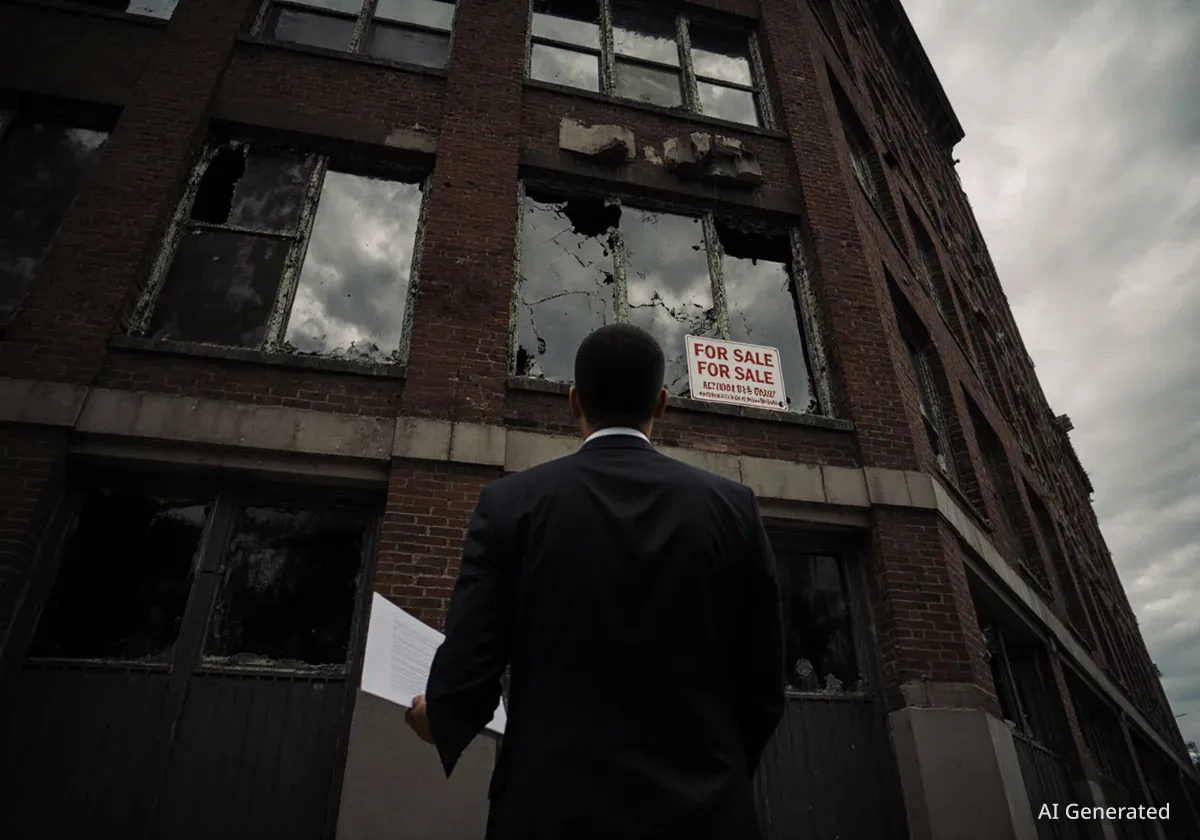
Approximately ten years ago, as Detroit was beginning to emerge as a focal point for ambitious real estate investors, a plan was set in motion for a major property deal. At the heart of this potential transaction was the Buhl Building, an architectural landmark in the city's financial district.
Details about the specific nature of the proposed deal remain scarce. However, it is understood that the scope was significant enough for its backers to seek powerful and well-connected financiers to help secure its success. Among those whose help was sought was Jeffrey Epstein, a figure known for his extensive network of influential contacts in business and politics.
The outreach to Epstein underscores the level of ambition behind the project. In the world of large-scale commercial real estate, securing capital and influence often involves approaching high-profile individuals who can open doors and facilitate complex financial arrangements. Despite this effort, the plan for the Buhl Building never came to fruition. The reasons for its failure have not been publicly disclosed, and the project was quietly abandoned.
The Buhl Building: A Downtown Detroit Icon
The property at the center of the failed deal, the Buhl Building, is a significant piece of Detroit's skyline. Located at 535 Griswold Street, the 26-story skyscraper was completed in 1925 and is recognized for its distinctive Romanesque Revival and Gothic architectural style.
A Landmark of the Financial District
Designed by famed Detroit architect Wirt C. Rowland of the Smith, Hinchman & Grylls firm, the Buhl Building has long been a prestigious address for law firms, financial services companies, and other professional tenants. Its location in the heart of the downtown financial district makes it a highly desirable commercial property.
At the time of the proposed transaction a decade ago, Detroit was a city in transition. Having recently navigated municipal bankruptcy, the downtown area was experiencing a wave of investment interest. Developers and investors were actively seeking opportunities to acquire and redevelop the city's historic building stock, betting on a widespread urban revival.
This environment created a competitive and often secretive atmosphere for real estate deals. The attempt to put together a major transaction for a landmark like the Buhl Building was characteristic of the era's optimism and the aggressive strategies employed to capitalize on the city's potential comeback.
High-Finance Networking in a Changing City
The involvement of a figure like Jeffrey Epstein, even peripherally, highlights the methods used to assemble large and complex real estate deals. In such transactions, success often depends as much on connections and influence as it does on market fundamentals.
Backers of large projects frequently create a network of potential financiers, partners, and influential brokers to navigate the intricate process of acquisition and development. Epstein, before his criminal convictions and death, operated within these circles, leveraging his connections to participate in and facilitate financial ventures.
Detroit's Post-Bankruptcy Boom
The period a decade ago marked the beginning of a significant real estate boom in downtown and midtown Detroit. From 2013 onward, billions of dollars were invested in renovating historic buildings, constructing new residential units, and revitalizing commercial corridors, fundamentally altering the city's economic landscape.
While the approach to Epstein did not lead to a successful outcome in this case, it serves as a historical footnote illustrating the kinds of channels that were explored to fund Detroit's redevelopment. It reflects a moment when local ambitions intersected with the world of international high finance.
For many in Detroit's real estate community, the story is a reminder of the many ambitious plans that are conceived but never realized. In a dynamic market, particularly one undergoing a dramatic transformation, not every proposed deal can cross the finish line. The failed Buhl Building transaction is one of many such stories from a formative period in the city's recent history.