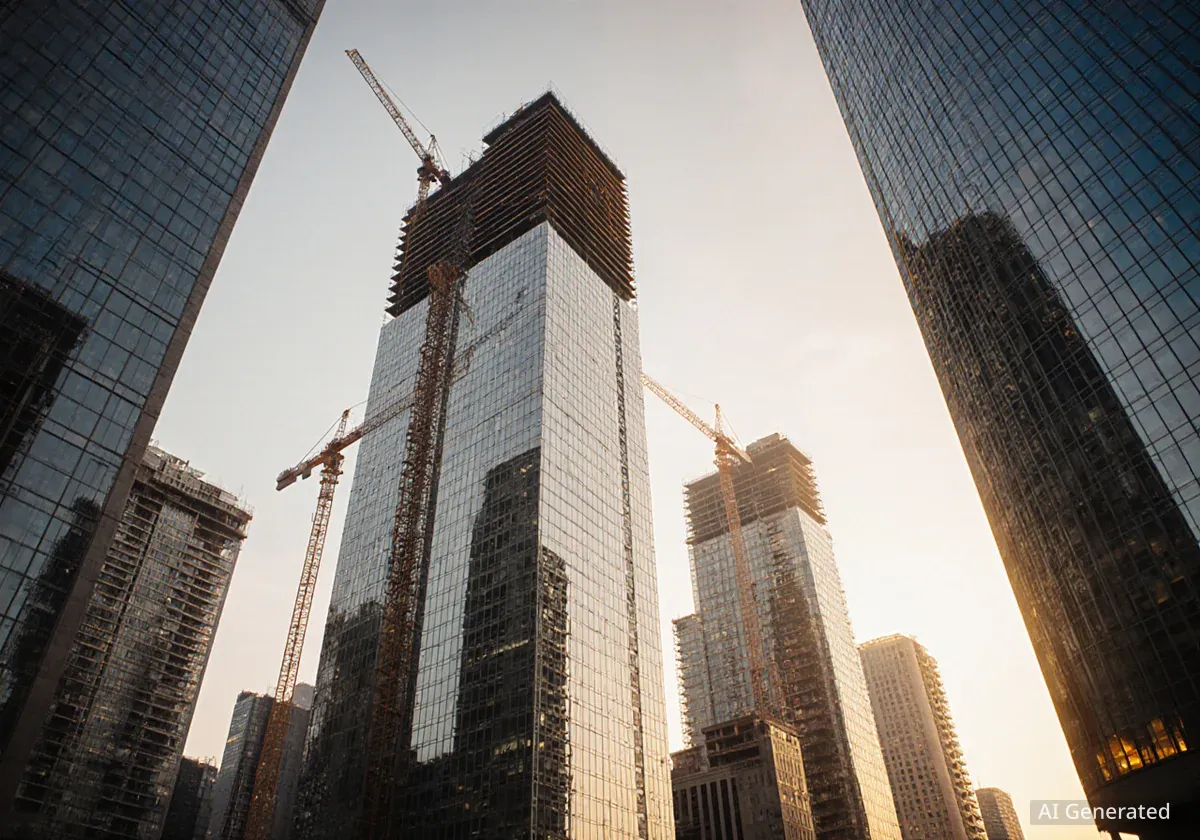
South Florida's real estate developers are placing significant bets on Miami's urban core, with Downtown and Brickell emerging as the primary focus for new large-scale projects. A confluence of factors, including a growing population, demand for walkable neighborhoods, and major corporate relocations, is fueling this concentrated development boom.
Industry leaders are channeling capital into mixed-use, residential, and office spaces within these central business districts, signaling a strategic shift towards density and transit-oriented living. This focus is reshaping Miami's skyline and redefining the lifestyle priorities for its new and existing residents.
Key Takeaways
- Developers are concentrating new projects in Downtown Miami and Brickell, close to commercial hubs.
- There is a growing trend towards smaller, more efficient apartments with a heavy emphasis on location and amenities.
- The influx of new residents with higher median incomes is driving demand for premium urban properties.
- High construction and land costs present a major challenge, pushing new inventory into a higher price bracket.
- Improved public transit, particularly the Brightline rail service, is a key factor supporting growth in the urban core.
The New Gravity Center: Downtown and Brickell
Real estate investment in South Florida is increasingly gravitating towards a few key submarkets. Developers are targeting areas that offer a high quality of life, walkability, and proximity to major employment centers. At the heart of this trend are Downtown Miami and the financial district of Brickell.
Erik Rutter, Managing Partner of Oak Row Equities, highlighted the strategic importance of this area. His firm recently closed a $520 million deal for 4.25 acres on Brickell Bay Drive, a location he believes is poised for significant growth.
"We're one block away from where Citadel is building their new headquarters. We think Brickell Bay Drive is going to become like the Fifth Avenue of New York," Rutter stated.
This sentiment is echoed by other major projects in the vicinity. The fully approved Citadel tower is set to become the tallest office building in South Florida, anchoring the area as a premier commercial destination. According to Ana Bozovic, founder of Analytics Miami, this is part of a larger pattern.
"We're seeing development coming within proximity of the urban course of the places of commerce," she explained, noting the rise of Class-A office space in the district.
Major Urban Core Projects
- Miami World Center: A 27-acre mixed-use development transforming the downtown landscape.
- Signature Bridge: A new infrastructure project creating over 30 acres of park space and improving connectivity between the urban core and surrounding neighborhoods like Overtown.
A Shift in Urban Living Standards
The type of housing being built reflects a change in consumer priorities. As location becomes paramount, developers are finding that residents are willing to trade square footage for access to amenities and a vibrant neighborhood.
Location Over Size
Daniel Kodsi, CEO of Royal Palm Companies, noted that the focus is now on a more compact and efficient product. This approach allows developers to manage costs while meeting market demand.
"What we're doing today is we're looking at a smaller type of product. Today, people care more about location- What's downstairs, and what restaurants do I have? What shopping opportunities, transportation? And then the apartments themselves don't need to be as large," Kodsi said.
This trend is visible in neighborhoods like Edgewater, which continues to grow due to its strategic position. "It's a desirable place to live, you're very close to transportation... Wynwood is, you know, within a stone's throw away or, you know, Downtown, Miami World Center," Kodsi added.
Workforce Housing and Condos
Looking ahead, the market is expected to see a mix of development types. "I think that you're going to see a number of Live Local Projects try to get out of the ground over the next couple of years," Rutter predicted. These projects integrate a workforce housing component into multifamily developments.
Alongside this, he affirmed that traditional condo development will remain a strong segment of the market across the region.
The Economic Forces Driving the Boom
The demand for new housing is not just coming from the ultra-wealthy. Experts observe a broad demographic shift, with new taxpayers moving to South Florida from all income brackets, drawn by the region's economic opportunities and lifestyle.
A Magnet for New Residents
Data shows a significant trend in migration patterns. "The median incomes of people who are moving to Miami-Dade County are significantly higher than those are people who are moving out," said Ana Bozovic. "And that's going to be an ongoing pattern."
This influx of new residents with higher earning potential is creating sustained demand for housing, particularly in desirable urban locations. "All tax brackets are moving to Miami because it's a great place to live. It's a great place to work, and it's a great place to raise a family," Rutter commented.
The role of enhanced transportation cannot be overstated. The Brightline rail system has become a critical piece of infrastructure, connecting Miami's core with other major and smaller cities like Boca Raton and Aventura. This connectivity makes urban living more viable for commuters and is expected to fuel further growth around transit hubs as road traffic worsens.
Navigating High Costs and Market Realities
Despite the strong demand, developers face a significant hurdle: the soaring cost of construction and land. These expenses directly impact the final price for consumers, making it difficult to deliver new housing at an affordable price point.
Ana Bozovic pointed out the stark reality of the market. "Because of the cost of land, the cost of construction, all these factors, it's basically impossible to sell something to the consumer for under $1,000 a square foot," she explained. "Even that doesn't exist to the urban core, but below that, it's virtually empty. It's impossible."
This cost structure means that the vast majority of new inventory is what Bozovic terms "New and Prime"—properties priced significantly higher than the area's median. To combat these rising expenses, developers are actively exploring innovative design and construction methods to keep projects financially viable.
While the urban core is the center of new construction, established neighborhoods like Coconut Grove, Coral Gables, and South Miami are also experiencing change. Already built out with single-family homes, these areas are seeing redevelopment and renovation of existing properties rather than the construction of new high-rises, catering to a different segment of the market seeking established communities.