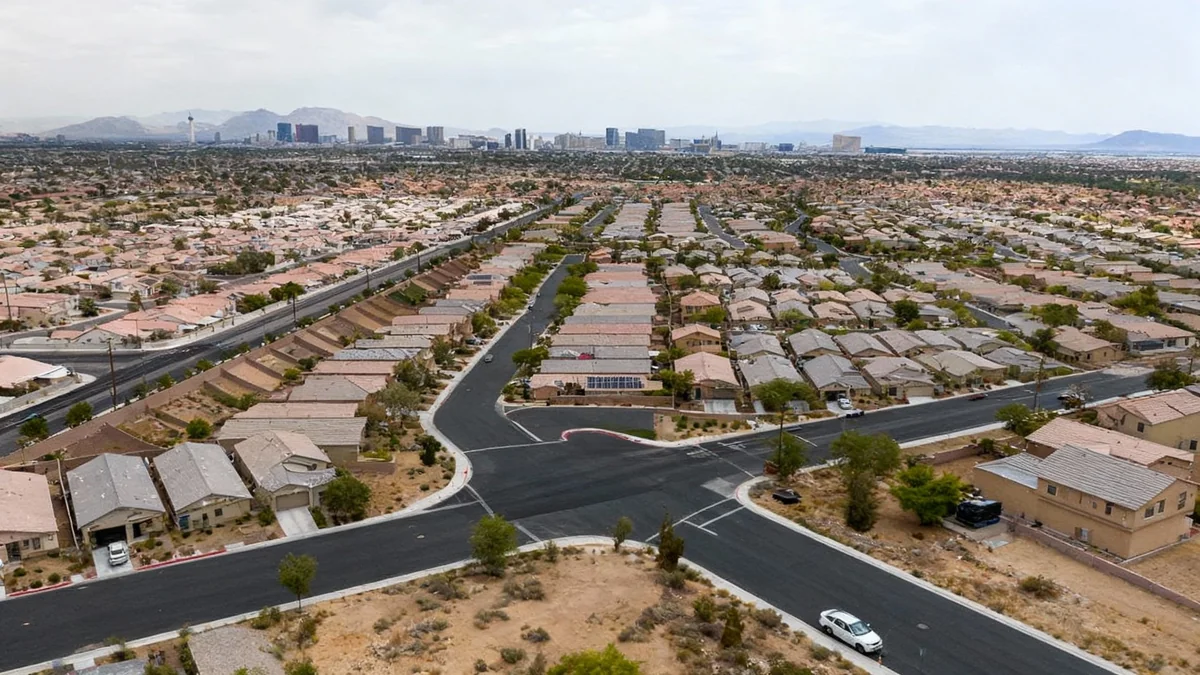
The Las Vegas housing market is presenting a complex and contradictory picture. While rents are declining and the number of homes for sale significantly outpaces buyers, the city continues to grapple with a severe affordability crisis. This paradox highlights a growing divide between the luxury real-Estat sector and the everyday challenges faced by residents seeking stable housing.
Key Takeaways
- Home sellers in Las Vegas outnumber buyers by 86%, indicating a significant market slowdown.
- Rental prices for one-bedroom apartments have decreased across the valley, with some areas seeing drops of over 14% year-over-year.
- Despite the cooling market, affordability remains a primary concern for many residents.
- The luxury market shows signs of strength, contrasting with the struggles in the broader market.
- Local authorities and developers are actively pursuing new affordable housing projects to address the shortage.
A Market Tilted Toward Buyers
Recent data reveals a dramatic shift in the Las Vegas real estate landscape. The market, once a hotspot during the pandemic-era buying frenzy, has cooled considerably. A recent report indicates that home sellers now outnumber buyers by a staggering 86%, placing Las Vegas among the slowest housing markets in the Sun Belt region.
This imbalance suggests that buyers currently have more leverage and a wider selection of properties to choose from. For sellers, it means increased competition and potentially longer times on the market to secure a deal. According to local real estate professionals, this shift requires sellers to be more strategic with pricing and presentation to attract the limited pool of active buyers.
The Sun Belt Slowdown
The trend seen in Las Vegas is reflective of a broader cooling across the Sun Belt, a region that experienced unprecedented housing demand from 2020 to 2022. Factors such as higher interest rates, economic uncertainty, and the return of workers to offices in other states have contributed to this slowdown.
Falling Rents Don't Equal Affordability
In a related trend, the rental market is also showing signs of softening. A December 2025 report from Zumper highlighted that one-bedroom apartment prices have fallen in every part of the Las Vegas Valley. The decline was most pronounced in the Paradise area, which saw a 14.3% year-over-year drop in rental costs.
While lower rents may seem like good news for tenants, experts caution that it doesn't solve the underlying affordability problem. Many residents still struggle to find housing that fits their budget, especially as wages have not kept pace with the high cost of living that became entrenched during the recent boom.
"A dip in rental prices is a welcome change, but it's a small step in a very long journey," said Matt Hennessy, a local mortgage adviser. "The core issue is the gap between average incomes and the overall cost of housing, whether renting or buying. That gap remains wide."
The Luxury Market Tells a Different Story
While the general market cools, the high-end segment continues to break records. In a clear sign of this divergence, a Los Angeles billionaire recently purchased a condo in The Summit Club for a record-breaking $21 million. The 4,929-square-foot unit's sale underscores the persistent demand for luxury properties in exclusive communities.
Another example is a home in the Eagle Hills area of Summerlin, designed with a unique 'wabi-sabi' aesthetic, which recently hit the market for $3.75 million. These high-value transactions paint a picture of a market that is thriving at the top, even as the middle and lower tiers face significant headwinds.
"We are seeing two different markets operating in parallel," noted Lori Galarza, a Realtor with Re/Max. "The demand for ultra-luxury and unique properties from high-net-worth individuals is still very strong. Meanwhile, the average family is navigating a much different and more challenging environment."
Efforts to Address the Housing Shortage
Recognizing the critical need for more accessible housing, local governments and developers are taking action. The city of Las Vegas is actively seeking proposals for an affordable 'artist housing' project, which would include at least 100 residential units combined with commercial space to create a vibrant, mixed-use community.
In North Las Vegas, a new 105-unit affordable-housing complex is already under construction near the VA medical center, spearheaded by a Midwest-based developer. These projects aim to add much-needed inventory for low- and middle-income residents.
New Development on the Horizon
Large-scale development is also continuing. A new master-planned community slated for 3,500 homes recently completed its first land sale. A major homebuilder acquired a parcel for more than $46 million with plans to construct nearly 300 homes, signaling long-term confidence in the valley's growth.
Navigating an Uncertain Future
The current state of the Las Vegas housing market is one of adjustment. The frenzy of the past few years has subsided, replaced by a more measured, buyer-friendly environment for typical homes. However, the disconnect between the thriving luxury sector and the affordability struggles of the general population remains a central challenge.
Experts like Brian Bonnenfant from the University of Nevada, Reno, suggest that sustainable solutions will require a multi-faceted approach, including continued investment in affordable housing, policies that support wage growth, and innovative development strategies. As the city moves forward, balancing the needs of all its residents will be key to fostering a stable and equitable housing market for the future.