
An Atlanta-based real estate investor has been handed a record-breaking $4.7 million penalty by the U.S. Treasury Department. The penalty stems from his company's purchase of a foreclosed mansion in Georgia that was secretly tied to a sanctioned Russian oligarch's family.
The case exposes significant gaps in the U.S. financial and legal systems, showing how a property linked to international sanctions could be sold at a public auction without raising immediate red flags, leading to severe consequences for the buyer.
Key Takeaways
- Investor Sahib Arora's company, King Holdings LLC, was penalized $4.7 million for purchasing a property linked to Karina Rotenberg.
- The mansion in Alpharetta, Georgia, was an asset frozen under U.S. sanctions against Russia.
- The property was sold at a routine foreclosure auction in January 2023 for $922,000.
- The penalty is the largest of its kind issued by the Office of Foreign Assets Control (OFAC) against an individual American for sanctions violations.
- The case highlights bureaucratic failures, as public records did not clearly flag the property's sanctioned status.
A Routine Auction with Hidden Dangers
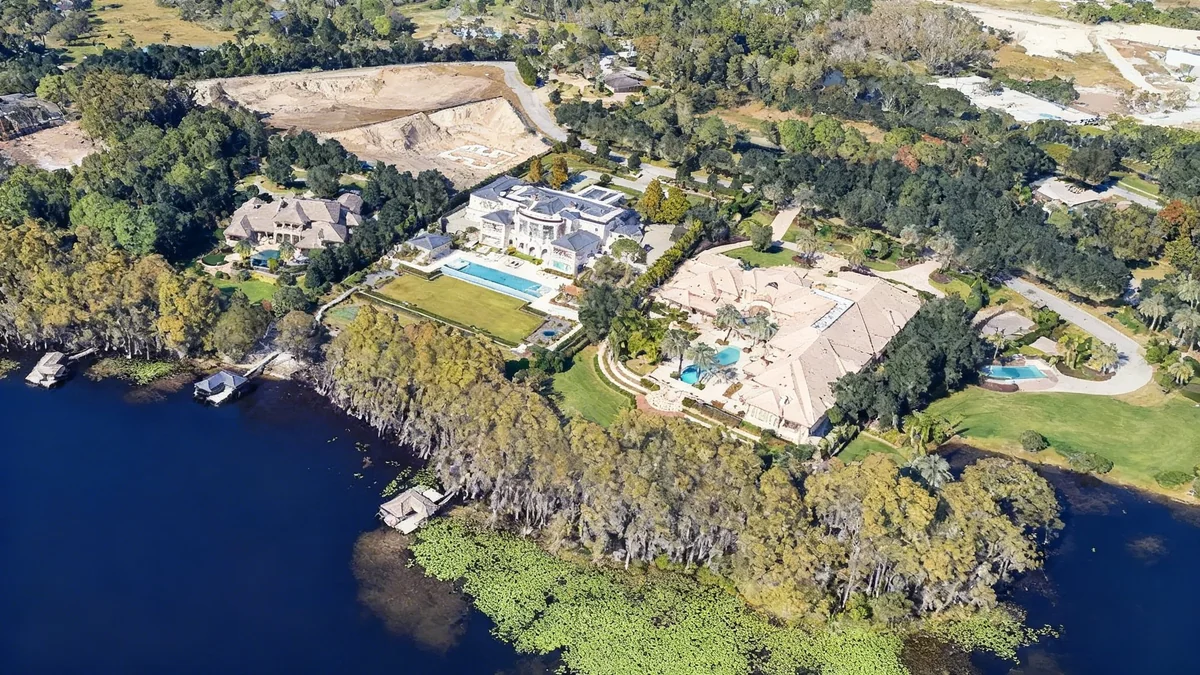
For real estate investor Sahib Arora, the dilapidated mansion in Alpharetta seemed like a promising opportunity. At a foreclosure auction on the Fulton County courthouse steps in January 2023, his company, King Holdings LLC, placed the winning bid of $922,000. The property, with its six bedrooms and seven baths, was a prime candidate for renovation and resale.
What Arora says he didn't know was that the mansion's previous owner, Karina Rotenberg, was a U.S. citizen whose assets were frozen. Her ex-husband, Boris Rotenberg, is a Russian oligarch and a close associate of President Vladimir Putin. He was sanctioned by the U.S. following Russia's 2014 invasion of Crimea, and Karina was added to the sanctions list in March 2022 after the full-scale invasion of Ukraine.
Before its sale, the house had become a neighborhood blight. For years, neighbors complained about the overgrown yard and rotting pool, a stark contrast to the other multi-million dollar homes in the area. The homeowners' association had tried to sue Rotenberg over unpaid assessments but struggled to serve her with legal papers as she lived abroad.
The Path to Foreclosure
Despite the U.S. sanctions freezing her assets, records show that mortgage payments on the Alpharetta property continued for several months. Payments stopped in late 2022, triggering the foreclosure process that led to the January 2023 auction. This allowed the property to enter the public market, seemingly like any other distressed asset.
A Systemic Breakdown
The transaction proceeded through standard channels. King Holdings secured financing from two Atlanta-area lenders, and a title search was conducted. According to Arora and his legal team, no one involved in the purchase, from the lenders to the title examiners, found any indication that the property was a blocked asset.
The problem stemmed from a bureaucratic oversight. In September 2022, the Treasury Department's Office of Foreign Assets Control (OFAC) sent a letter to the Fulton County Clerk's office, warning that the property was blocked. However, the notice was indexed under Karina Rotenberg's maiden name, Karina Gapkuch, which was one of several aliases listed in sanctions documents. The primary name on the property deed was Karina Rotenberg.
"Nobody knew," said a representative from the law firm that handled the title examination. "There is no way we could have found this notice blocking the property."
This indexing error meant that a standard title search using the owner's name on the deed would not—and did not—reveal the OFAC warning. The foreclosure sale went ahead, setting Arora on a collision course with federal authorities.
A Web of Names
Sanctions documents listed Karina Rotenberg with at least seven different name variations and translations, including her maiden name and a former married name, Fox. This complexity contributed to the difficulty in tracking her assets within local property record systems.
The Call from the Treasury
Several months after purchasing the mansion, Arora received a phone call in April 2023 from an OFAC investigator. He was informed that his company's purchase was considered a "null and void" transaction because it involved a sanctioned individual. The investigator explained that King Holdings had violated U.S. sanctions law.
Arora, an immigrant from India who built his business from the ground up, was stunned. He maintained he was an innocent buyer who followed all legal procedures. "I'm like, who is this guy? What is OFAC?" he recalled thinking. "I didn't even know what he was calling about."
OFAC's position was firm. Any transaction involving a blocked asset, whether intentional or not, is a violation. The agency argued that Arora's company should have obtained a special license before completing the purchase and subsequent renovation and sale of the property. King Holdings had already invested hundreds of thousands of dollars in repairs and had lined up a buyer for the renovated home.
A Record-Setting Penalty
Despite Arora's arguments that his company was a small house-flipping business without the sophisticated compliance departments of large financial institutions, OFAC proceeded with enforcement. In November 2023, the agency publicly announced a penalty of $4,776,552 against King Holdings.
OFAC described the violations as "egregious," though not "willful." The agency stated that King Holdings had reason to know about the property's status and proceeded with a subsequent sale even after being contacted by investigators. Arora's team countered that they were cooperating and trying to resolve the matter when they moved forward with the sale to mitigate their financial losses, which included a high-interest loan for the renovation.
Unprecedented Fine
The $4.7 million penalty is the largest OFAC has ever issued against an individual American for a sanctions violation. According to a review of agency records, it is larger than the next seven highest penalties against U.S. individuals combined since 2003.
Arora has called the penalty amount "absurd," noting that his company lost an estimated $50,000 on the entire deal after legal fees and other costs. He argued that the punishment was disproportionate for a small business that unknowingly fell into a complex web of international sanctions enforcement.
The Treasury Department has declined to comment further on the case. The final buyers of the home, a local family, eventually secured a license from OFAC to legitimize their purchase, but only after weeks of uncertainty. Meanwhile, Karina Rotenberg's name was dropped from the sanctions list in April 2024, just as the license for the mansion was set to expire, adding another layer of complexity to the saga.