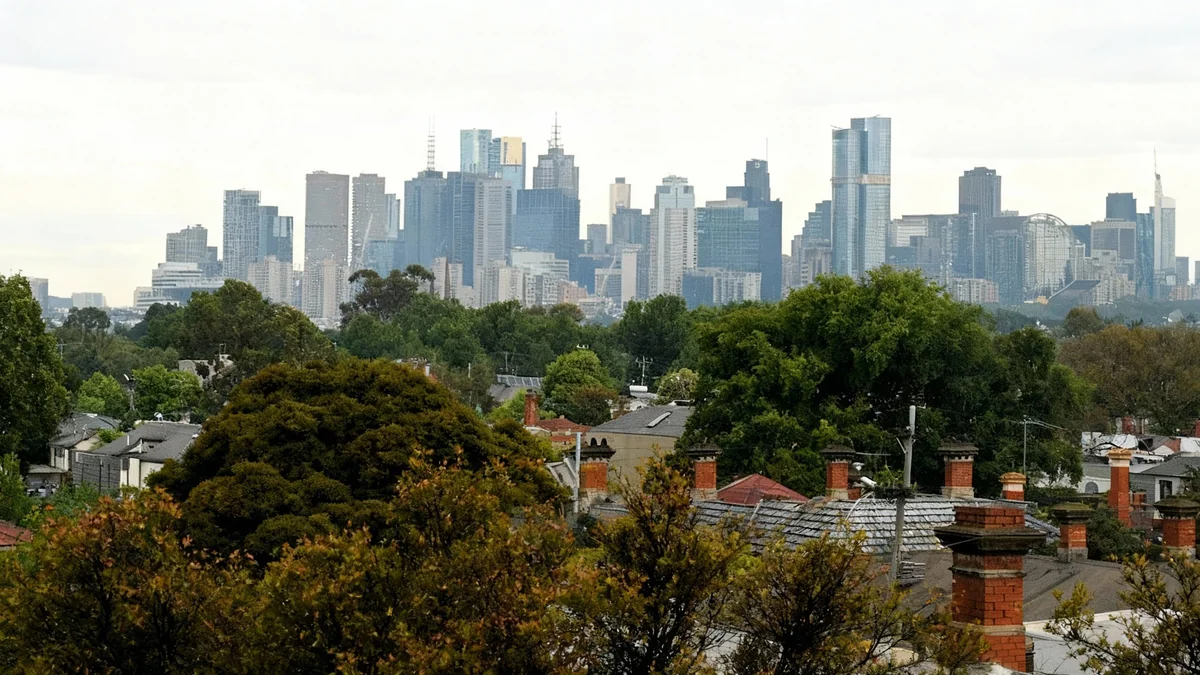
Australia's property market has marked another period of significant growth, with house prices climbing for the 12th consecutive quarter. New data reveals that median house prices in six of the nation's capital cities now exceed one million dollars, as Perth becomes the latest city to join this exclusive group.
The sustained increase, which represents the longest uninterrupted growth cycle since the 2012-2015 period, has pushed property values to record levels in nearly every capital city. Melbourne has also shown a strong recovery, reaching a new price peak for the first time in four years.
Key Takeaways
- National house prices rose by 9.6% in 2025, while unit prices increased by 6.8%.
- Perth's median house price surpassed $1 million for the first time after a 9.9% quarterly jump.
- Six capital cities—Sydney, Melbourne, Brisbane, Adelaide, Canberra, and now Perth—have median house prices over $1 million.
- Melbourne's market staged a significant recovery, with house prices growing 7.4% over the year.
- Sydney's median house price could potentially reach $2 million by 2027 or 2028, according to market projections.
National Property Market Continues Upward Trend
Across Australia's combined capital cities, house prices saw a substantial increase of 9.6% throughout 2025. This added an average of $111,728 to the median value. The final quarter of the year alone contributed a 3.9% rise, capping off a year of consistent gains.
The unit market also performed strongly, with a combined capital city median price increase of 6.8% for the year. The December quarter saw a 3.5% lift, bringing the median unit price to $722,811.
According to Nicola Powell, Chief of Research and Economics at Domain, several factors are fueling this momentum. "This momentum continues to be supported by improved borrowing capacity following the three interest rate cuts delivered in 2025, alongside tight housing supply, a resilient labour market and solid wage growth," Ms. Powell explained.
She also noted a rise in consumer sentiment. "Buyer confidence is up and the expansion of the home guarantee scheme last October has played a role in creating the greater momentum we've seen," she added.
Perth Joins the Exclusive Million-Dollar Club
The most significant development in the latest report is Perth's entry into the so-called "million-dollar club." The Western Australian capital experienced the fastest growth in the country to end 2025, with prices jumping a remarkable 9.9% in just the December quarter.
This surge pushed its median house price past the seven-figure mark for the first time. Over the entire year, Perth's house prices climbed by 18.4%. The city's unit market was equally robust, rising 7.4% in the final quarter for an annual increase of 17.8%.
Perth's Price Convergence
The gap between Perth and Melbourne's median house prices has narrowed dramatically. In 2019, Perth houses were 42% cheaper than Melbourne's. Today, that difference is just 2%.
Ms. Powell described the city's performance as "extraordinary." She attributed the rapid growth to strong demand from population shifts. "This is because of strong demand in Perth with a lot of people moving to Western Australia — not just from overseas but we've also seen positive net interstate migration," she said.
Strong Growth and Recovery in Eastern States
While Perth's growth was notable, other capitals also posted impressive figures. Brisbane and Adelaide both recorded double-digit annual increases in house prices.
Brisbane's 'Historic' Run
Brisbane's property market has been on what is described as a "historic" run. House prices in the city grew by 4.5% in the December quarter, contributing to a 13.3% increase for the year. The median house price in Brisbane now stands at $1,171,237.
"Brisbane has the X factor — a tight rental market amid positive net migration plus the upcoming Games with its investments in infrastructure giving people a reason to locate in search of jobs," commented Nicola Powell on the city's appeal.
Melbourne's Decisive Rebound
After a period of slower growth, Melbourne's property market has re-entered a phase of sustained expansion. The city's median house price hit a new record for the first time in four years, reaching $1,111,084.
House prices in the Victorian capital increased by 2.9%, or an average of $31,614, in the final three months of 2025. Over the full year, prices grew by 7.4%, signaling a clear recovery for one of the nation's largest property markets.
A Multi-Speed Market
While overall growth is strong, the pace varies significantly between cities. Smaller capitals like Perth and Adelaide are currently leading in house price growth, while buyers in larger markets like Sydney and Melbourne are showing increased interest in units for their relative affordability.
Sydney's Path to a $2 Million Median
Sydney remains Australia's most expensive city for real estate. Although its quarterly growth of 2% was the slowest among the capitals, its median house price still climbed by $34,177 to nearly $1.76 million.
The annual growth for Sydney houses was 6.4%. However, projections suggest the city's high prices could climb even further. Ms. Powell noted that a $2 million median price is a real possibility in the near future.
"Even though Sydney house prices didn't rise as much as some previous years in 2025, the city does see wild price cycles from time to time, so hitting the $2 million mark could conceivably happen in 2027 or 2028," she predicted.
Sydney's unit market also showed renewed strength, with a 2.1% increase in the December quarter. This marked its strongest quarterly growth since mid-2023, bringing the median unit price to $844,390.
Performance Across Other Capitals
Other major cities also saw significant price movements, though not all were positive across every market segment.
- Adelaide: House prices jumped 5% in the quarter for an annual increase of 11.9%, reaching a median of $1,094,427.
- Darwin: Experienced a massive 22.4% annual surge in house prices, with the median now at $690,896.
- Canberra: While house prices rose 3.6% to a median of nearly $1.4 million, its unit market saw a second consecutive quarterly decline, falling 1.3% to a median of $611,466.
As the market moves into 2026, experts suggest the pace of growth could moderate in some cities, particularly if interest rate hikes materialize as predicted. However, the underlying factors of tight supply and strong demand continue to support property values across the country.