
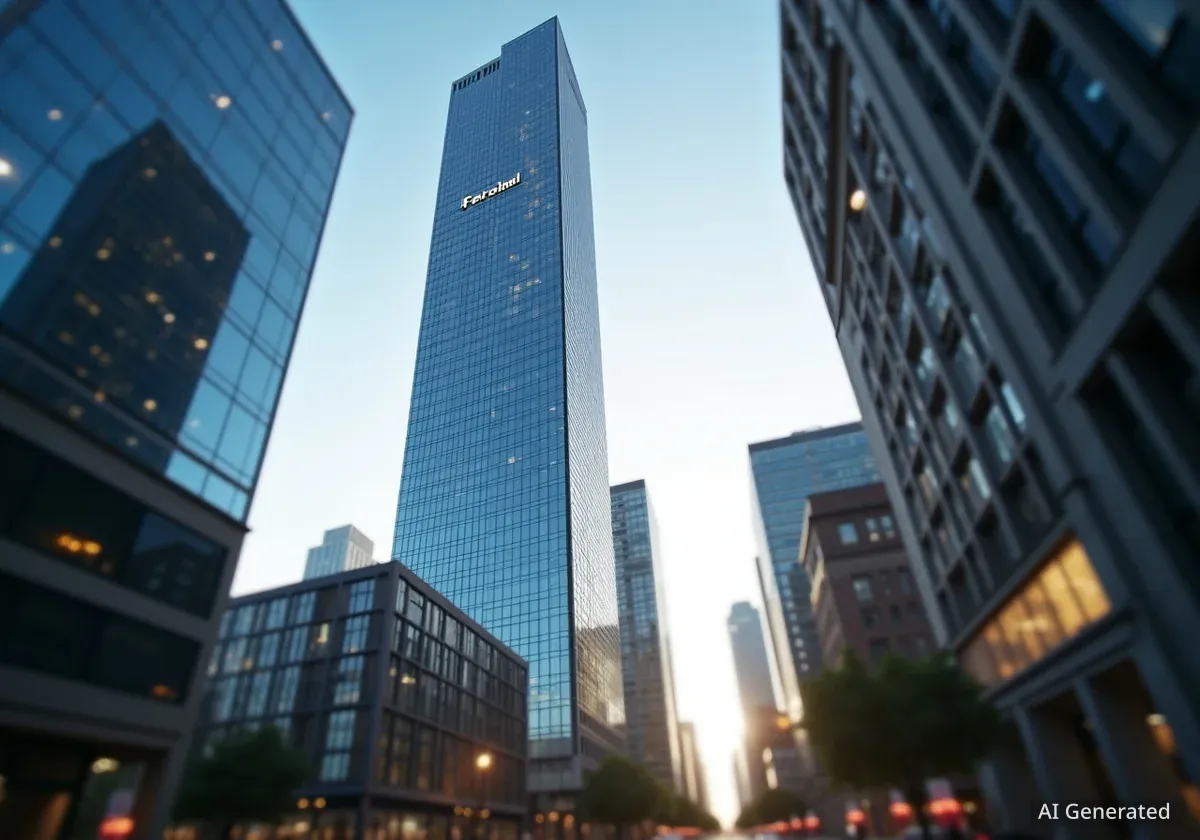
An Oregon-based investor has secured a $45 million loan from Goldman Sachs for a downtown Chicago office building, a move that signals renewed confidence in a commercial real estate market facing significant challenges. The financing for the property at 230 W. Monroe St. comes two years after the investor acquired the distressed tower.
This transaction is being viewed by market observers as a notable success story, demonstrating that well-managed properties can still attract capital from major financial institutions despite broader market uncertainty. The deal provides a positive data point for landlords and lenders navigating the city's high office vacancy rates.
Key Takeaways
- An Oregon-based investment firm has received a $45 million loan for the office tower at 230 W. Monroe St. in Chicago.
- The financing was provided by investment banking giant Goldman Sachs.
- The deal marks a successful turnaround for the property, which was purchased in a distressed state two years ago.
- This transaction injects a degree of optimism into Chicago's struggling downtown office market.
A Vote of Confidence from Wall Street
The new $45 million loan represents a significant financial maneuver for the Loop office tower. By securing capital from a prominent lender like Goldman Sachs, the property's owner has successfully refinanced the asset, effectively validating the turnaround strategy implemented over the past two years.
Financial experts note that such deals have become increasingly rare in the current climate. Lenders have grown more cautious, often tightening their standards for commercial real estate, particularly in the office sector. The willingness of Goldman Sachs to finance this property suggests a belief in its long-term viability and the owner's ability to maintain its value.
This development is especially important for the Central Loop submarket, which has seen some of the highest vacancy rates in the city. The ability to recapitalize a building in this area demonstrates that investor appetite has not disappeared entirely, but is now highly selective, focusing on assets with clear paths to profitability.
Market Context: The Post-Pandemic Office Landscape
Downtown Chicago's office market has been under immense pressure since 2020. The widespread adoption of remote and hybrid work models has led to companies reducing their office footprints, causing vacancy rates to climb to historic highs. This has, in turn, depressed property values and made it difficult for many building owners to secure new financing or sell their assets.
The Turnaround of 230 W. Monroe
The journey of 230 W. Monroe St. over the last two years provides a case study in navigating a difficult market. The Oregon-based investor acquired the tower at a time when many were shying away from downtown office assets. The property was considered distressed, likely facing challenges with occupancy and cash flow.
Since the acquisition, the ownership has focused on stabilizing the building. While specific details of their strategy are not public, successful turnarounds in today's market typically involve:
- Aggressive Leasing Efforts: Attracting new tenants with competitive lease terms and incentives.
- Capital Improvements: Upgrading building amenities, such as lobbies, fitness centers, and collaborative spaces, to meet the demands of modern tenants.
- Tenant Retention: Working closely with existing tenants to ensure their needs are met and encourage lease renewals.
The ability to secure a $45 million loan indicates these efforts have paid off, improving the building's financial performance to a level that satisfies the rigorous underwriting standards of a major institutional lender.
A Glimmer of Hope
While one transaction does not reverse a market-wide trend, it serves as a crucial proof of concept. It shows other investors and lenders that opportunities still exist within the downtown office sector for those willing to invest capital and actively manage their properties. This success could encourage other building owners to pursue similar strategies rather than defaulting on loans or selling at a loss.
Implications for Chicago's Commercial Real Estate
The successful refinancing of 230 W. Monroe St. offers a glimmer of hope for Chicago's broader commercial real estate ecosystem. It suggests a potential floor for property values, at least for well-located and properly managed buildings. For landlords, it underscores the importance of investing in their assets to remain competitive.
Market analysts will be watching closely to see if this deal is an isolated event or the beginning of a larger trend. If more lenders begin to selectively re-enter the office market, it could help stabilize the sector and prevent a wave of distressed sales that many have feared.
However, the challenges remain formidable. The overall vacancy rate in downtown Chicago is still near a record high, and the long-term demand for office space remains an open question. This deal is not a panacea, but rather a positive development in a market that has been short on good news.