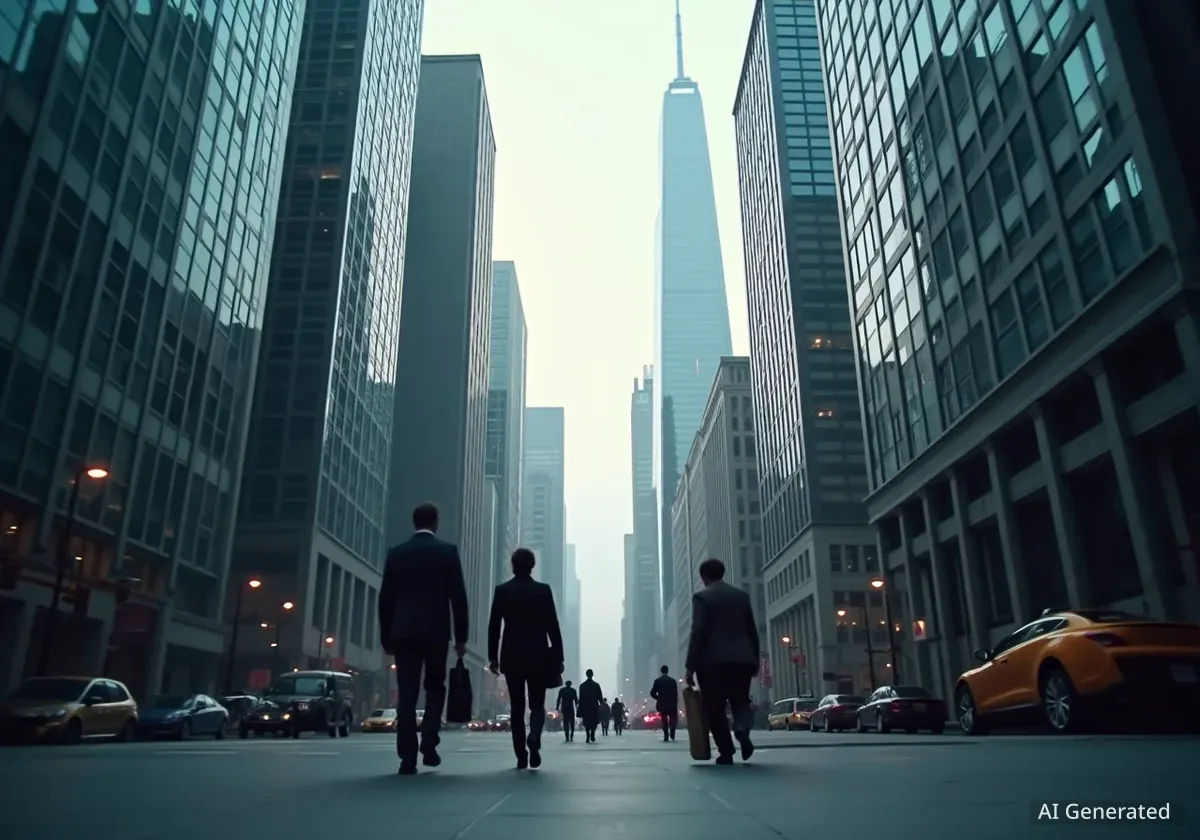
Chicago's commercial real estate market is stepping into 2026 on uncertain footing, as the once-popular mantra of "survive until '25" has given way to a more complex reality. Investors and developers are now navigating a landscape marked by persistent economic unease and shifting property valuations.
While the broad optimism for a swift post-pandemic recovery has faded, the market is not without signs of life. A mix of distressed sales and strategic investments suggests a period of transition rather than total stagnation, forcing stakeholders to adopt new strategies for the year ahead.
Key Takeaways
- The optimistic "survive until '25" sentiment that previously guided the market has largely disappeared, replaced by a more cautious long-term view.
- Economic ambiguity and concerns over tariffs continue to influence investor decisions, delaying major capital commitments.
- Despite the challenges, specific transactions, including notable office tower sales, indicate that capital is still being deployed for well-positioned assets.
- The market is undergoing a fundamental reset, with property values being re-evaluated across office, retail, and other commercial sectors.
The Fading Promise of a Rebound
Throughout the early 2020s, many in Chicago's property sector held onto the belief that if they could weather the storm until 2025, a significant recovery would take hold. This widespread sentiment, often summarized as "survive until '25," provided a guiding light through challenging times.
However, as 2026 begins, that narrative has proven to be overly simplistic. The anticipated V-shaped recovery has not materialized. Instead, the market is grappling with a prolonged period of adjustment, where old assumptions about property use and value no longer apply.
The shift in sentiment is palpable among brokers and investors. The conversations have moved from waiting for a return to normalcy to actively planning for a new, and in many ways, more challenging market environment.
Economic Headwinds and Investor Hesitation
A primary factor dampening spirits is the persistent economic uncertainty. Ambiguous talk of tariffs and broader concerns about the health of the U.S. economy have created a climate of caution. This has thwarted the hopes of many investors who were banking on a more stable and predictable 2026.
This hesitation is most evident in the office sector, which continues to struggle with high vacancy rates. With many companies still finalizing their long-term remote and hybrid work policies, landlords are finding it difficult to secure the long-term leases necessary to stabilize their assets.
A Broader Market Realignment
The challenges facing Chicago are not unique. Commercial real estate markets across the country are facing a similar reckoning. The confluence of higher interest rates, changing work habits, and shifting consumer behavior has forced a re-evaluation of commercial property as an asset class, particularly large downtown office buildings.
This has led to a standoff between buyers and sellers. Many current owners are reluctant to sell at today's lower valuations, while potential buyers are unwilling to invest without significant discounts to account for the increased risk.
Glimmers of Hope Amid the Gloom
Despite the overarching mood of caution, the market is far from frozen. Recent transactions show that deals are still getting done, albeit at prices that reflect the new reality. These deals provide crucial data points for a market desperate for price discovery.
One such notable transaction was the sale of Boeing's former office tower in the West Loop. The building, a prominent fixture in the city's skyline, was sold for approximately $22 million. While this figure is a fraction of its pre-pandemic valuation, the completed sale provides a clear marker for similar assets.
Key Market Activities
- Boeing Tower Sale: The West Loop property changed hands for $22 million, signaling a new pricing benchmark for Class A office space.
- Loop Landlord Secures Loan: In a positive sign for the financial markets, a prominent Loop landlord successfully secured new financing, suggesting lenders are still willing to back certain downtown office properties.
- Retail Division Rebranding: Brookfield's retail division announced a name change back to its original identity, a strategic move aimed at reinforcing its brand in a competitive market.
Furthermore, there are signs that lenders have not completely abandoned the downtown office market. One Loop landlord recently scored a significant loan, an event that provides a glimmer of hope for other property owners seeking to refinance or stabilize their buildings. These isolated successes demonstrate that capital is available for well-managed properties with clear business plans.
The Outlook for 2026
Looking ahead, 2026 is shaping up to be a year of recalibration for Chicago's commercial real estate sector. The focus has shifted from waiting for a recovery to actively adapting to a permanently changed landscape. This involves re-imagining office spaces, finding new uses for underutilized properties, and accepting new valuation benchmarks.
For investors, this environment presents both risks and opportunities. Distressed assets may become available at steep discounts, offering high potential returns for those willing to invest in repositioning or converting properties.
Ultimately, the year will likely be defined by a continued divergence in performance. Newer, highly amenitized buildings in prime locations may continue to attract tenants and investors. In contrast, older, less desirable properties will face a difficult path, potentially leading to more defaults, foreclosures, or conversions to other uses like residential.
The era of passive real estate investment in Chicago appears to be over. Success in 2026 and beyond will require active management, creative thinking, and a willingness to embrace the profound changes reshaping the city's commercial core.