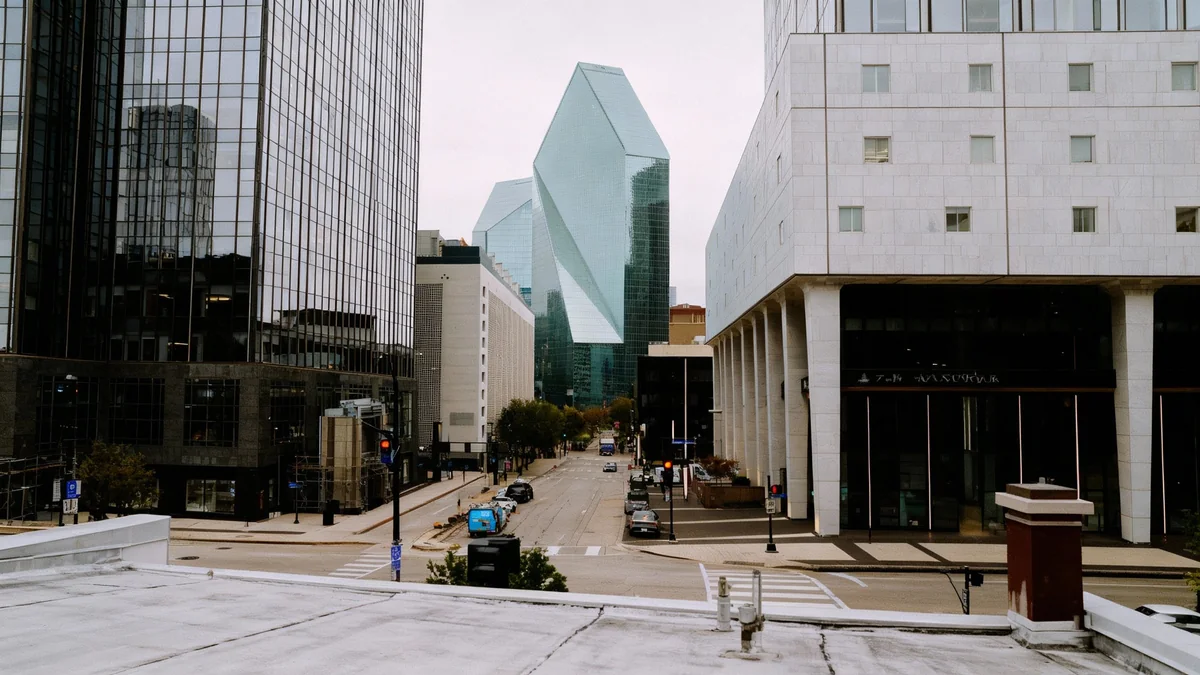
Dallas is experiencing a significant economic boom, attracting major companies and earning the nickname "Y'all Street" as a new financial hub. However, this widespread prosperity in the metro area masks a troubling issue at its core: Downtown Dallas now holds the second-highest office vacancy rate of any central business district in the United States.
This striking contrast between a thriving region and a hollowed-out city center presents a complex challenge for city planners, developers, and business leaders. While the suburbs flourish with new construction and corporate relocations, the gleaming towers of downtown are struggling to retain tenants, creating a tale of two cities within one metropolitan giant.
Key Takeaways
- Downtown Dallas has the second-highest office vacancy rate among all major U.S. downtowns.
- This vacancy crisis exists despite the Dallas metro area experiencing a population boom and attracting numerous financial services firms.
- The growth is concentrated in the suburbs and surrounding areas, not the traditional central business district.
- The nickname "Y'all Street" reflects the region's success as a financial hub, yet this success is not translating to a vibrant downtown office market.
The Tale of 'Y'all Street' and Its Empty Towers
The Dallas-Fort Worth metroplex is a magnet for corporate America. With a rapidly growing population and a business-friendly environment, companies, particularly in the financial services sector, are relocating to North Texas in record numbers. This influx has led to the area being dubbed "Y'all Street," a nod to its emerging status as a major financial center rivaling traditional hubs.
Yet, a walk through the streets of Downtown Dallas tells a different story. The impressive skyline, featuring iconic buildings like Fountain Place, hides a growing problem of empty office space. While the broader region thrives, the central business district is grappling with a vacancy rate that is among the worst in the nation.
This situation creates a significant economic paradox. The very engine of the region's growth—corporate expansion—is simultaneously bypassing the traditional heart of the city. Instead of filling the established skyscrapers, many new and expanding companies are choosing modern office parks in suburban locations like Plano, Frisco, and Irving.
Context: The National Trend
Dallas is not entirely unique in this struggle. Across the United States, the shift to remote and hybrid work models following the pandemic has fundamentally altered the demand for traditional office space. However, the severity of the problem in Dallas, a city experiencing immense overall growth, highlights a more localized and complex set of challenges beyond just work-from-home trends.
Why Is Downtown Being Left Behind?
Several factors contribute to the hollowing out of Downtown Dallas's office market, even as the surrounding areas boom. The primary driver is a preference for newer, amenity-rich office buildings that are more common in the suburbs.
These modern developments often offer features that older downtown buildings lack, such as:
- Large, flexible floor plates: Accommodating modern open-office layouts.
- State-of-the-art amenities: Including fitness centers, sophisticated food courts, and expansive green spaces.
- Convenient access and parking: A significant advantage over the more congested downtown core.
- Proximity to workforce: Many employees have moved to suburban communities, and companies are following them to shorten commute times.
Older office towers in the central business district, some decades old, require substantial investment to compete with these new suburban campuses. For many companies, it is simply more appealing and cost-effective to lease space in a brand-new building tailored to the needs of a modern workforce.
A National Perspective
The office vacancy rate in Downtown Dallas is second only to one other major U.S. city, underscoring the severity of the local issue compared to national averages. This is particularly notable in a state known for its robust economic growth.
The Flight to Quality and Suburbia
The trend is often described as a "flight to quality." Companies are not just leaving downtown; they are seeking out the best possible office environments to attract and retain top talent in a competitive labor market. This means the newest buildings with the most modern features are in high demand, while older buildings—many of which are concentrated downtown—are left behind.
The boom in the Dallas suburbs is a testament to this shift. Areas north of the city have seen a construction explosion, with entire mixed-use districts being built from the ground up. These developments integrate office, residential, retail, and entertainment spaces, creating vibrant, self-contained communities where people can live, work, and play without ever needing to travel downtown.
This decentralization of the office market poses a long-term challenge for the city's urban core. A healthy downtown is crucial for a city's tax base, public transportation system, and cultural identity. The high vacancy rate threatens to undermine all three.
What Does the Future Hold for Downtown Dallas?
Faced with this challenge, property owners and city officials are exploring new strategies to revitalize Downtown Dallas. The most prominent solution being discussed and implemented is the conversion of obsolete office buildings into other uses.
Residential conversions are becoming increasingly popular. Transforming empty office floors into apartments or condominiums can help address housing demand while bringing more residents—and life—back to the city center. Other potential uses include hotels, educational facilities, and vertical farms.
"The traditional 9-to-5 downtown is a concept of the past. For central business districts to thrive, they must become 24/7 neighborhoods where people live, work, and socialize," stated a local urban planning analyst. "Conversion is not just an option; it's a necessity for survival. "
However, these conversions are complex and expensive. Not every building is suitable for residential use, and the financial incentives must be significant enough to attract developers. The future of Downtown Dallas will likely depend on a combination of strategic conversions, investment in public spaces, and a concerted effort to attract businesses that still see value in a central urban location.
While the "Y'all Street" boom continues to reshape the Dallas metroplex, the fate of its historic core hangs in the balance. The city's ability to adapt its iconic skyline to a new economic reality will determine whether downtown can reinvent itself or become a relic of a bygone era.