Fears of a widespread global housing market collapse appear to be unfounded, according to a new analysis of major international cities. A 2025 report from the Swiss investment bank UBS indicates that while a few urban centers are showing signs of a speculative bubble, the global market is not on the brink of a 2007-style crash.
The study examined 21 major metropolitan areas, concluding that stable prices and a lack of excessive construction are providing a buffer against a worldwide downturn. However, the report specifically identifies Miami, Tokyo, and Zurich as being in a high-risk bubble territory.
Key Takeaways
- A new UBS report suggests a global housing market crash is not imminent.
- Miami, Tokyo, and Zurich are the only cities identified as having a high risk of a real estate bubble.
- Factors like stable prices and low construction volume are supporting market stability worldwide.
- Major financial hubs including New York, London, and Paris are currently rated as low-risk markets.
Market Stability Prevails Globally
Homeowners and property investors can breathe a tentative sigh of relief. The UBS Global Real Estate Bubble Index for 2025 suggests that conditions for a catastrophic, synchronized collapse of housing markets are not present. Unlike the period preceding the 2008 financial crisis, the current landscape is marked by more cautious fundamentals.
According to the analysis, housing prices across the 21 surveyed cities have remained firm when adjusted for inflation over the past year. This stability is a key indicator that markets are not spiraling out of control due to pure speculation.
What Is a Housing Bubble?
A housing bubble occurs when property prices rise to unsustainable levels, driven by speculation and hype rather than by fundamental economic factors like income growth and housing demand. UBS identifies these bubbles by looking for imbalances, such as prices becoming detached from local incomes and rents, excessive lending, and a surge in construction activity.
Another significant factor preventing a widespread bubble is a relative scarcity of new construction. A controlled supply of new homes helps prevent a market glut, which can cause prices to fall sharply. This dynamic creates a more stable investment environment, though it offers little comfort to potential buyers struggling with affordability.
High-Risk Zones Identified
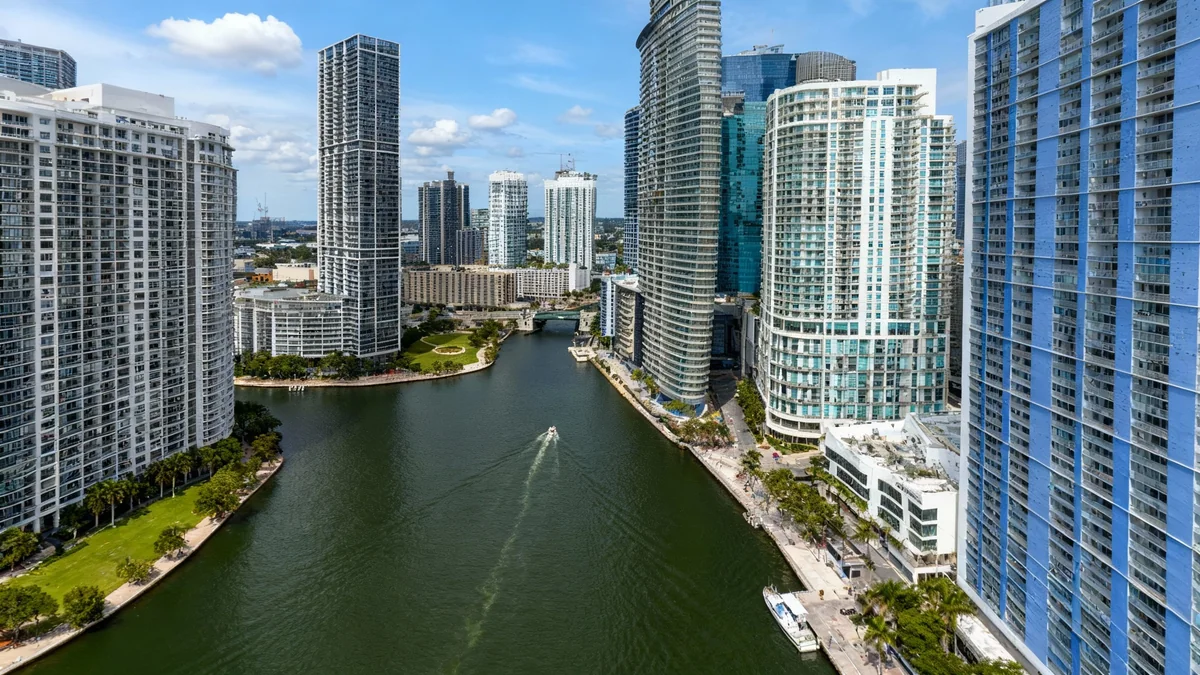
While the global outlook is stable, the report sounds a clear warning for a select few cities. Miami, Tokyo, and Zurich have been placed in the highest-risk category, suggesting their property markets exhibit classic signs of a bubble.
In these locations, property valuations appear to have become disconnected from the local economic realities. This often happens when a surge of investment, both foreign and domestic, pushes prices far beyond what average local salaries can support. While the report does not predict an imminent pop, the "high risk" designation serves as a caution to investors and policymakers in those areas.
The 2025 Bubble Risk Index
UBS categorized the 21 cities into four distinct risk levels, providing a clear snapshot of the global real estate landscape.
- High Risk: Miami, Tokyo, Zurich
- Elevated Risk: Los Angeles, Dubai, Amsterdam, Geneva
- Moderate Risk: Toronto, Sydney, Madrid, Frankfurt, Vancouver, Munich, Singapore
- Low Risk: Hong Kong, London, San Francisco, New York, Paris, Milan, São Paulo
Cities on the Watchlist
Just below the most critical tier, several other major cities are showing signs of overvaluation. The report places Los Angeles, Dubai, Amsterdam, and Geneva in the "elevated risk" category. These markets are not considered to be in a full-blown bubble but are exhibiting significant price imbalances that warrant close monitoring.
A larger group of cities falls into the "moderate risk" classification. This includes major hubs like Toronto, Sydney, Madrid, and Singapore. In these markets, while prices may be high, they are not yet considered dangerously detached from economic fundamentals. These cities represent a middle ground, where the risk of a significant downturn is present but not immediate.
This tiered system highlights the fragmented nature of the global property market. Conditions can vary dramatically from one major city to another, influenced by local economic policies, foreign investment flows, and housing supply constraints.
Safe Havens for Real Estate
In a sign of market health, many of the world's most prominent financial and cultural centers are deemed low-risk. Cities such as New York, London, San Francisco, and Paris are considered to have fairly valued or moderately overvalued markets with a low probability of a severe correction.
This assessment suggests that despite high entry costs, the property markets in these global hubs are supported by strong economic fundamentals, diverse industries, and consistent demand. For investors seeking stability, these locations appear to offer a safer harbor compared to the more volatile, high-risk cities.
The report also lists Hong Kong, Milan, and São Paulo in this low-risk category, indicating that market stability can be found across different continents and economic environments. The overall message is one of cautious optimism, suggesting that while specific hotspots require attention, the global real estate foundation remains solid for now.