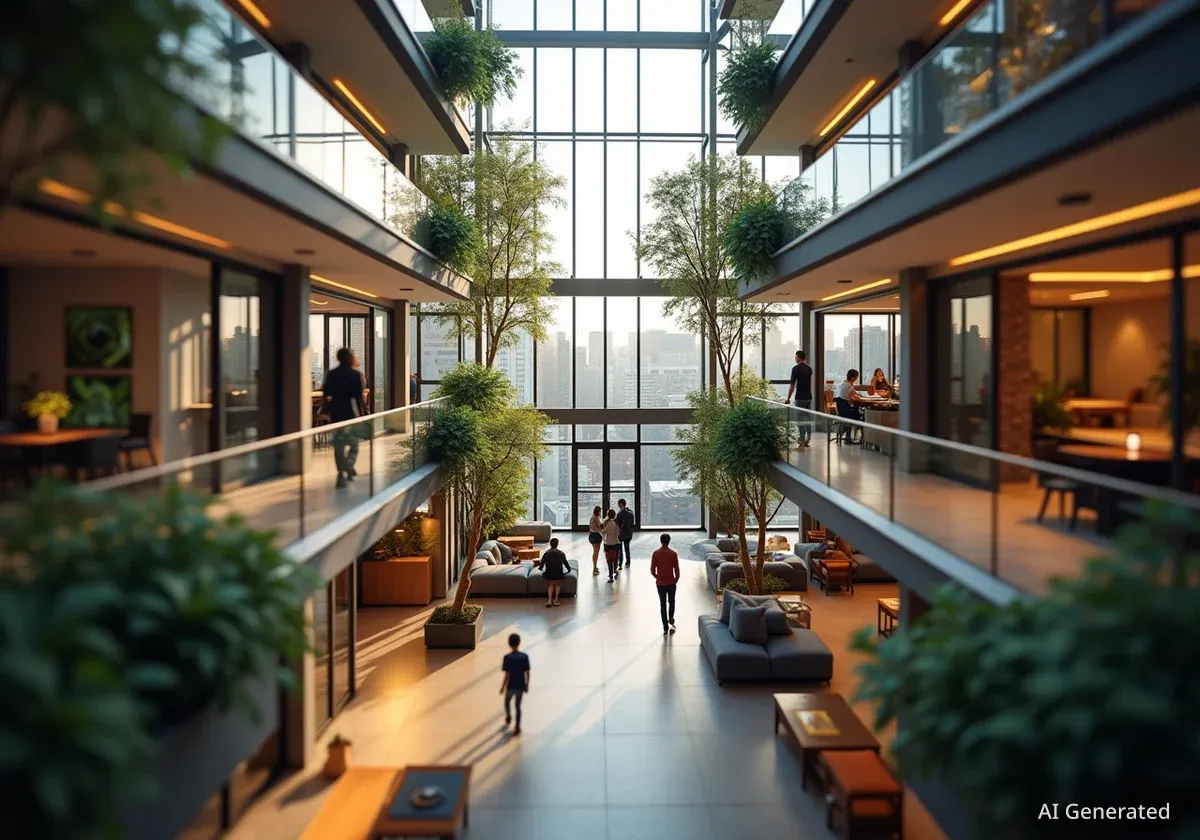
A quiet transformation is reshaping the New York City skyline, not by building new towers, but by repurposing old ones. Developers are increasingly converting underused office buildings into residential apartments, a trend that has accelerated in recent years to address the city's housing needs and adapt to post-pandemic work habits. Over the last two decades, this movement has seen nearly 30 million square feet of commercial space turned into homes.
What was once considered an architectural and financial impossibility is now becoming a viable solution. Through innovative design and engineering, developers are overcoming the unique challenges posed by deep, windowless office floor plans to create livable, light-filled apartments in the heart of the city.
Key Takeaways
- Nearly 30 million square feet of office space in New York has been converted to residential use over the past 20 years.
- The pace of these conversions has significantly increased recently due to shifts in work culture and housing demand.
- New architectural techniques, such as carving light wells and creating internal courtyards, are making conversions more feasible.
- This trend helps address the city's housing shortage while revitalizing commercial districts with lower office occupancy.
The Challenge of Office-to-Home Conversion
For years, the idea of turning a classic office tower into an apartment building was dismissed by many in the real estate industry. The core problem lies in the fundamental design differences between commercial and residential structures. Office buildings are often designed with massive, deep floor plates to accommodate open-plan workspaces, leaving large portions of the interior far from any natural light.
Residential building codes, however, have strict requirements for windows, ventilation, and light in every habitable room. This made the vast, dark interiors of office towers unsuitable for traditional apartment layouts. Furthermore, integrating the complex plumbing and electrical systems required for individual kitchens and bathrooms into a structure designed for shared facilities presented a significant engineering hurdle.
These obstacles often made conversions prohibitively expensive and logistically complex, leading developers to favor new construction. However, a combination of changing market dynamics and architectural ingenuity is shifting that calculus.
Why Now? The Perfect Storm for Conversions
The rise of remote and hybrid work has left many older office buildings with high vacancy rates, depressing their value. Simultaneously, New York City continues to face a critical housing shortage. This economic pressure has created a powerful incentive for building owners and developers to find new uses for their underperforming commercial assets.
Architectural Hacks Breathing New Life into Old Buildings
To solve the puzzle of the deep, dark office floor, architects and engineers are employing creative strategies that fundamentally alter the buildings' internal structures. These are not simple renovations; they are complex architectural reinventions.
Carving Out Light and Air
One of the most effective techniques is the creation of internal light wells or atriums. This involves cutting large vertical shafts through the center of the building, from the roof down through multiple floors. These new voids act as internal courtyards, allowing sunlight and fresh air to penetrate deep into the building's core.
Apartments can then be designed to face both the exterior of the building and this new internal space, ensuring every unit has access to natural light. This method effectively transforms a single, massive floor plate into a doughnut-shaped layout more suitable for residential living.
Strategic Notches and Courtyards
Another approach involves carving "notches" into the building's facade. These strategic cutaways create smaller courtyards or indentations, increasing the surface area available for windows. This allows for more flexible apartment layouts and ensures more rooms meet legal light and air requirements.
By strategically removing sections of the floor plate, developers can create U-shaped or E-shaped floors, breaking up the monolithic interior and creating more corners and exterior-facing walls.
A Growing Trend
While nearly 30 million square feet have been converted over 20 years, a significant portion of that activity has occurred in the last five. This acceleration highlights the growing acceptance and financial viability of these complex projects in today's real estate market.
Rethinking the Building's Core
The central core of an office building, typically housing elevators, stairwells, and mechanical systems, also presents a challenge. In many cases, these cores are too large and centrally located for efficient residential layouts.
Developers are now finding ways to work around this. Some projects involve strategically walling off sections of the interior core that are too far from windows. These landlocked spaces are then repurposed for uses that don't require natural light, such as:
- Amenity spaces: gyms, movie theaters, and resident lounges.
- Storage units: personal storage lockers for residents.
- Mechanical rooms: housing the new, decentralized plumbing and HVAC systems needed for apartments.
This approach allows developers to maximize the usable, light-filled perimeter of the building for valuable residential units while still finding a purpose for the less desirable interior space. It's a pragmatic solution that turns a building's biggest weakness into a functional asset.
"We're no longer just renovating; we're performing architectural surgery. By carving new voids for light and reconfiguring the core, we're unlocking the hidden residential potential in buildings that were never designed for it." - An anonymous New York-based architect specializing in adaptive reuse.
The Future of Urban Living
The rise of office-to-residential conversions represents more than just a clever real estate strategy. It signals a fundamental shift in how we envision the future of our cities. As work becomes more decentralized, the traditional 9-to-5 central business district is evolving into a more integrated, mixed-use neighborhood where people can live, work, and socialize.
These projects contribute to a more sustainable urban model by recycling existing structures rather than demolishing them. This adaptive reuse reduces construction waste and preserves the architectural character of historic neighborhoods.
While challenges remain, including zoning regulations and the high cost of conversion, the momentum is undeniable. As developers continue to refine their techniques and more cities embrace this model, the empty office towers of yesterday are poised to become the vibrant residential communities of tomorrow.