The recent mayoral election in New York City is creating significant discussion in luxury real estate markets far beyond the five boroughs. Real estate agents in affluent areas like Miami, Palm Beach, and Greenwich, Connecticut, report a noticeable shift in client sentiment, with some attributing a new sense of urgency among potential buyers to the political changes in New York.
While the phenomenon, dubbed the "Mamdani effect," is still largely based on conversations rather than completed transactions, it is influencing both buyer and seller behavior in these high-end markets. Some sellers are considering price increases in anticipation of new demand, while some buyers are accelerating their plans to purchase property.
Key Takeaways
- The election of socialist mayor Zohran Mamdani in New York City is prompting some wealthy residents to explore real estate options elsewhere.
- Luxury property markets in South Florida and Connecticut are seeing increased interest and speculation from both buyers and sellers.
- Agents report that while the election is a contributing factor, it often accelerates pre-existing plans rather than being the sole reason for a move.
- Despite the talk of an exodus, New York City's own luxury market saw a spike in sales the week of the election, suggesting many are opting for multiple residences.
Florida Sees a Surge in Interest
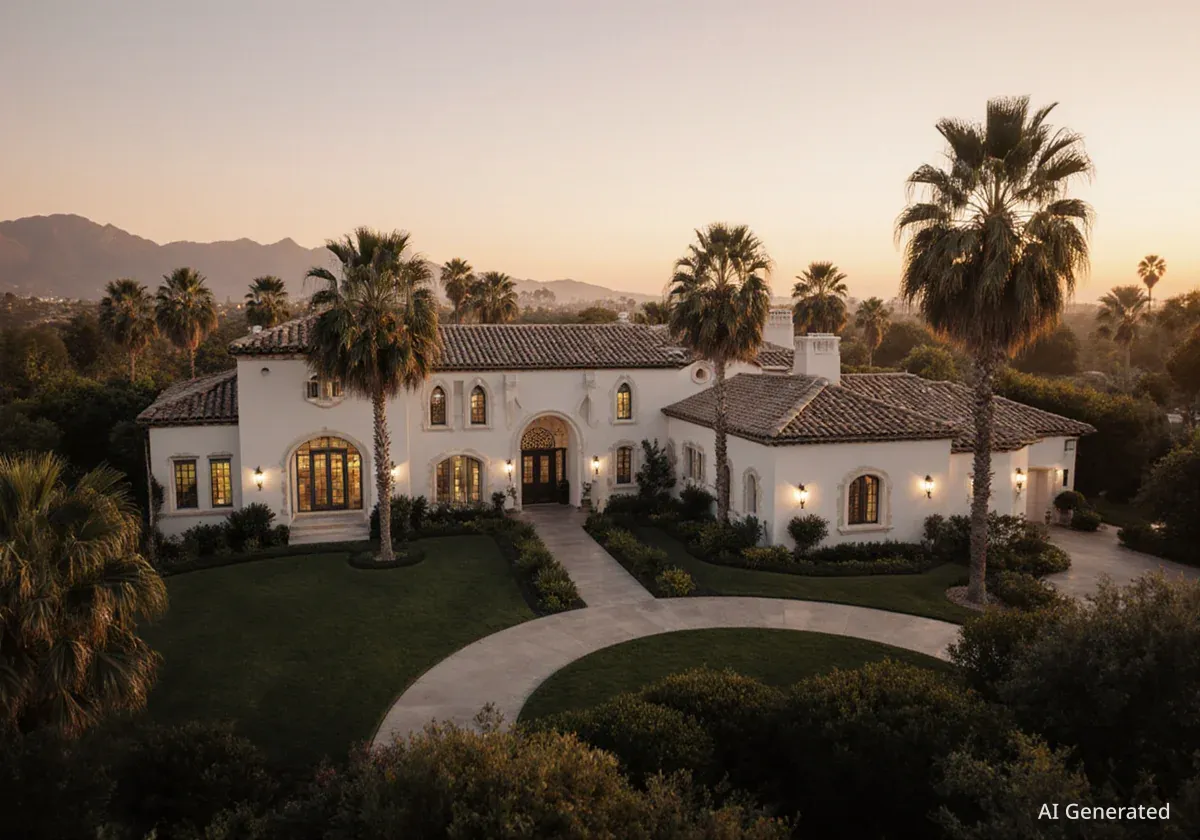
In South Florida, a long-favored destination for New Yorkers, the election has added fuel to an already hot ultra-luxury market. Dina Goldentayer, a top agent with Douglas Elliman in Miami, noted that 2025 was already a banner year for high-end sales. This trend contrasts with the broader Miami market, where median home prices fell by about 4% year-over-year as of September.
In the same period, prices for luxury homes in Miami climbed by 8.4%. Goldentayer mentioned that the price benchmarks for top-tier properties are rising, stating, "30 is the new 20," in reference to listings in the tens of millions.
While she has not had clients explicitly state they are moving because of the new mayor, she observes a change in local market psychology. "I've had some sellers in Miami say, 'Let's raise my price,'" Goldentayer said, adding that she advises them to wait for concrete policy changes. Buyers, on the other hand, are concerned that an influx of New Yorkers will drive prices even higher. One of her clients remarked that "The Mamdani effect is being baked into the price."
From Second Homes to Lifestyle Shifts
Nancy Batchelor, a leading agent with Compass in Miami, described the reaction as more subtle. She said she has had "a handful of buyers mention the election," but it is never the "sole reason" for their property search.
"What we're seeing is more subtle; people who were on the fence are now exploring their options with more urgency," Batchelor explained.
Many are purchasing second homes in Florida for now, planning to see how policies unfold in New York before committing to a full relocation. This reflects a broader trend of affluent individuals owning properties in multiple locations. "Many aren't choosing between New York and Miami, they're choosing both," she added.
A Magnet for Wealth
South Florida has increasingly become a hub for major financial players. Billionaires like investor Carl Icahn and Citadel's Ken Griffin, who moved his firm's headquarters to Miami, have established a significant presence. This migration of capital and influence has solidified the region's status as a premier destination for the ultra-wealthy.
In Palm Beach, what began as a pandemic-driven trend has evolved into a "full lifestyle shift," according to agent Samantha Curry. She has heard from former New Yorkers who cite potential tax changes and safety concerns under the new administration as factors in their search. Currently, these concerns are primarily "driving conversations," but she anticipates a larger migration if new tax policies are enacted. "If that happens, we expect to see another wave of buyers from the north heading to Palm Beach," Curry stated.
Greenwich Market Heats Up
Greenwich, Connecticut, a traditional haven for those in the finance industry, is also experiencing heightened activity. Mark Pruner, a Compass agent in Greenwich, analyzed sales data and found a notable jump in ultra-luxury transactions after Mamdani's primary victory in June. The average sale price for these homes rose from $14.9 million before the nomination to $19.7 million after.
Pruner reported that three significant sales, ranging from $14 million to $28 million, went into contract shortly after the general election. While he acknowledged the evidence linking these sales directly to the election is "anecdotal," some clients have mentioned it as a factor.
A Record Year for Greenwich
The town is on track for a historic year in real estate, with projections of more than 50 sales over $10 million. The previous record was 19 such sales in 2007. This surge is occurring even as housing inventory has plummeted by 82% compared to pre-pandemic levels, putting upward pressure on prices.
Pruner suggests another force is at play: the stock market. "We're at record highs, people are sitting at lots of unrealized profits, and there are people who are taking money out of their stock investments and putting it into high-end real estate here in Greenwich," he said. For these buyers, property is seen as a stable asset.
New York's Luxury Market Remains Strong
Despite the narrative of a potential exodus, New York City's own luxury market has shown surprising strength. According to the Olshan Luxury Market Report, the week of the election saw 41 contracts signed for properties priced at $4 million and above. This was the highest single-week total since late May.
This data suggests that many wealthy individuals are not abandoning New York but are instead expanding their real estate portfolios. The concept of "multi-market living" allows them to maintain a foothold in the city while establishing residency in lower-tax states like Florida.
As Pruner noted, the financial capacity of this demographic allows for such flexibility. "The nice thing is, if you can afford an over $10 million house, you generally can afford two, or three, or four," he said. This allows them to change their primary domicile for tax purposes while keeping their properties in New York. The full impact of the city's new leadership on real estate trends will likely become clearer once new policies are implemented in 2026.