Portland, once a top destination for real estate investment, has seen its appeal plummet among national capital partners. A city that recently ranked among the top five markets for investment now finds itself near the bottom, at 80th out of 81 major markets, according to one major developer who has been active in the city for over a decade.
This dramatic shift in investor sentiment is leading to significant financial consequences, with major commercial properties losing substantial value and new residential projects struggling to find tenants, painting a challenging picture for the city's economic future.
Key Takeaways
- Portland has fallen from a top-five investment market to 80th out of 81, signaling a major loss of confidence from capital partners.
- High-profile properties have seen dramatic devaluations; one former county courthouse purchased for $28 million in 2018 is now valued at just $5.8 million.
- New luxury apartment buildings are facing low occupancy rates and are being forced to offer rents described as a "joke" by developers to attract tenants.
- Developers cite a combination of high taxes, public safety concerns, and the slow return of office workers as key factors driving the downturn.
Investor Confidence Evaporates
The flow of investment capital into Portland's real estate market has slowed to a trickle. Developers who once found eager financial backers in New York and San Francisco now report that mentioning Portland in meetings causes potential partners to "run."
Lauren Noecker, CEO of NBP Capital, a firm with extensive holdings in the city, described the change in atmosphere. "We used to talk about Portland, and there was a lot of interest from capital partners, be it debt or equity," she stated. Now, the situation is the reverse, making it difficult to secure funding for even short-term project needs.
This loss of confidence has tangible effects on the ground. Data shows that applications for new apartment construction permits have fallen to their lowest point in a decade, a clear indicator that out-of-state developers are no longer betting on Portland's growth.
The Devaluation of a City's Assets
The decline is not just theoretical; it is reflected in the hard numbers of property valuations. NBP Capital, which once held over 50 buildings in the city, is now navigating a landscape where assets are worth a fraction of their purchase price.
A High-Profile Example
Perhaps the most stark example is the former Multnomah County Courthouse. NBP Capital purchased the historic building for $28 million in 2018 with plans for redevelopment. Today, the county assessor values the same property at just $5.8 million, a decrease of nearly 80%.
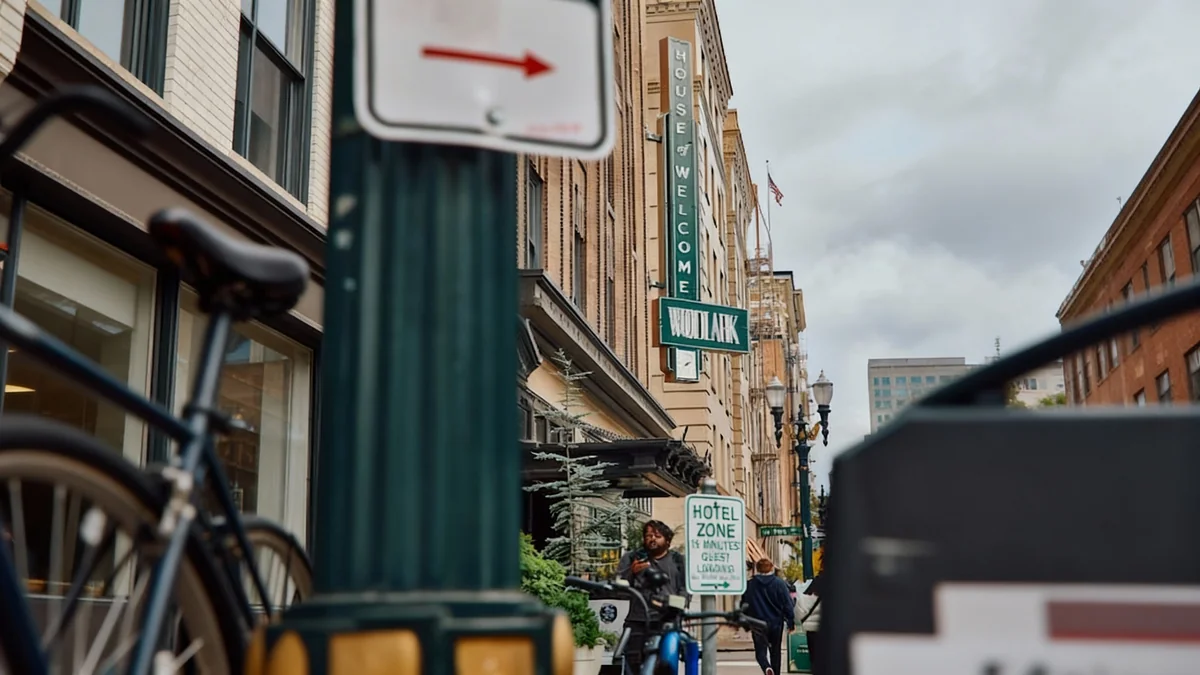
The situation has become so dire that some lenders are reluctant to foreclose on properties because they do not want to assume ownership in a depressed market. Noecker confirmed that the courthouse is one such property being returned to the lender, who is hesitant to take it back. "The best angle I have with my lender on the hotel is that they don’t want to take it back," she said, referring to another of her properties, the Woodlark Hotel.
This trend forces owners like NBP to cover basic utility and maintenance costs on underperforming assets simply because there is no viable exit strategy.
Struggles in the Residential Sector
Even brand-new, high-end residential projects are not immune to the city's challenges. The Holloway, a newly opened 271-unit luxury apartment building in Northeast Portland, highlights the difficulties in the rental market.
Despite offering premium amenities like a high-end gym and common areas designed to compete with exclusive social clubs, the building is struggling to attract residents. Since opening in August, it has leased only 63 units, representing less than a quarter of its total capacity.
By the Numbers: The Holloway
- Total Units: 271
- Units Leased: 63 (as of late 2023)
- Occupancy Rate: Approximately 23%
- Starting Rent: $1,399 per month
To fill apartments, NBP has set rents at levels that Don Mutal, the company's president of construction, called "a joke." The low rental income makes it nearly impossible for such a project to be profitable.
"It’s a joke what we’re renting the units for in this building," Mutal said, expressing frustration over the market conditions.
Noecker sees a small silver lining in the situation. The anemic rents mean that no competitor can afford to build a project of similar quality in the current environment, giving the Holloway a unique advantage in attracting tenants from other properties. "We’re stealing tenants from other places," she noted.
A 'Perfect Storm' of Factors
Developers on the ground point to a confluence of events that they believe accelerated Portland's decline. The issues cited are multifaceted and have combined to create what Noecker calls a commercial real estate collapse that was "so much faster and so much deeper" than in other cities.
Among the factors frequently mentioned are:
- Public Policy: Measures like Measure 110, which decriminalized small amounts of hard drugs, are often cited by business leaders as contributing to public safety concerns.
- Social Unrest: The prolonged protests of recent years have had a lasting impact on the city's downtown core and its national reputation.
- Remote Work: The slow return of office workers has decimated daytime foot traffic, hurting retail and service businesses that support the commercial real estate ecosystem.
- High Taxes: Developers and investors argue that Portland's property taxes are too high relative to the services and public safety provided, making it an unattractive place to own property. Noecker questioned who would willingly pay her condo tax bill in the Pearl District given the current environment.
"You had a very lax D.A.," Noecker added. "Go downtown and you’re going to see something you don’t want to see...From a business perspective, it was just impossible."
An Uncertain Future
Despite the immense challenges, some developers like Noecker have not completely abandoned the city. NBP Capital is holding onto properties like its RiverPlace residential units and the Holloway, hoping for a long-term recovery. The firm's Woodlark Hotel continues to earn accolades, including Michelin stars for its restaurant, Bullard Tavern, and a No. 1 ranking on Tripadvisor.
However, the appetite for future investment remains non-existent. Noecker made it clear that if her firm were to build in Portland again, the project would be starkly different.
"I don’t know if we can jump back into anything in Portland, but if we ever did, it would be so basic," she said. "I’m talking no amenities. You can’t build this stuff anymore." This sentiment suggests that the era of ambitious, amenity-rich development in the city may be over for the foreseeable future, as investors wait for signs of a fundamental recovery.