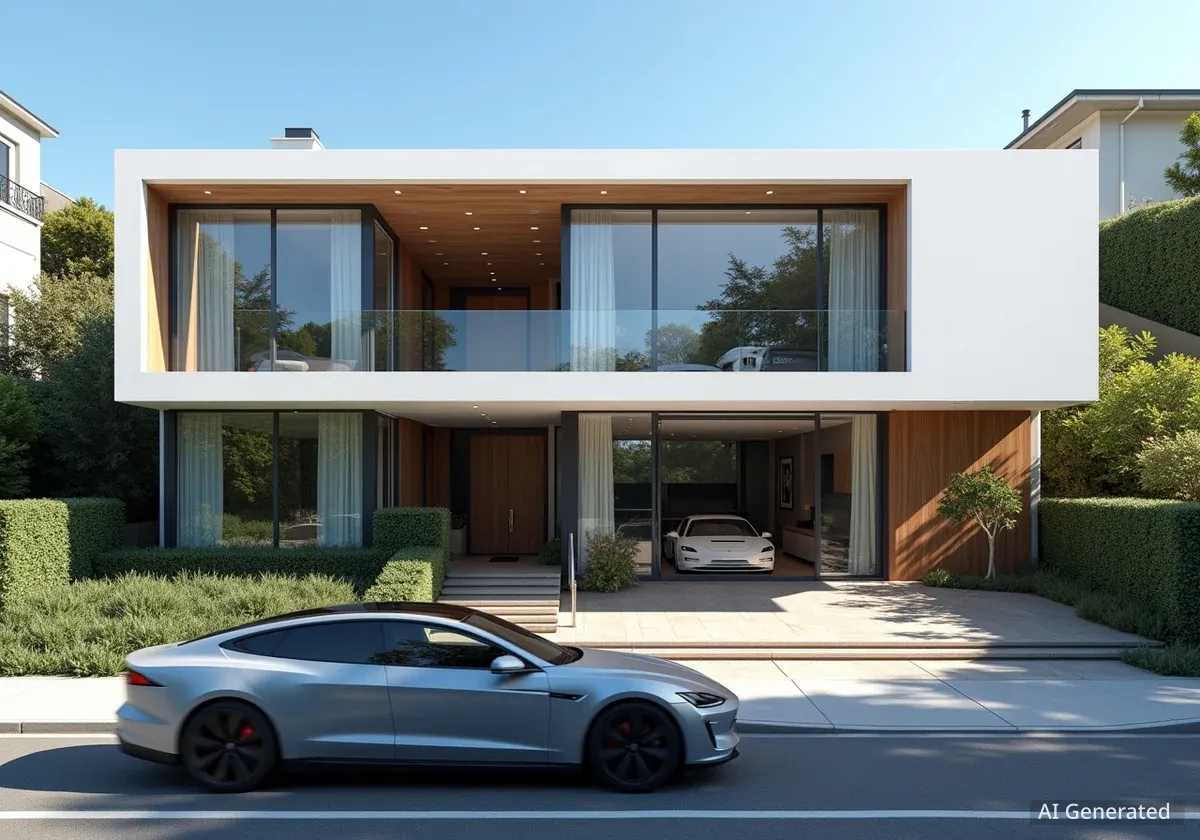
San Francisco's high-end real estate market is showing new signs of life, fueled by a surge of wealth from the city's booming artificial intelligence sector. After a prolonged period of stagnation, multimillion-dollar homes that once lingered on the market are now finding buyers, signaling a potential turnaround for the city's most exclusive properties.
A prominent example of this shift is a hilltop mansion on Glenbrook Avenue, which recently sold for $16.5 million. The property, featuring panoramic views of the city and bay, had been on the market for two years before a buyer finalized the deal in November.
Key Takeaways
- San Francisco's luxury real estate market, particularly for homes over $10 million, is experiencing a resurgence.
- The boom in the Artificial Intelligence (AI) industry is identified as a primary driver, creating new wealth for potential buyers.
- Properties that were on the market for extended periods are now being sold, such as a Glenbrook Avenue home that sold for $16.5 million after two years.
- This trend marks a notable shift from the recent downturn that affected the city's property values, especially in the high-end segment.
A Market Reawakens
For the past two years, the luxury housing market in San Francisco has been notably quiet. Economic uncertainty and shifts in the tech industry led to a slowdown, leaving many high-value properties without serious offers. However, recent activity suggests that this trend is beginning to reverse.
The sale of the Glenbrook Avenue property is a key indicator of this change. The six-bedroom home, complete with a 300-bottle wine cellar, sauna, and outdoor spa, was initially listed for $20 million. Despite a 10% price reduction, it failed to attract a buyer for a significant period. Its recent sale for $16.5 million demonstrates renewed confidence among affluent buyers.
This is not an isolated event. Real estate professionals in the area report an uptick in inquiries and serious offers for homes in the eight-figure price range, a segment that had been particularly slow. The new momentum is directly linked to the financial success emanating from the city's AI companies.
The AI Gold Rush and Its Impact on Real Estate
The driving force behind this market revival is the immense wealth being generated by San Francisco's artificial intelligence industry. As AI companies secure massive funding and achieve high valuations, a new class of millionaires and billionaires is emerging. These tech leaders and early employees are now looking to invest their earnings in tangible assets, with prime real estate being a top choice.
Unlike previous tech booms, the wealth from AI seems to be materializing quickly. This has created a fresh wave of demand for luxury properties that offer exclusivity, space, and premium amenities. These buyers are often seeking statement homes that reflect their success in the tech world.
From Tech Slowdown to AI Boom
The recent revival contrasts sharply with the market conditions of the past few years. Following a period of remote work adoption and layoffs in some parts of the tech sector, San Francisco's commercial and high-end residential markets faced significant headwinds. The current AI-driven activity suggests a new chapter for the city's economy, with a different segment of the tech industry leading the charge.
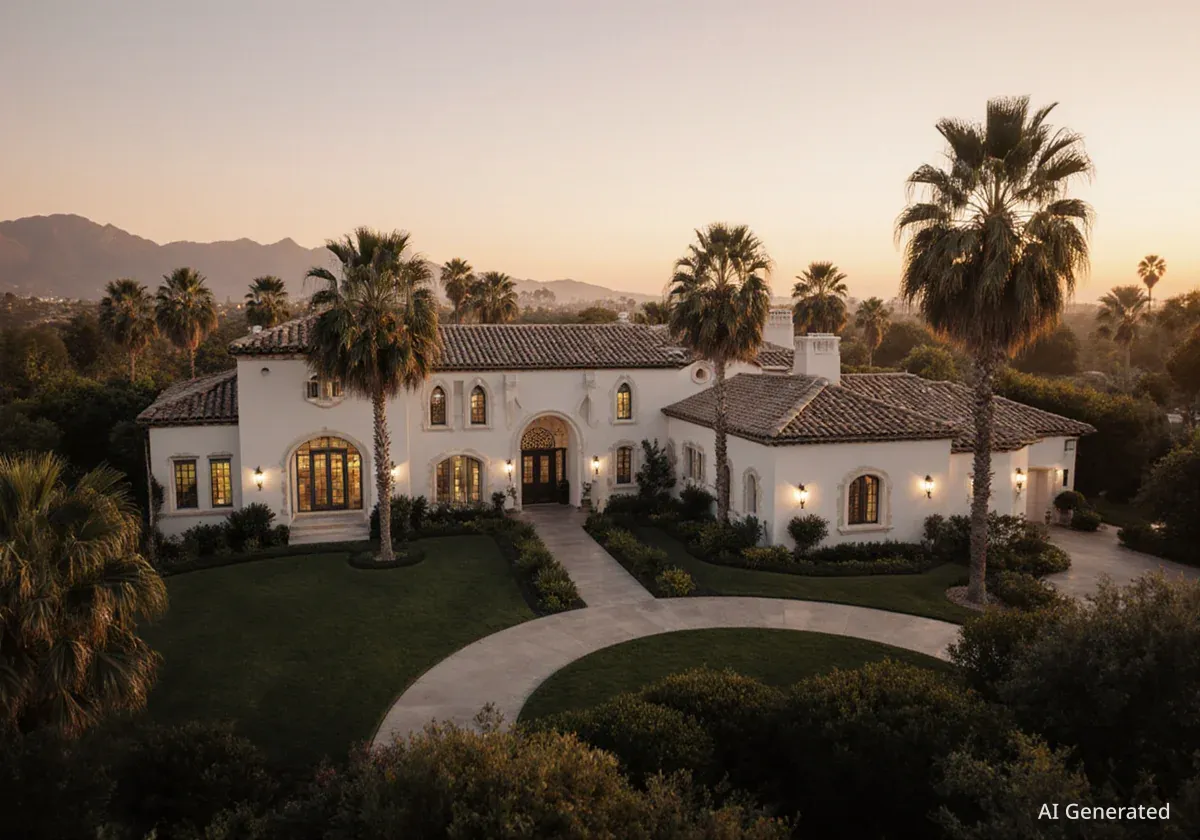
The Glenbrook Avenue mansion, with its commanding hilltop position and floor-to-ceiling windows, represents the exact type of property these new buyers are targeting. It offers privacy, luxury, and a vantage point over the city where their fortunes are being made.
Details of a Landmark Sale
The property on Glenbrook Avenue serves as a perfect case study for the market's new dynamics. Its journey from a stagnant listing to a successful sale highlights the shifting tides.
Property Profile
- Location: Glenbrook Avenue, San Francisco
- Bedrooms: Six
- Key Features: 300-bottle wine cellar, sauna, outdoor spa, panoramic city views
- Original Asking Price: $20 million
- Final Sale Price: $16.5 million
The fact that the home sold after a two-year wait, even at a price below the original asking figure, is significant. It indicates that buyers with substantial capital are re-entering the market, willing to close deals on properties that meet their specific criteria. The original price may have been set during a different market peak, but the $16.5 million sale price is still a massive transaction that injects confidence into the local luxury sector.
Market Stagnation and Price Adjustments
The Glenbrook property initially saw a 10% price cut from its $20 million listing price, bringing it to $18 million. For a long time, even this reduction was not enough to secure a sale. The final deal at $16.5 million reflects a negotiation process that found a meeting point between seller expectations and the new buyer's valuation in the current market.
This sale is expected to have a ripple effect, encouraging other high-net-worth individuals to invest in San Francisco real estate. It also provides a new benchmark for other luxury properties in the area, potentially stabilizing prices in the ultra-high-end market segment.
What This Means for San Francisco's Future
The resurgence in the luxury home market is a positive economic indicator for San Francisco. It suggests that despite challenges in other sectors, the city remains a critical hub for innovation and wealth creation. The AI boom is not just a corporate phenomenon; it is having a direct and visible impact on the local economy.
For homeowners of high-end properties, this trend could signal the end of a frustrating period of declining or stagnant values. For the city, it means an increase in high-value property transactions, which contributes to tax revenues and overall economic health.
While the market for homes under $10 million may not experience the same immediate impact, the confidence at the top end often trickles down. As the AI industry continues to grow and create jobs, its positive effects could spread to other segments of the housing market. Observers will be watching closely to see if this is the beginning of a sustained recovery or a short-term boost limited to the city's most affluent residents.