President Donald Trump's stated interest in the United States acquiring Greenland is being analyzed by observers as a reflection of his background as a real estate developer. The president has suggested that if a straightforward deal is not possible, other measures might be considered, framing the potential acquisition in terms of strategic value against rivals like Russia and China.
The proposal has been met with firm rejection from Danish officials, who oversee the autonomous territory. This has sparked a unique diplomatic conversation, blending traditional geopolitics with the transactional approach of a property magnate.
Key Takeaways
- President Trump has confirmed his interest in the U.S. acquiring Greenland.
- Analysts suggest this approach stems from his real estate developer background, viewing the territory as a strategic asset.
- The president cited concerns over potential Russian or Chinese influence in the Arctic as a key reason for the interest.
- Danish officials have dismissed the idea, leading to a tense diplomatic exchange.
A Transactional View of Global Politics
Understanding President Trump's persistent interest in Greenland requires looking at his career before entering politics. For decades, his focus was on identifying, acquiring, and developing valuable properties. Political analyst Fareed Zakaria suggests this mindset is now being applied to international relations.
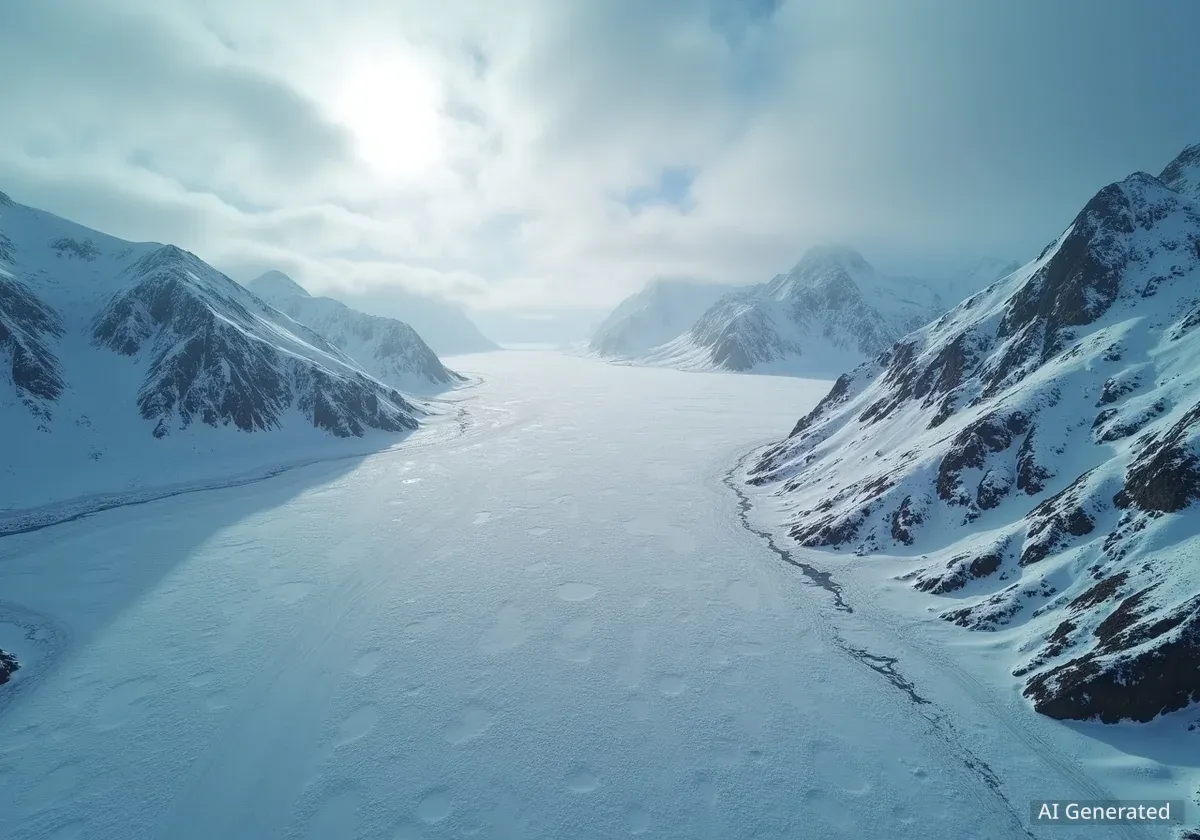
From this perspective, Greenland is not just a sovereign territory with a distinct culture and population; it is a massive, undeveloped parcel of land rich in natural resources and positioned in a strategically critical location. This view prioritizes the asset's potential value over traditional diplomatic norms.
The president's language further supports this interpretation. He has spoken of acquiring the territory via an "easy way," implying a negotiated purchase, but has also alluded to a "hard way," a comment that has caused concern among international observers.
Historical Context: US Interest in Greenland
While President Trump's approach is unconventional, U.S. interest in Greenland is not entirely new. After World War II, President Harry S. Truman's administration offered Denmark $100 million for the territory, an offer that was declined. The U.S. has maintained a significant military presence at Thule Air Base in Greenland for decades, highlighting its long-standing strategic importance.
Geopolitical Motivations in the Arctic
Beyond the transactional mindset, the administration has provided a clear geopolitical justification for its interest. President Trump has warned that if the United States does not act, other global powers could fill the void in the increasingly accessible Arctic region.
Specifically, he mentioned Russia and China as potential rivals who could seek to establish a foothold on the island. As climate change causes polar ice to melt, new shipping lanes and access to vast reserves of minerals, oil, and gas are opening up, making the Arctic a new frontier for global competition.
This concern elevates the Greenland proposal from a mere real estate venture to a matter of national security. The administration's argument is that securing Greenland would preemptively block rivals from gaining a strategic advantage in North America's backyard.
Greenland by the Numbers
- Area: Over 2.16 million square kilometers, making it the world's largest island.
- Population: Approximately 56,000 residents.
- Governance: An autonomous territory within the Kingdom of Denmark.
- Strategic Value: Location between the Arctic and Atlantic oceans, rich in potential resources.
Denmark's Firm Rejection
The reaction from Denmark and Greenland has been swift and unequivocal. The idea of selling the territory has been dismissed as absurd by officials. Danish Member of Parliament Rasmus Jarlov expressed disbelief and concern over the president's remarks.
In an interview, Jarlov reacted to the president's suggestion that he might have to acquire the territory the "hard way."
"We are talking about an allied country. We are talking about a democratic country. We are talking about people, and you don't just talk about acquiring people and a country in this manner," Jarlov stated, emphasizing the human and democratic elements ignored by a purely transactional view.
The sentiment from Greenland's own government has been just as direct, with officials stating that the island is "not for sale." This cultural and political disconnect highlights the fundamental clash between a business-oriented approach and the principles of national sovereignty and self-determination.
Protests and Domestic Reactions
While the Greenland discussion unfolds, the administration faces separate challenges at home. Protests have been organized across the United States in response to the actions of U.S. Immigration and Customs Enforcement (ICE). A recent fatal shooting of a motorist in Minnesota by an ICE agent has galvanized activists.
Over 1,000 demonstrations, many coordinated under the banner "ICE Out For Good," were planned. Organizers have stressed that the events are intended to be nonviolent and community-led. In Minneapolis, Representative Ilhan Omar joined thousands of protesters to rally against the shooting and the administration's broader immigration policies.
These domestic events provide a complex backdrop to the administration's foreign policy initiatives, showing a president engaging on multiple, often controversial, fronts simultaneously. While the Greenland story captures global attention, domestic issues continue to fuel significant public and political debate within the United States.
White House Expansion Plans Move Forward
In other news from Washington, new details have emerged about a proposed expansion of the White House's East Wing. An architect presented plans to an oversight commission that include a "grand stair," additional space for utilities and food service, and a potential second-story addition to the West Wing Colonnade.
President Trump has stated that the entire cost of this significant renovation project will be covered by private donors, not taxpayers. This project, focused on enhancing the physical infrastructure of the executive mansion, continues to move forward even as the administration pursues ambitious and unconventional goals abroad.