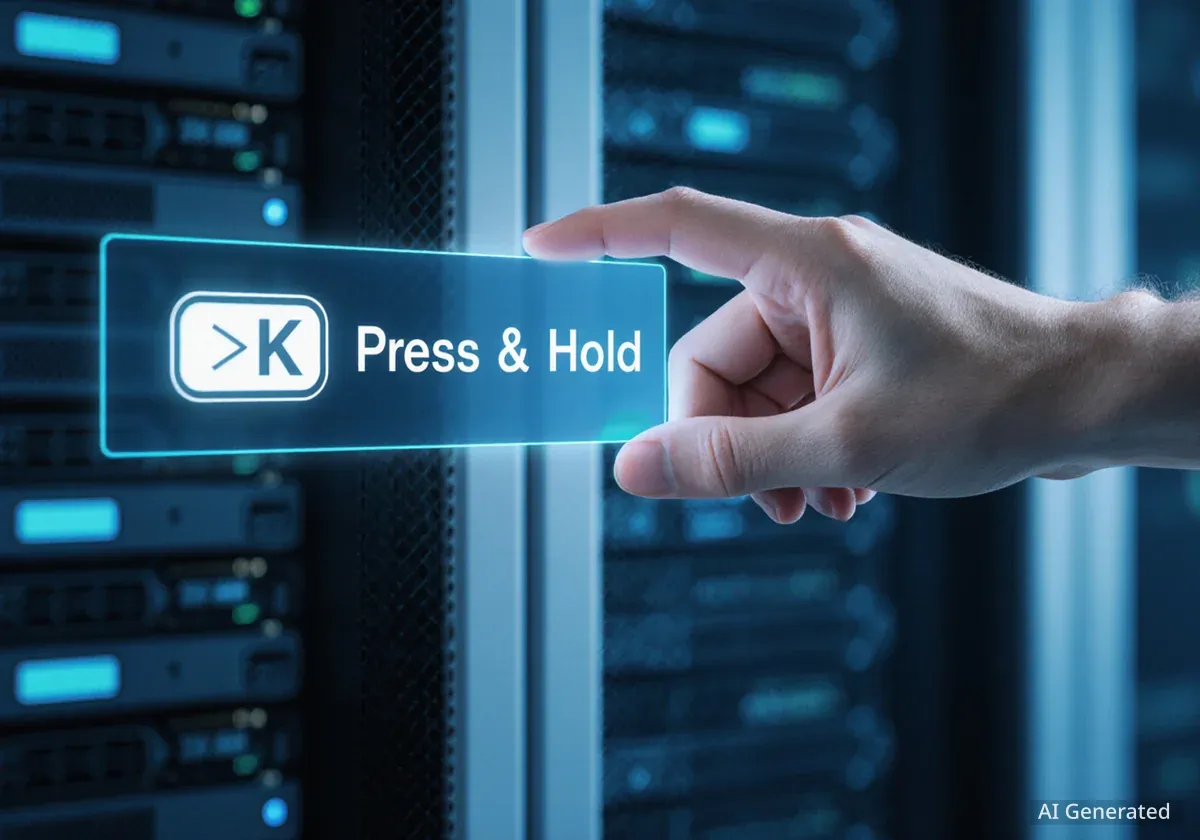
A new type of online security check is appearing on websites, asking users to simply press and hold a button on their screen. This method, developed by cybersecurity firm PerimeterX, is designed to distinguish human visitors from automated bots without the need for solving puzzles or identifying images.
The technology aims to reduce user frustration commonly associated with traditional CAPTCHA systems while providing a robust defense against malicious automated traffic. By analyzing the simple action of a press and hold, the system gathers data points to verify human behavior.
Key Takeaways
- A 'press and hold' verification method is being used to replace traditional CAPTCHAs.
- The system is developed by cybersecurity company PerimeterX as part of its bot management solution.
- It works by analyzing behavioral biometrics during the simple press-and-hold action.
- The goal is to improve user experience while effectively blocking sophisticated bot attacks.
A Simpler Approach to Online Security
For years, internet users have been asked to prove their humanity by deciphering distorted text, selecting specific images from a grid, or clicking a simple checkbox. These tests, known as CAPTCHAs, have become a standard, if sometimes annoying, part of browsing the web.
Now, a different approach is gaining traction. Instead of a cognitive task, some websites now present a button with the instruction to "Press & Hold." This seemingly simple action is the core of a sophisticated security check designed to be easy for humans but difficult for automated programs, or bots, to replicate.
This technology is part of a broader shift in the cybersecurity industry towards what is known as behavioral biometrics. The focus is moving from what a user knows (a password) or has (a security key) to how they behave. The way a person interacts with a device provides a unique signature that can be used for verification.
What Are Bots and Why Are They a Problem?
Automated programs, or bots, account for a significant portion of all internet traffic. While some bots are benign (like search engine crawlers), many are malicious. They are used for activities like scraping content, creating fake accounts, attempting fraudulent transactions, and launching denial-of-service attacks that can take websites offline.
How 'Press and Hold' Works
The 'press and hold' mechanism is more complex than it appears. When a user touches and holds the button, the system begins collecting data. It analyzes a range of signals generated by the interaction between the user, their device, and the browser.
These signals can include:
- The precise pressure applied to the screen.
- Micro-movements of the finger or mouse during the hold.
- The duration of the hold.
- Device-specific data like accelerometer and gyroscope readings on a mobile phone.
PerimeterX, the company behind this specific implementation, uses this data to build a real-time profile of the user. Its machine learning algorithms compare these behavioral patterns against models of known human and bot behavior. A genuine human interaction has a certain level of natural 'noise' and variability that is very hard for a simple script to fake.
According to industry reports, malicious bot traffic can make up over 25% of all activity on the internet, posing a major threat to businesses and consumers alike.
The End of Annoying Puzzles?
Improving the User Experience
A major driving force behind this innovation is user frustration. Traditional CAPTCHAs, especially those requiring you to identify traffic lights or crosswalks, can be time-consuming and sometimes difficult to solve, leading to a poor user experience. This can cause users to abandon a website or a purchase.
The 'press and hold' method is designed to be almost frictionless. It requires a single, intuitive action that takes only a moment. By making the security check faster and simpler, companies hope to reduce user friction and improve engagement without compromising on security.
The Evolving Arms Race
However, the battle against bots is a constant arms race. As security measures become more advanced, so do the bots designed to circumvent them. Modern bots now use AI and machine learning to better mimic human behavior, from mouse movements to typing speed.
Cybersecurity experts note that no single solution is foolproof. The most effective strategies involve a layered approach, using multiple signals to detect and block malicious activity before it can cause harm. Behavioral checks like 'press and hold' are one important layer in that defense.
If the system detects a suspicious interaction—for instance, a perfectly timed hold with no micro-movements—it can block the request or present a more challenging puzzle. This adaptive approach ensures that most legitimate users have a smooth experience, while only suspicious traffic is subjected to further scrutiny.
What This Means for Internet Users
As this technology becomes more widespread, users can expect to see fewer image puzzles and distorted text challenges. Instead, they may encounter more of these simple, interactive checks that feel less like a test and more like a natural part of using a website or app.
The system also highlights the increasing importance of data in online security. While it doesn't collect personal information, it does analyze behavioral data to protect online services. In the event of an issue, such as a poor network connection or an ad-blocker interfering with the script, users are typically prompted with a clear error message to help them resolve the problem and proceed.
Ultimately, the goal is an internet that is both more secure and easier to use. Innovations like the 'press and hold' verification are a significant step in that direction, moving security checks into the background and letting users get on with their tasks with minimal interruption.