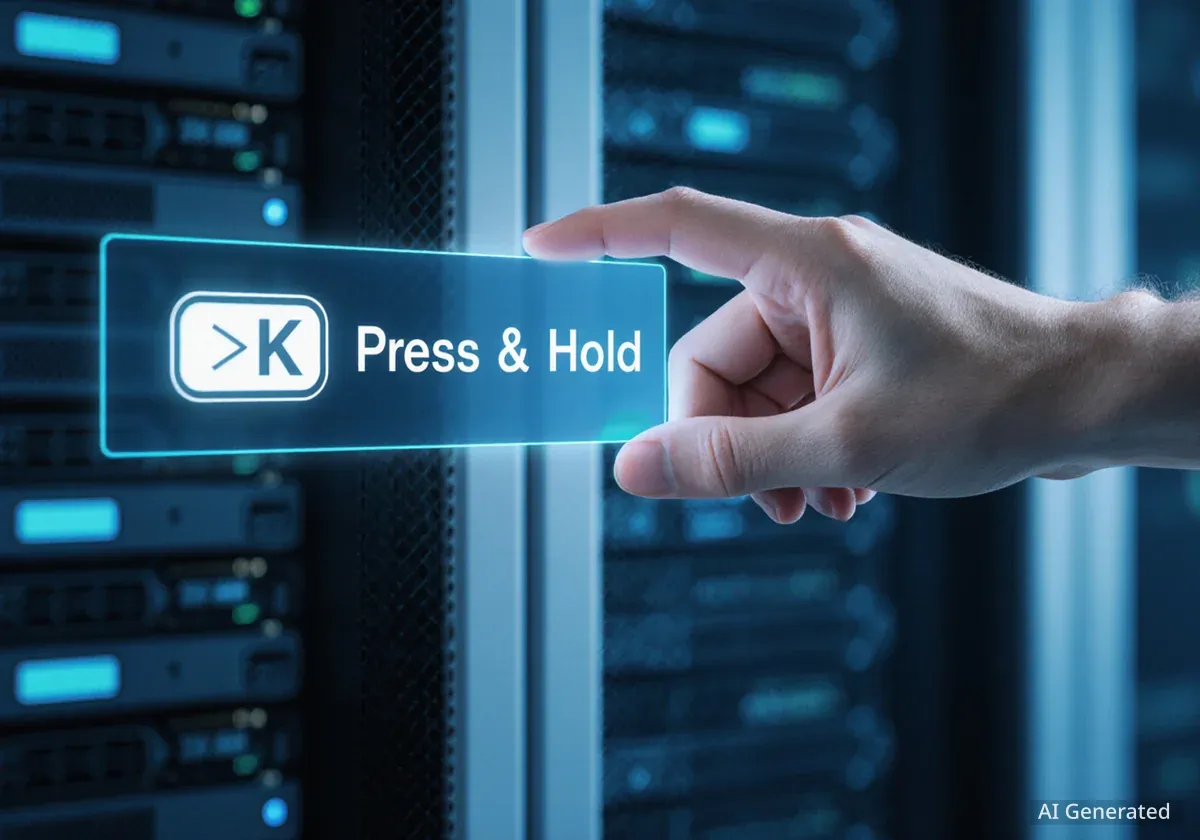
Websites are deploying a new security check that asks users to simply press and hold a button on their screen. This method represents a significant shift away from traditional, often frustrating, CAPTCHA tests that require solving puzzles or identifying images.
The technology, developed by web security firms, aims to distinguish human visitors from automated bots by analyzing subtle behavioral cues, making the process of proving you're human faster and less intrusive.
Key Takeaways
- A new 'Press and Hold' verification method is replacing older CAPTCHA systems on many websites.
- This technology analyzes behavioral biometrics like pressure, timing, and mouse movement to identify humans.
- The goal is to improve user experience by removing frustrating image puzzles while strengthening security against sophisticated bots.
- The shift comes as traditional CAPTCHAs are becoming less effective against AI-powered bot attacks.
A New Approach to Online Security
For years, internet users have encountered security prompts asking them to prove they are not a robot. These tests, known as CAPTCHAs, have typically involved deciphering distorted text or clicking on specific images, such as traffic lights or storefronts.
However, a new generation of verification is becoming more common. Instead of a puzzle, users are presented with a simple instruction: Press and Hold. This seemingly basic action is the front end of a complex security analysis designed to be effortless for humans but difficult for automated programs to replicate.
This method is part of a broader industry move towards what are called passive or low-friction authentication systems. The focus is shifting from asking users to complete a task to analyzing how they naturally interact with a webpage.
What is CAPTCHA?
CAPTCHA stands for "Completely Automated Public Turing test to tell Computers and Humans Apart." It is a type of challenge-response test used in computing to determine whether or not the user is human. The goal is to block spam and automated data extraction from websites.
How 'Press and Hold' Works
The simplicity of the 'Press and Hold' action hides a sophisticated security process. When a user interacts with the button, the system is not just registering a click; it is collecting and analyzing a stream of behavioral data in real-time.
Analyzing Human Behavior
The technology measures several subtle indicators that are characteristic of human interaction. These can include:
- Mouse Movement: The path the cursor takes to reach the button. Human mouse movements are rarely perfectly straight and have unique variations in speed and acceleration.
- Pressure and Duration: On touch-screen devices, the system can analyze the amount of pressure applied and how long the button is held.
- Micro-movements: Even when holding a button, humans make tiny, subconscious adjustments. Bots, on the other hand, tend to be static and unnaturally precise.
This collection of data points creates a unique behavioral fingerprint. Security platforms like PerimeterX, which is now part of HUMAN Security, use machine learning algorithms to compare this fingerprint against patterns known to belong to humans and bots. A genuine user is typically verified in a fraction of a second.
Automated bots are estimated to account for nearly 50% of all internet traffic, carrying out activities from benign web indexing to malicious attacks like credential stuffing and data scraping.
The Problems with Old-School CAPTCHAs
The move towards behavioral analysis is a direct response to the growing limitations of traditional CAPTCHAs. While once effective, these older systems now present several significant problems for both users and website owners.
One of the primary issues is the declining user experience. Image-based puzzles can be time-consuming and frustrating. They also pose significant accessibility challenges for users with visual impairments, who may struggle to complete the tests without assistance.
Bots Are Getting Smarter
Perhaps most importantly, bots have evolved. Modern malicious programs, often powered by artificial intelligence, have become increasingly adept at solving traditional CAPTCHAs. There are even services, known as CAPTCHA farms, that use human workers or advanced AI to solve challenges on behalf of bots in real-time.
"The classic image puzzle is becoming a less reliable indicator of humanity. We've reached a point where bots are sometimes better at solving them than people are, which defeats the entire purpose," explained a cybersecurity analyst familiar with bot mitigation techniques.
This has created an arms race where CAPTCHA challenges become more difficult for everyone, leading to higher user frustration and abandonment rates on websites. For e-commerce and service sites, this can translate directly into lost revenue.
Benefits for Users and Businesses
The adoption of behavioral verification systems like 'Press and Hold' offers clear advantages for all parties. The most immediate benefit for users is a smoother, faster, and less aggravating browsing experience.
- Improved User Experience: Replacing complex puzzles with a single, quick action reduces friction and helps users access content or complete transactions without interruption.
- Enhanced Security: For businesses, behavioral biometrics provide a more robust defense against modern, sophisticated bot attacks. It is significantly harder for a bot to mimic the nuanced, imperfect movements of a human than it is to identify a picture of a bus.
- Better Accessibility: A simple press-and-hold action is far more accessible to users with a wide range of abilities compared to visual or auditory puzzles.
- Increased Conversion Rates: By removing a common point of frustration, businesses can reduce the number of users who abandon a sign-up form or a shopping cart, leading to better business outcomes.
The Future of Proving You're Human
The 'Press and Hold' method is a stepping stone in the evolution of online identity verification. The ultimate goal for many security experts is a system that is entirely invisible to the user.
Future security checks will likely rely on continuous, passive analysis of a user's behavior from the moment they land on a page. By monitoring how a user types, scrolls, and moves their mouse, these systems can build a confidence score of their humanity without ever presenting an active challenge.
As the digital world becomes more integrated into our daily lives, the need for security that is both strong and seamless will only grow. Technologies that prioritize user experience without compromising on protection are set to define the next era of web security.