The journey to homeownership is filled with paperwork, but for some buyers, a lender's request for documentation can feel unusually personal and potentially discriminatory. A recent query from a real estate professional in New York highlights a critical question many foreign-born U.S. citizens face: When is a mortgage lender legally permitted to ask for proof of citizenship, and when does that request cross a line?
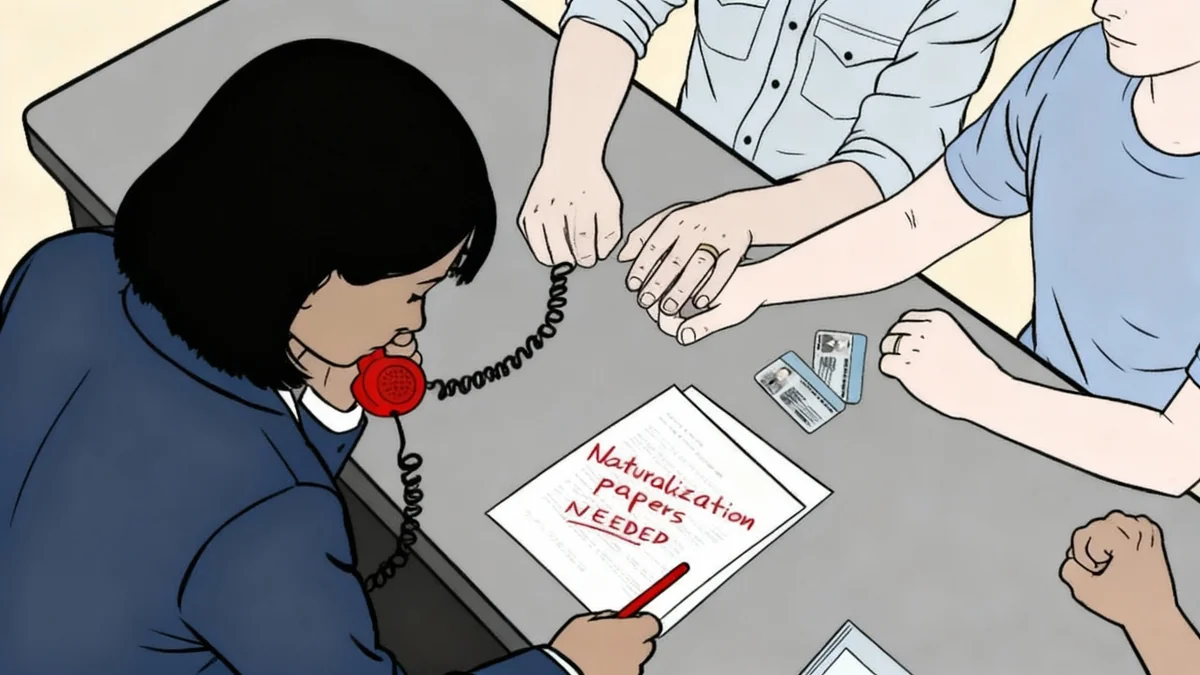
The situation involved two married men, both naturalized U.S. citizens, applying for a mortgage together. A lender's underwriter specifically requested "naturalization papers" from only one of the applicants, raising concerns about targeted and inconsistent practices. While a U.S. passport was later accepted as sufficient proof, the initial, specific demand has drawn attention to the fine line between due diligence and potential discrimination in the mortgage industry.
Key Takeaways
- Mortgage lenders are permitted to inquire about a borrower's residency and immigration status to assess loan risk.
- The Equal Credit Opportunity Act (ECOA) and the Fair Housing Act prohibit discrimination based on national origin.
- Inconsistent requests for documentation, such as asking only one of two joint applicants for citizenship papers, can be a red flag for discriminatory practices.
- Buyers who believe they have been discriminated against can file complaints with the Consumer Financial Protection Bureau (CFPB) or the Department of Housing and Urban Development (HUD).
The Legal Framework for Lenders
Navigating the mortgage application process requires a clear understanding of what lenders are legally allowed to ask. Federal laws are in place to prevent discrimination while still allowing lenders to perform necessary risk assessments.
The primary regulations governing this area are the Equal Credit Opportunity Act (ECOA) and the Fair Housing Act. Both laws explicitly prohibit lenders from discriminating against credit applicants on the basis of national origin, race, color, religion, sex, marital status, or age.
Why Immigration Status Matters to Lenders
A lender's primary concern is the borrower's ability to repay the loan over its entire term, which can be up to 30 years. For non-U.S. citizens, a lender may need to verify that their residency status allows them to live and work in the U.S. for the foreseeable future. This is considered a legitimate part of assessing creditworthiness and is not, in itself, discriminatory.
However, the law makes a crucial distinction. "A lender, dealer, or broker cannot discriminate on the basis of national origin, but they are allowed to ask about permanent residency and immigration status," explained Stacey L. Tutt, a senior staff attorney at the National Housing Law Project who specializes in homeownership issues. This means while the question of legal residency is permissible, the reason and manner in which it is asked are critically important.
Identifying Potential Discrimination
The line between standard procedure and discrimination often comes down to consistency and intent. When a lender's request for documentation appears targeted or arbitrary, it raises serious questions.
Inconsistent Document Requests
In the case reported from Hudson, New York, the underwriter asked only one of the two buyers for his citizenship papers, despite both being on the mortgage application. This type of inconsistency is a classic warning sign. If two applicants have similar financial profiles, singling one out for additional scrutiny based on their perceived background could be interpreted as a biased practice.
"If a lender has a standard policy to verify residency for all non-citizen applicants, that's one thing. But when they selectively ask one person on a joint application for their 'naturalization papers,' you have to question the motive," noted a mortgage industry analyst who spoke on the condition of anonymity. "It suggests a decision is being made based on a name or an assumption, not on the application's data."
Experts advise that any deviation from a lender's standard, uniformly applied procedures should be scrutinized. The focus should always be on the applicant's financial stability and legal ability to reside and work in the country, not their country of origin.
Know Your Rights
Under the ECOA, lenders are required to provide applicants with a reason for any adverse action, such as a loan denial. If you are denied a mortgage, you have the right to know why within 30 days. This can help determine if the denial was based on legitimate financial reasons or potentially discriminatory factors.
What Documentation Is Considered Standard?
For non-U.S. citizen borrowers, lenders typically need to verify their legal residency status. The type of documentation required often depends on the applicant's specific situation.
Commonly accepted documents include:
- A Permanent Resident Card (Green Card)
- An Employment Authorization Document (EAD)
- Visas such as an H-1B or L-1, which demonstrate an established ability to work in the U.S.
For naturalized U.S. citizens, however, the situation is different. Once naturalized, they have all the same rights as native-born citizens. A lender has no legal basis to treat them differently. While a U.S. passport or a Certificate of Naturalization can prove citizenship, a request for such documents should only be made if there is a legitimate, non-discriminatory reason to verify information on the application.
The specific demand for "naturalization papers" can also be problematic. It implies the buyer is being viewed through the lens of their former nationality rather than their current status as a U.S. citizen. A U.S. passport is the most common and sufficient proof of citizenship.
What to Do if You Suspect Discrimination
Homebuyers who feel they have been unfairly targeted or discriminated against during the mortgage process have several avenues for recourse. It is important to act, as reporting potential violations helps regulators identify patterns of misconduct in the industry.
- Keep Detailed Records: Document every interaction with the lender. Save all emails, make notes of phone conversations with dates and names, and keep copies of all paperwork requested and submitted.
- Ask for Clarification in Writing: If you receive an unusual request, ask the lender to provide the reason for it in writing. A legitimate request will have a clear, policy-based explanation.
- File a Complaint: You can file a formal complaint with federal agencies tasked with enforcing fair lending laws. The two primary bodies are:
- The Consumer Financial Protection Bureau (CFPB): The CFPB handles complaints about financial products and services, including mortgages, and investigates claims of discrimination.
- The Department of Housing and Urban Development (HUD): HUD oversees the Fair Housing Act and investigates housing-related discrimination claims.
- Consult Legal Counsel: For complex cases, seeking advice from a fair housing organization or an attorney specializing in housing discrimination can provide clarity on your rights and legal options.
Ultimately, the goal of fair lending laws is to ensure that every applicant is judged on their financial merits, not their background. While lenders must protect themselves from risk, their procedures must be fair, consistent, and free from any form of prejudice.