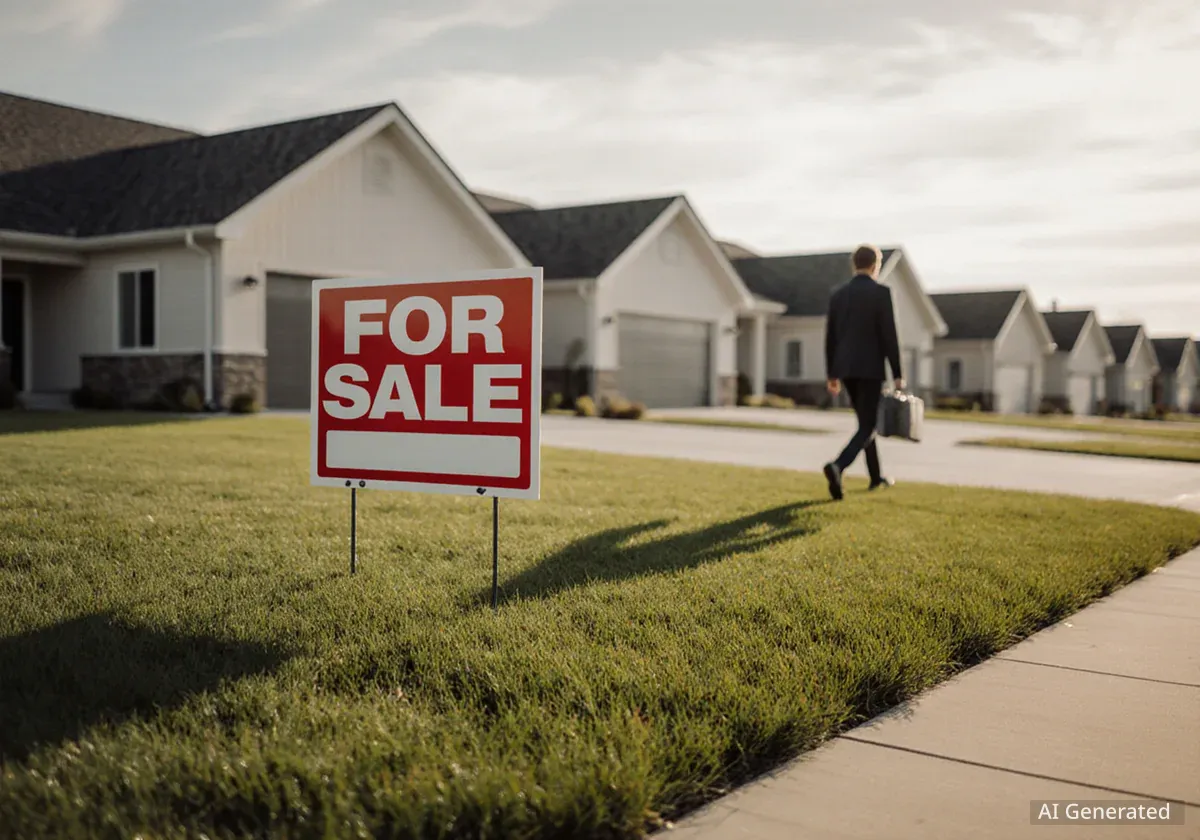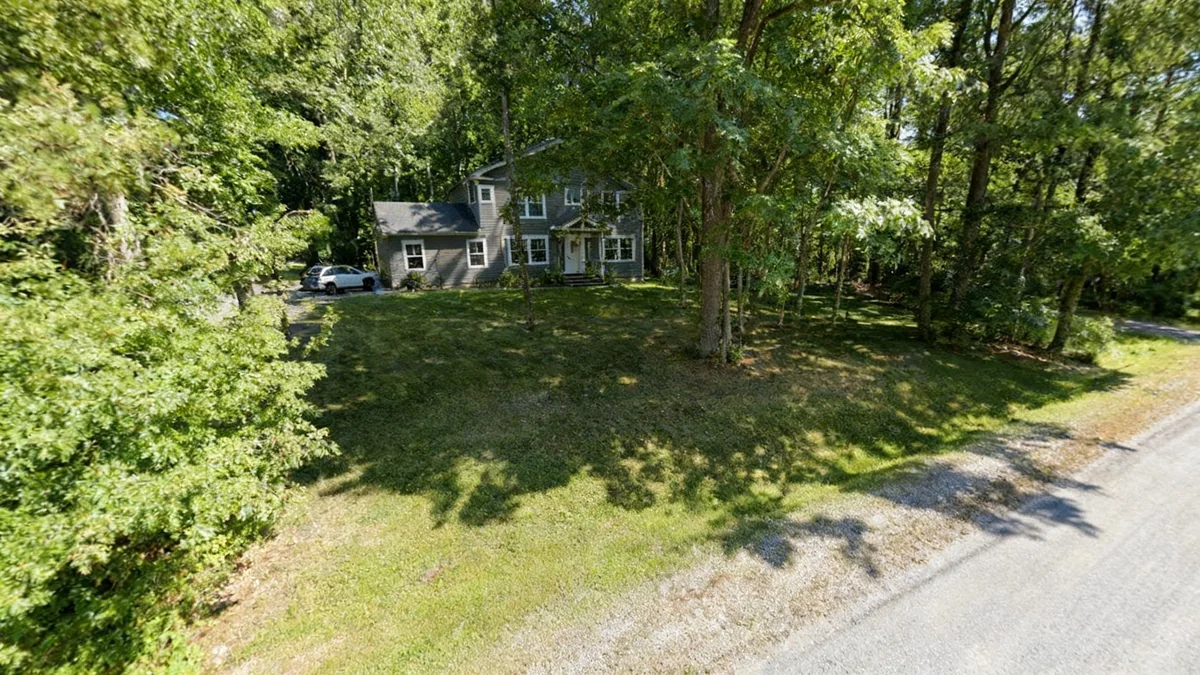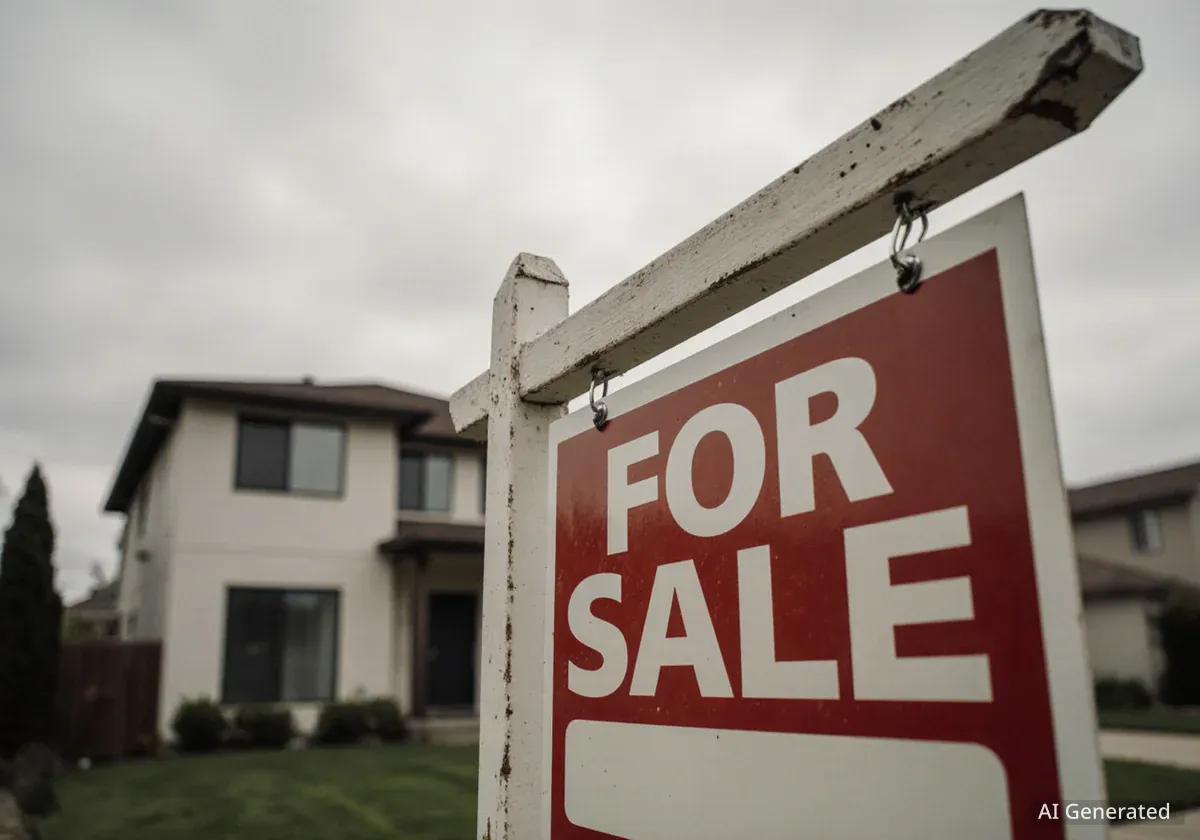

A growing number of prospective homebuyers are voicing their frustration over misleading real estate photos, describing a trend of digital alterations and camera tricks that create unrealistic expectations and waste valuable time. The practice, which some buyers have labeled 'catfishing,' involves using ultra-wide-angle lenses and dramatic editing to make properties appear larger, brighter, and more appealing than they are in reality.
This widespread frustration, bubbling up in online forums and discussions, highlights a significant disconnect between marketing tactics and buyer expectations in a challenging housing market. For many, the search for a new home has become a demoralizing cycle of excitement followed by disappointment.
Key Takeaways
- Homebuyers are increasingly critical of real estate photos that use wide-angle lenses to distort room sizes.
- Unnatural lighting, especially "twilight" shots that make every window glow, is a common complaint that erodes trust.
- Listings that omit photos of key areas like kitchens or basements are often seen as red flags for potential problems.
- In a market where homes take longer to sell, experts suggest that honest, straightforward photography may be more effective than deceptive marketing.
The Anatomy of a Deceptive Listing
Frustrated buyers have compiled a list of common photo techniques they feel cross the line from marketing to misrepresentation. The most frequently cited issue is the use of extreme wide-angle lenses, which can make a small 9x9 foot bedroom look like a spacious master suite.
"I can now tell from the photos alone whether I'm about to see a normal house or drive 40 minutes to get catfished," one exasperated buyer shared in an online real estate forum. This sentiment is echoed by many who feel their time is disrespected by such practices.
Another major point of contention is the popular "twilight" or "dusk" photography style. While aesthetically pleasing, these photos often feature homes with unnaturally glowing windows and oversaturated colors, creating a magical ambiance that doesn't exist in broad daylight.
"When every surface is glowing and the walls look like they've been dipped in neon, I'm not thinking ‘wow.' I'm thinking ‘this is going to feel very different in person,'" the buyer added.
What Buyers Want to See
The solution, according to house hunters, is not about professional polish but about authenticity. Buyers are asking for honesty and transparency to make informed decisions before scheduling a visit.
Key requests from buyers include:
- Natural Lighting: Photos taken during the day with open curtains that show how the house truly looks and feels.
- Comprehensive Tours: Images of every important room, including the kitchen, bathrooms, and basement. A listing with 28 photos but none of the kitchen is an immediate red flag.
- Accurate Scale: Minimalist staging that helps gauge a room's size, rather than oversized furniture that hides flaws or tiny furniture that makes spaces seem larger.
- Floor Plans: A simple floor plan is often more valuable than a dozen artistically angled photos, as it provides a clear, objective layout of the property.
"Ugly is fine. Hidden is not," one commenter summarized, capturing the core desire for transparency over perfection.
Market Context: A Slower Pace
The frustration with misleading photos comes as the housing market has cooled. According to recent data from Redfin, the typical U.S. home spent about 53 days on the market in November 2025. This is an increase from previous years, indicating that buyers have more inventory to choose from and are taking more time to make decisions.
The Agent and Photographer Perspective
While buyers place the blame on deceptive listings, some real estate photographers note that the pressure often comes from agents or sellers. In a competitive market, agents may feel compelled to use every tool available to make their listings stand out from the dozens of others a buyer might scroll through in a single session.
One working photographer explained that they often provide a full suite of honest photos and even offer to create floor plans for a minimal fee, but agents sometimes decline. "They'll regularly say no," the photographer wrote, noting that some agents request only the 15 "best" and most flattering images, even if it means omitting crucial information.
This approach can backfire. When a buyer's first impression upon entering a home is, "Oh... it's smaller than I thought," the trust is broken before the tour even begins. This initial disappointment is difficult to overcome and often results in a lost sale, wasting the time of the buyer, the seller, and the agent.
The Rise of Virtual Misdirection
The problem extends beyond simple camera tricks. Some buyers have reported encountering listings with AI-generated staging that includes completely fabricated views. One user described a listing where AI-staged photos showed "rolling meadows through the windows," when the actual view was a commercial parking lot filled with trucks. This level of digital manipulation represents a new frontier in misleading real estate marketing.
A Call for Transparency in a Tough Market
As the market continues to normalize, the consensus among frustrated buyers is clear: deceptive photos don't sell houses, they just create roadblocks. The goal of a listing should be to attract the *right* buyer, not just *any* buyer.
When a listing is honest, it communicates respect for the buyer's time and intelligence. It sets a foundation of trust that can carry through negotiations and closing. In contrast, a listing that feels like a "magic trick" starts the relationship on a negative note, often leading to a dead end.
For sellers and agents, the takeaway is that in a market where buyers are more discerning, transparency may be the most powerful marketing tool of all. As one buyer simply put it, "Just open the curtains, let the house look like it does on a normal Tuesday."