South Florida's real estate market is entering the new year in a state of flux, presenting a complex picture for both buyers and sellers. While high insurance costs and mortgage rates softened the market, anticipated interest rate cuts could soon shift the balance, creating a unique window of opportunity for prospective homeowners.
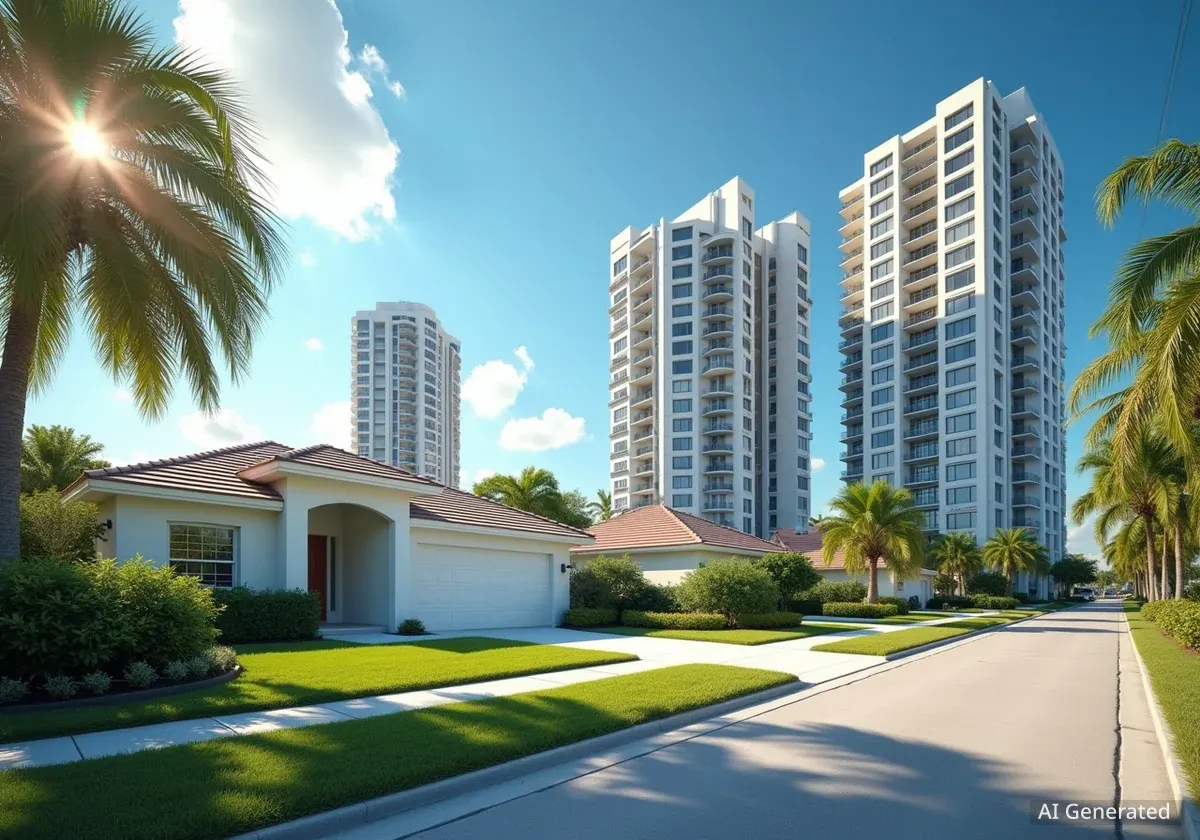
The region is not one single market, but a collection of distinct segments behaving in vastly different ways. Single-family homes are experiencing price growth amid tight supply, while the condominium sector faces significant headwinds, creating a landscape of both risk and potential reward.
Key Takeaways
- The South Florida real estate market is currently considered favorable for buyers, but this may change with expected interest rate cuts.
- Single-family home prices are rising due to low inventory, while condo prices are generally falling.
- The condo market is under pressure from new regulations, leading to high fees and predictions of a potential crash in some segments.
- Developers are increasingly buying out older condo buildings for redevelopment, a trend known as condo termination.
- Affordable and "attainable" housing, including micro-units, are gaining traction as solutions to the region's high cost of living.
A Tale of Two Markets: Houses vs. Condos
The divergence between single-family homes and condominiums is one of the most striking features of the current market. According to Fernando de Nuñez y Lugones, CEO of Vertical Developments, this split is creating unique dynamics. “The market is extremely interesting right now, because each sub-market is having a totally different behavior,” he noted.
The supply of single-family homes has not kept pace with demand, leading to continued price appreciation. Buyers in this segment face stiff competition for limited inventory, a situation that is unlikely to ease in the near future.
The Troubled Condo Sector
In stark contrast, the condominium market is navigating a period of significant uncertainty. New state laws, enacted following the 2021 Surfside building collapse, have imposed stricter inspection and reserve funding requirements on condo associations.
These regulations, while designed to improve safety, have resulted in soaring association fees and special assessments for residents in many older buildings. This has made it more difficult for owners to sell and for buyers to secure financing for these units.
Post-Surfside Regulations
Florida's new condo laws mandate structural integrity reserve studies and require associations to fully fund reserves for major repairs. This prevents associations from waiving reserve funding, a common practice in the past that led to deferred maintenance in many older buildings.
Some market analysts are sounding the alarm. Peter Zalewski, a condo market expert and broker at Condo Vultures Realty, has a particularly pessimistic outlook for 2026, comparing the current climate to the period just before the 2008 financial crisis.
“We are in 2007, which is the predecessor to right before the big sell-off begins,” Zalewski warned, suggesting that owners facing high fees may soon start selling at a loss.
However, not everyone sees a looming disaster. The new laws have also increased transparency, providing potential buyers with more information about a building's financial and structural health. Data from the Miami Association of Realtors indicates a potential silver lining. In November, sales for condos priced between $200,000 and $400,000 saw a 21% increase compared to the previous year. This suggests that informed buyers are finding value in well-priced older units.
The Rise of Condo Terminations
Another significant trend reshaping the coastline is the increase in condo association terminations. Developers are actively buying out all the units in older condo buildings, often located in prime waterfront locations, with plans to demolish them and construct new, high-end luxury towers.
Isaac Toledano, a co-founder of the development firm BH Group, confirmed his company's involvement in such buyouts in Sunny Isles Beach, Coconut Grove, and Naples. He anticipates this trend will accelerate.
“I think you’ll see more and more of this,” Toledano said, adding that his firm is already working on two additional buyouts. For residents in aging buildings, this can present a lucrative exit, but it also contributes to the changing character and cost of coastal neighborhoods.
Addressing the Affordability Crisis
Miami consistently ranks as one of the least affordable housing markets in the United States, a challenge that is expected to persist for the region's working and middle-class residents. However, new legislative efforts and development trends are emerging to address the shortfall.
The Live Local Act
Passed in 2023, this state law offers significant zoning and tax incentives to developers who set aside at least 40% of a project's units for affordable housing for a period of 30 years.
J.C. de Ona, Southeast Florida division president for Centennial Bank, believes this legislation will spur much-needed development. “There’s just a huge gap in the amount of affordable housing that we need,” he said. “But I do think that we’ll see more activity.”
'Attainable' Housing and Micro-Units
Beyond traditional affordable housing, the concept of “attainable” housing is gaining ground, particularly in the rental market. This involves trade-offs, such as smaller unit sizes or fewer amenities, in exchange for a location in a more desirable neighborhood.
This trend is exemplified by the recent approval of a new residential building in the Brickell area featuring “micro units” as small as 320 square feet. This project marks the second of its kind from developer Namdar Group, signaling a growing acceptance of smaller living spaces as a solution to urban affordability.
What's Next for the Luxury Market?
While affordability is a major concern, South Florida's luxury market has remained a powerful force, fueled by the migration of high-net-worth individuals and corporate relocations. Many experts expect this strength to continue.
High-profile events like the upcoming 2026 FIFA World Cup and major developments, such as Ken Griffin’s planned Citadel headquarters in Brickell, are expected to draw more affluent buyers to the area.
However, some skepticism remains. Zalewski questions the sustainability of this trend, pointing to a potential weakness in the market: a lack of “step-up buyers”—local residents moving into larger, more expensive homes.
“It’s not great on the luxury side... you’re starting to see a pullback, and the primary reason is there’s no step-up buyers,” he explained. “Who do you resell this stuff to?”
As the new year unfolds, South Florida's real estate market remains a complex and fascinating arena. While buyers may currently have a slight advantage, the landscape is shifting, with distinct opportunities and challenges emerging across every price point and property type.