Investors from Texas are making significant moves in San Francisco's commercial real estate market, acquiring high-profile properties in a sign of renewed confidence in the city's economic future. After several quiet years, this influx of capital from the Lone Star State signals a potential turning point for a market that has faced significant challenges.
The acquisitions are concentrated in key areas like Union Square and the downtown financial district, with buyers snapping up office and retail buildings at prices considered historic lows. This trend represents a notable reversal, as several major companies had previously relocated from the Bay Area to Texas during the early years of the pandemic.
Key Takeaways
- Texas-based investment firms are actively purchasing commercial properties in San Francisco.
- Union Square and the downtown area are the primary focus for these acquisitions.
- This trend suggests investors believe the market has bottomed out and is poised for recovery.
- The renewed interest is not limited to Texas, with buyers from New York and Southern California also entering the market.
A Lone Star State of Mind
A wave of Texas-based capital is reshaping the ownership landscape of San Francisco's commercial districts. This renewed interest from out-of-state buyers is a welcome development for a market that, until recently, was primarily supported by local investors.
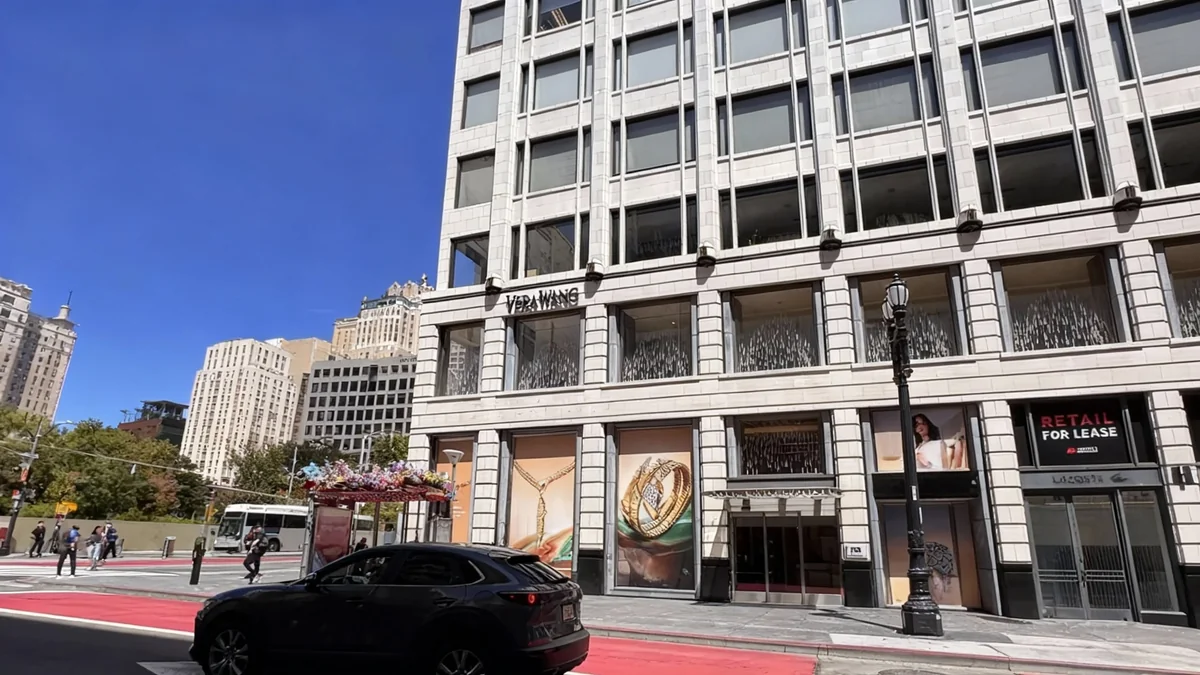
One of the most active players is a Dallas-based investment group led by Douglas MacMahon. Since August 2024, his group has made four significant purchases. These include prominent Union Square properties such as One Union Square, the former Burberry building at 225 Post Street, and the retail building at 240 Post Street.
MacMahon, who previously lived in San Francisco, has expressed a long-term belief in the city's market resilience. In a previous statement, he highlighted his strategy.
"My partners and I are long-term investors, and we believe San Francisco in the long-term is a great market for investing in real estate."
Union Square Becomes a Hotspot
The Union Square district, a historic hub for retail and tourism, has become a focal point for this investment surge. The area has seen a flurry of activity as investors seek to acquire properties at a significant discount compared to pre-pandemic valuations.
Lacie Ravina, a vice president at Colliers specializing in the Union Square market, noted the change in sentiment. "I think it signifies that we’ve bottomed out, and investors have realized that it’s time to acquire buildings at historic lows," she said.
This sentiment is echoed by Kelly Glass, a principal at Avison Young, who has observed a new pool of investors focused on the area. "Whenever I speak to them, they’re like, ‘Oh, you’re getting us excited,’ because the volume is there," Glass remarked, referring to the increasing transaction activity.
Notable Texas-Led Acquisitions
- One Union Square: Purchased by a group led by Douglas MacMahon in August.
- 240 Post Street: A five-floor retail building acquired by MacMahon's group in November.
- 600 California Street: Dallas-based Lone Star Funds is the reported buyer for the 360,000-square-foot building.
- Duboce Apartment Building: Houston-based Hines acquired an 87-unit building last year.
Beyond Texas A National Trend
While Texas investors are leading the charge, the interest in San Francisco real estate is not confined to one state. Buyers from New York, Southern California, and even Alaska have recently purchased buildings in the downtown and Union Square areas.
Uris Acquisitions, a group with New York roots, has been particularly active, purchasing three buildings along the iconic Powell Street since May. This broader interest from across the country reinforces the idea that institutional investors see a unique buying opportunity in the city.
Even Charles Schwab, the financial services giant that moved its headquarters from San Francisco to Westlake, Texas, in 2021, is reportedly searching for new office space in the city, indicating a continued operational commitment to the Bay Area.
What's Driving the Renewed Confidence?
Several factors appear to be fueling this investment revival. The narrative around San Francisco's recovery, often termed a "boom loop," is gaining traction nationally, partly driven by the city's central role in the artificial intelligence industry.
Derek Daniels, research director at Colliers, believes this story is reigniting investor interest. "As the recovery gains momentum, we’re seeing renewed interest from investors outside the region, which is a sign of improving fundamentals," he explained.
The "Boom Loop" Narrative
The term "boom loop" refers to a positive feedback cycle where a city's economic strengths, such as the AI boom in San Francisco, attract talent and investment. This, in turn, boosts real estate demand, improves city services, and enhances quality of life, further strengthening the economic core and attracting more growth.
Daniels also credited the city's new leadership under Mayor Daniel Lurie for actively promoting San Francisco's recovery on a national stage. This effort has reportedly helped restore confidence among stakeholders and investors who may have been hesitant in previous years.
The combination of historically low property prices, a strengthening local economy powered by AI, and a proactive city administration has created an attractive environment for long-term investors willing to bet on San Francisco's comeback.