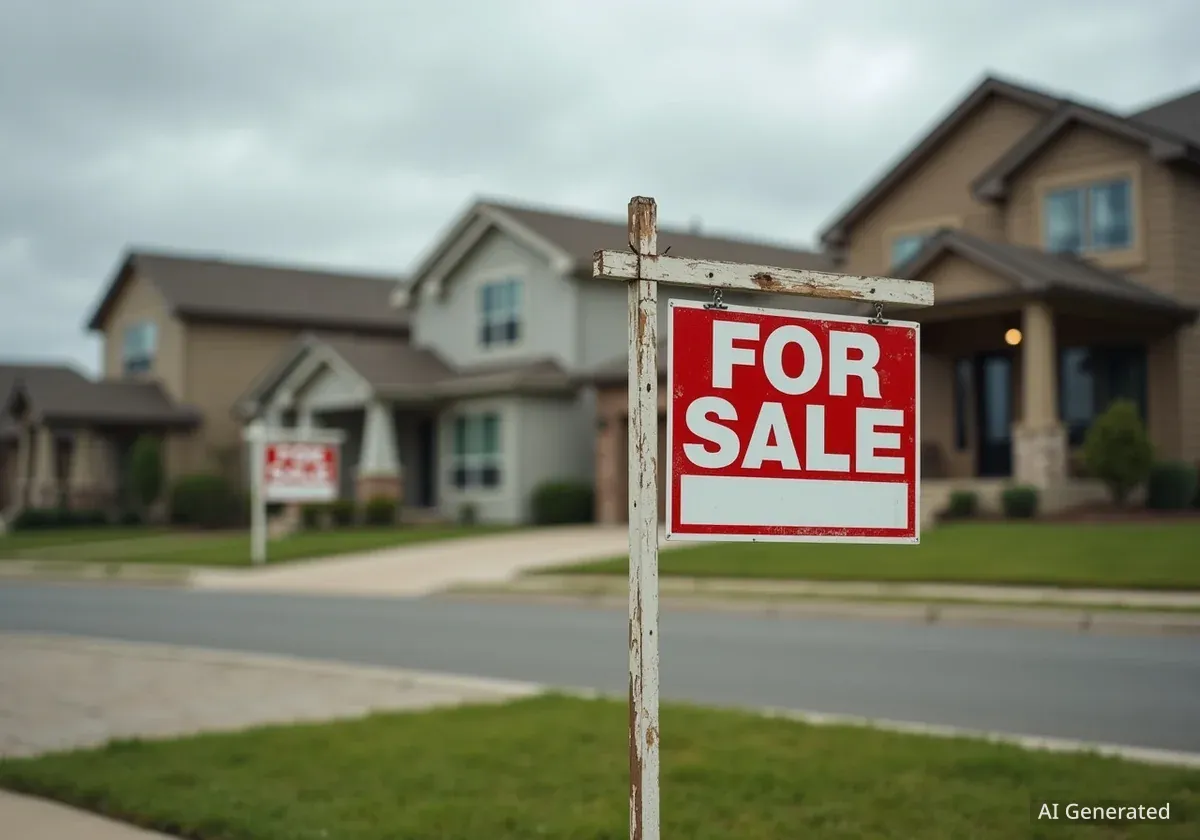
The Texas real estate market, once a symbol of pandemic-era growth, is now experiencing a significant cooldown. A recent report from the Federal Reserve Bank of Dallas describes the state's housing sector as undergoing one of the "most dynamic" boom and bust cycles in its recent history, signaling a major shift for homeowners, buyers, and industry professionals.
This new reality is marked by homes sitting on the market longer, a sharp decline in new real estate agents, and a pivot from inventory shortages to pressing affordability challenges. The frenzied bidding wars of 2021 have been replaced by a more calculated and cautious market environment.
Key Takeaways
- The Texas housing market is shifting from a rapid boom to a significant slowdown, according to the Federal Reserve Bank of Dallas.
- Affordability has replaced low inventory as the primary challenge for buyers in major markets like Dallas-Fort Worth.
- The number of new real estate salespeople entering the Texas market has fallen by 50% since its peak in early 2022.
- Homes in Texas are staying on the market longer, with a median of 74 days in October, compared to the national median of 51 days.
The Shifting Landscape of Texas Housing
The intense real estate activity that defined Texas during the pandemic has given way to a more subdued market. While prices are still rising in some parts of the country like the Northeast and Midwest, they are softening in the South and West. This trend is driven by a slowdown in migration and rising insurance costs, which are impacting buyer budgets.
Data clearly illustrates this change. As of last October, the median time a home spent on the market in Texas was 74 days. This is considerably longer than the national median of just 51 days, indicating that sellers can no longer expect the rapid sales that were common just a few years ago.
This slowdown is not uniform, but its effects are being felt across the state's major metropolitan areas. Projections for North Texas, for example, show an anticipated 5.4% decline in existing home sales this year, even as the median sale price is expected to increase by a modest 1.8%.
From Inventory Crisis to Affordability Problem
For years, the dominant narrative in Texas real estate was a critical lack of inventory. Today, industry experts say the core issue has changed. The problem is no longer a shortage of homes, but a shortage of buyers who can afford them.
"The days of putting the sign in the yard and having five offers within an hour are over," says Franceanna Campagna, president of the MetroTex Association of Realtors. She notes that Dallas-Fort Worth now faces an affordability problem, not an inventory issue.
Campagna explains that she now advises sellers to price their homes more competitively from the start to attract and maintain buyer interest. The market dynamics have shifted power away from sellers, requiring a more strategic approach to pricing and negotiations.
Market Snapshot: North Texas
- Projected Sales Decline (Existing Homes): 5.4% this year
- Projected Median Price Increase: 1.8% this year
- Primary Challenge: Buyer affordability
A Cooling Interest in Real Estate Careers
The housing market's boom and bust cycle has had a direct impact on the real estate profession itself. During the height of the pandemic, a career in real estate seemed like a lucrative opportunity, leading to a surge in new licensees.
Between early 2020 and early 2022, the number of new licensed salespeople entering the Texas market each quarter jumped by an astounding 60%. However, as interest rates began to climb and the market cooled, that trend reversed dramatically. By the end of 2024, the rate of new salespeople entering the field had plummeted by 50% from its peak.
The Agent Pipeline Slowdown
The decline extends beyond entry-level positions. The rate of experienced salespeople upgrading to broker status—a move that requires significant experience and education—also fell. After peaking at around 800 new brokers per quarter in 2022, the number dropped to fewer than 400 per quarter in early 2025.
This sharp decline suggests that the allure of a real estate career has faded alongside the market's rapid growth. The Federal Reserve report highlights the precarious situation for many who entered the industry during its peak.
Uncertain Future for Pandemic-Era Agents
The rapid influx of real estate professionals followed by an equally rapid market slowdown has created a challenging environment. Many who staked their careers on a perpetually booming market are now facing difficult choices.
The Dallas Fed's analysis offers a sobering outlook. "Thousands of Texans who made career bets on real estate during the pandemic era face uncertain prospects," the report states. It concludes that while some will adapt, others may be forced to leave the industry, a transition that could involve significant economic hardship.
As the market continues to normalize, the focus for both agents and consumers has shifted. For sellers, it's about realistic pricing and patience. For buyers, it's about navigating affordability challenges. And for the real estate industry, it's about adjusting to a more sustainable, albeit less frenetic, pace of business in the Lone Star State.